
Ten years ago, on the day of Eid-ul-Azha, Rohingya elder Mohammad Ali, 60, fled Myanmar’s Rakhine State with his family and took refuge in Bangladesh to save their lives. A decade later, he is still waiting to return to his homeland.
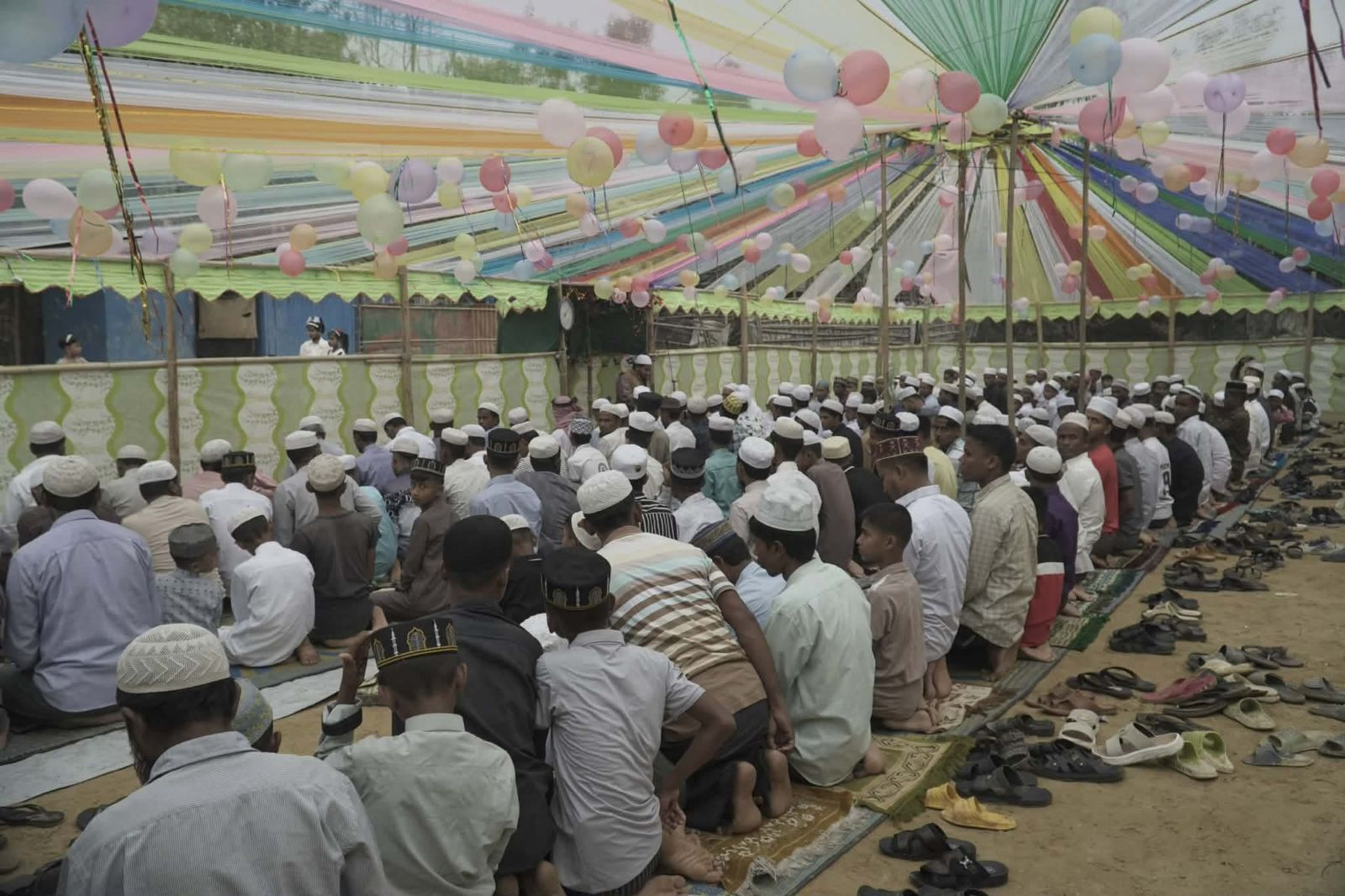
On Thursday morning, hundreds of thousands of Rohingya refugees offered Eid prayers at different camps in Ukhiya and Teknaf of Cox’s Bazar district.
After the prayers, many broke into tears while praying for safe repatriation to Myanmar and seeking peace for relatives killed during the 2017 violence.
Mohammad Ali said, “I fled my home with nothing but the clothes I was wearing. Ten years have passed, and I do not know how much longer I will live. I only pray that my grave may one day be in the soil of Arakan.”
Most Rohingyas living in the camps remain dependent on humanitarian aid. While some families managed to perform Qurbani according to their means, many could not afford it this year.
Recalling Eid celebrations in Myanmar, Rohingya teacher Abdullah said, “Back in Myanmar, we used to sacrifice large cattle and live comfortably through farming. Now we struggle to survive and cannot even afford Qurbani.”
The Rohingya camps have witnessed the birth of nearly 200,000 children over the past decade. Eid brings moments of joy, but many families’ faces still reflect uncertainty about the future.
Mohammad Forkan, organiser of the United Council for Rohingya (UCR), said that the next generation deserves a safe future. Repatriation is the only solution. Every Eid, they pray that the next one may be celebrated in Myanmar.
Bangladesh has set an example to the world by providing humanitarian shelter, and we are grateful for that. But this is not our homeland. The international community must ensure our dignified repatriation with citizenship rights and security,” he added.
The prolonged Rohingya crisis has also created pressure on local communities.
Engineer Robiul Hossain, president of a local rights implementation committee, said that they supported the Rohingyas on humanitarian grounds.
“But over time, the crisis has affected us socially and economically. There is no permanent solution without effective repatriation, although the current situation in Myanmar has made that process more difficult,” he added.
According to the Office of the Refugee Relief and Repatriation Commissioner, around 195,000 Rohingya families are receiving sacrificial meat this Eid with support from NGOs and donor agencies.
Refugee Relief and Repatriation Commissioner Mizanur Rahman said, “Despite shrinking aid, support efforts during Eid are continuing at the highest possible level. Each family is receiving one kilogram of meat, and camp-in-charge offices are supervising the distribution process.”
Regarding repatriation, he said that Bangladesh continues diplomatic efforts to ensure the safe and dignified return of the Rohingyas.
According to the latest data from the United Nations High Commissioner for Refugees, 1,044,354 Rohingya refugees are currently receiving humanitarian assistance in Bangladesh.
However, several non-government estimates suggest that nearly 1.5 million Rohingyas are now living in and around the camps in Cox’s Bazar.
By Abdu Rashid Manik
Photo: Courtesy