

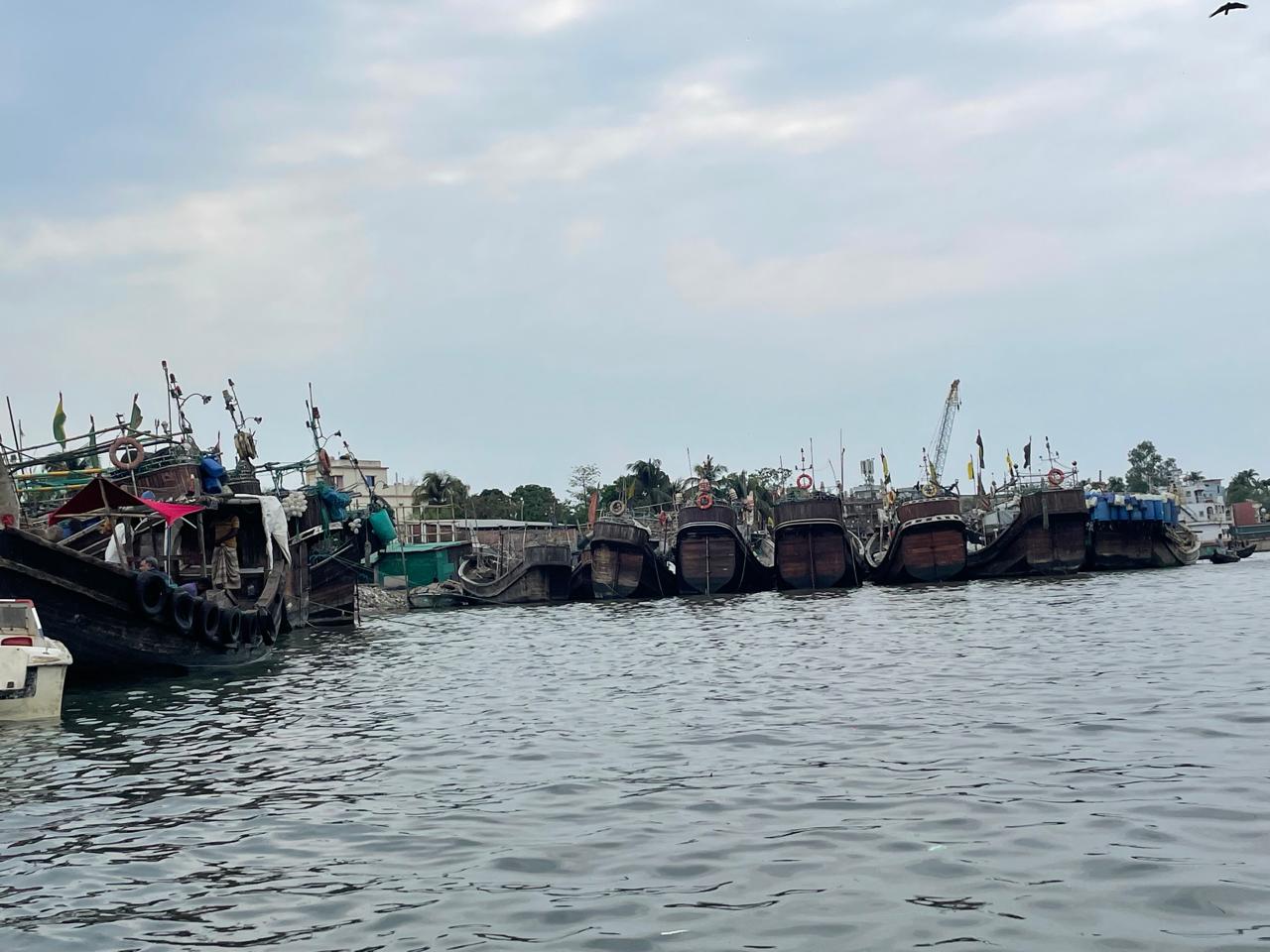
The 58-day government-imposed fishing ban in the Bay of Bengal is set to end on June 11, prompting fishers and trawler owners along the Cox’s Bazar coast to make final preparations for returning to sea.
Across the coastal belt, workers have been busy repairing trawlers, mending fishing nets, and stocking up on fuel, ice, and food supplies ahead of the resumption of fishing activities.
Fishers said the prolonged suspension of fishing had left many families struggling financially, making the prospect of returning to work a welcome relief.
Sirajul Islam, a fisherman aboard the FB Ma-Meherunnesa trawler, said that he was delighted that the ban was coming to an end.
“We are very happy that the restriction is ending. Once we can go back to sea and catch fish, we will be able to support our families and return to a normal life,” he said.
Despite their optimism, many fishers remain concerned about the risks associated with venturing into the sea during the monsoon season, when rough weather and turbulent waters are common.
Boat skipper Gias Uddin noted that adverse sea conditions typically characterize June and July.
‘The sea is usually rough during this period. That is why we have reservations about the timing of the fishing ban,’ he said.
Rising operational expenses have also added to the challenges facing the sector. Trawler owners say fuel, ice, and other essential supplies have increased significantly in price, putting additional pressure on their businesses.
Jainal Abedin, founding president of the Cox’s Bazar Fish Landing Centre Unity Cooperative Society, said that expenses had risen sharply in recent months.
‘Costs have increased substantially. Nevertheless, we are preparing to send our trawlers back to sea in the hope of a successful catch. Without government support, the sector could face further difficulties,’ he said.
The district fisheries department, however, maintains that the timing of the ban was determined based on scientific research aimed at protecting marine fish during their breeding season and ensuring sustainable fish production.
Cox’s Bazar district fisheries officer Md Nazmul Huda expressed optimism that the measure would yield positive results.
“The ban has been successfully implemented with the cooperation of the fishing community. We expect fish production to increase in the coming months, allowing fishers to benefit from improved catches,” he said.
Although the number of registered fishers in Cox’s Bazar stands at around 65,000, sector insiders estimate that more than 150,000 people depend directly or indirectly on marine fishing for their livelihoods.
With the ban ending on June 11, hundreds of fishing vessels are expected to head back into the deep sea in search of a productive fishing season.
By Abdu Rashid Manik
Photo: Abdu Rashid Manik