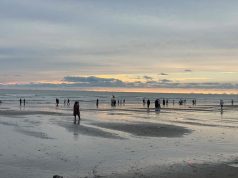
The monsoon has transformed Cox’s Bazar into a dramatic coastal landscape, with rough seas, towering waves and overcast skies attracting visitors eager to experience a different side of the world’s longest natural sea beach.
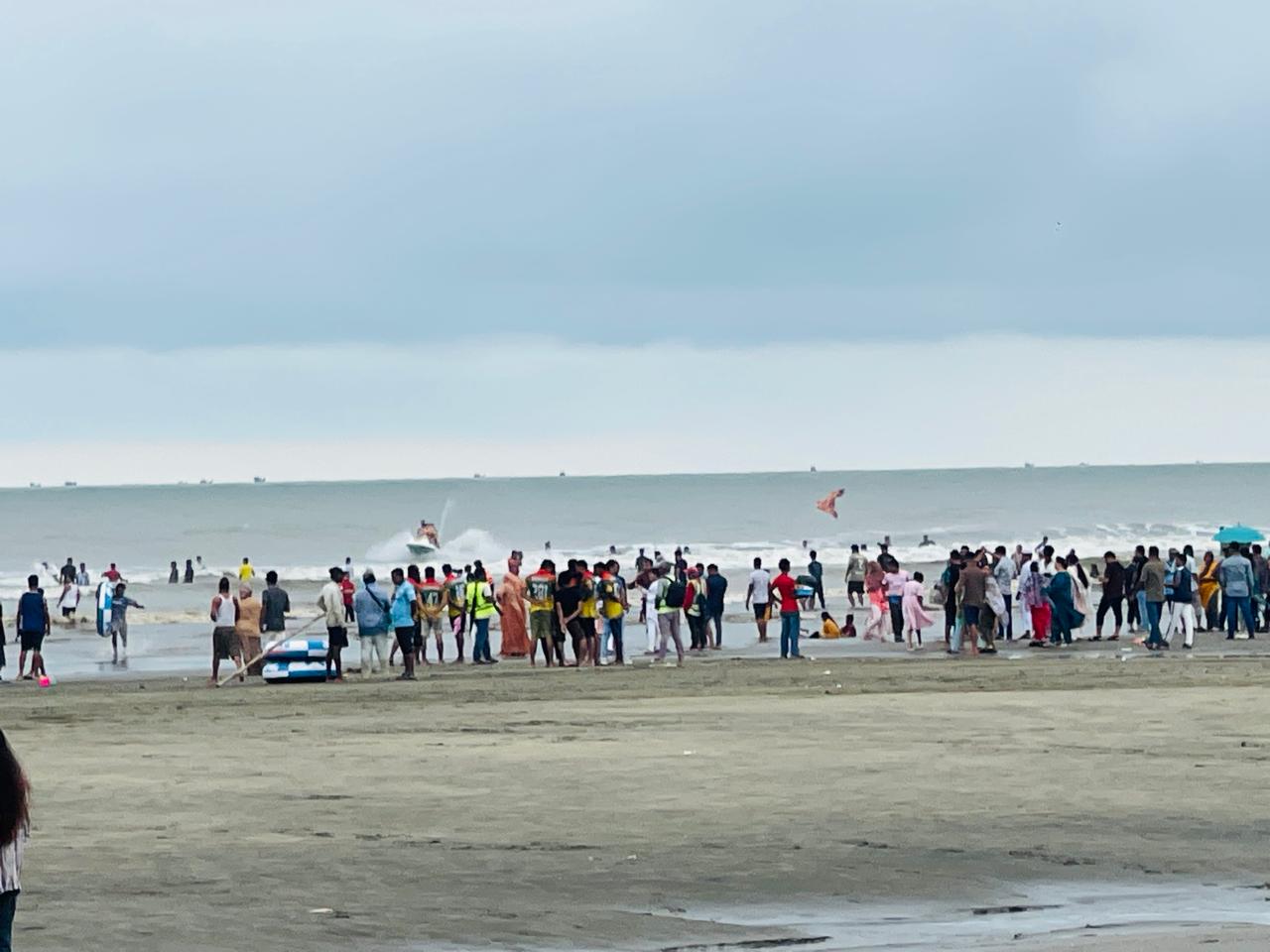
On Saturday, tourists gathered at the Laboni, Sugandha and Kolatoli beach points, where many stood at a safe distance to watch the powerful waves. Some took photographs, while others enjoyed the seaside with family and friends despite the unsettled weather.
Because of the rough sea, lifeguards continued to discourage visitors from entering deep water and regularly broadcast safety announcements over loudspeakers.
Assistant Meteorologist Md Abdul Hannan of the Cox’s Bazar Meteorological Office said Local Cautionary Signal No 3 remained in force at four seaports following the formation of a low-pressure area over the north-west Bay of Bengal and the adjoining north Odisha-West Bengal coast.
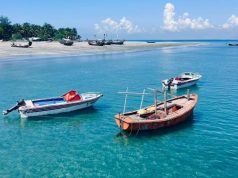
He said all fishing boats and trawlers operating in the Bay of Bengal had been advised to remain close to the coast and navigate with caution until further notice.
Rezaul Karim, a tourist from Dhaka, said the sea looked entirely different during the monsoon.
“The giant waves are fascinating to watch. We are enjoying the beach while remaining cautious and following the instructions of the lifeguards,” he said.
Lifeguards on duty said that they have prioritised visitor safety since issuing the cautionary signal. The highest priority for lifeguards has been visitor safety since the cautionary signal was issued. Lifeguards have placed red-and-yellow flags in designated areas and are repeatedly advising tourists not to venture into deep water.
People associated with the tourism sector said the monsoon reveals a unique beauty along the Cox’s Bazar coast, but stressed that visitors should exercise extra caution due to rough seas and adverse weather conditions.
By Mohammad Morshed
Photo: Mohammad Morshed