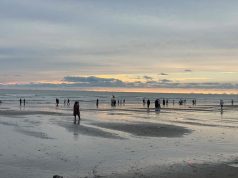
Located about 32 kilometres from Cox’s Bazar town along Marine Drive, Sonar Para beach in Ukhiya has steadily gained popularity among tourists for its tranquil surroundings, rows of casuarina trees, sampan boats, fishermen’s lives, and the sight of fishing in the sea.
As tourist footfall has increased, new resorts, restaurants and small businesses have also sprung up around the beach.
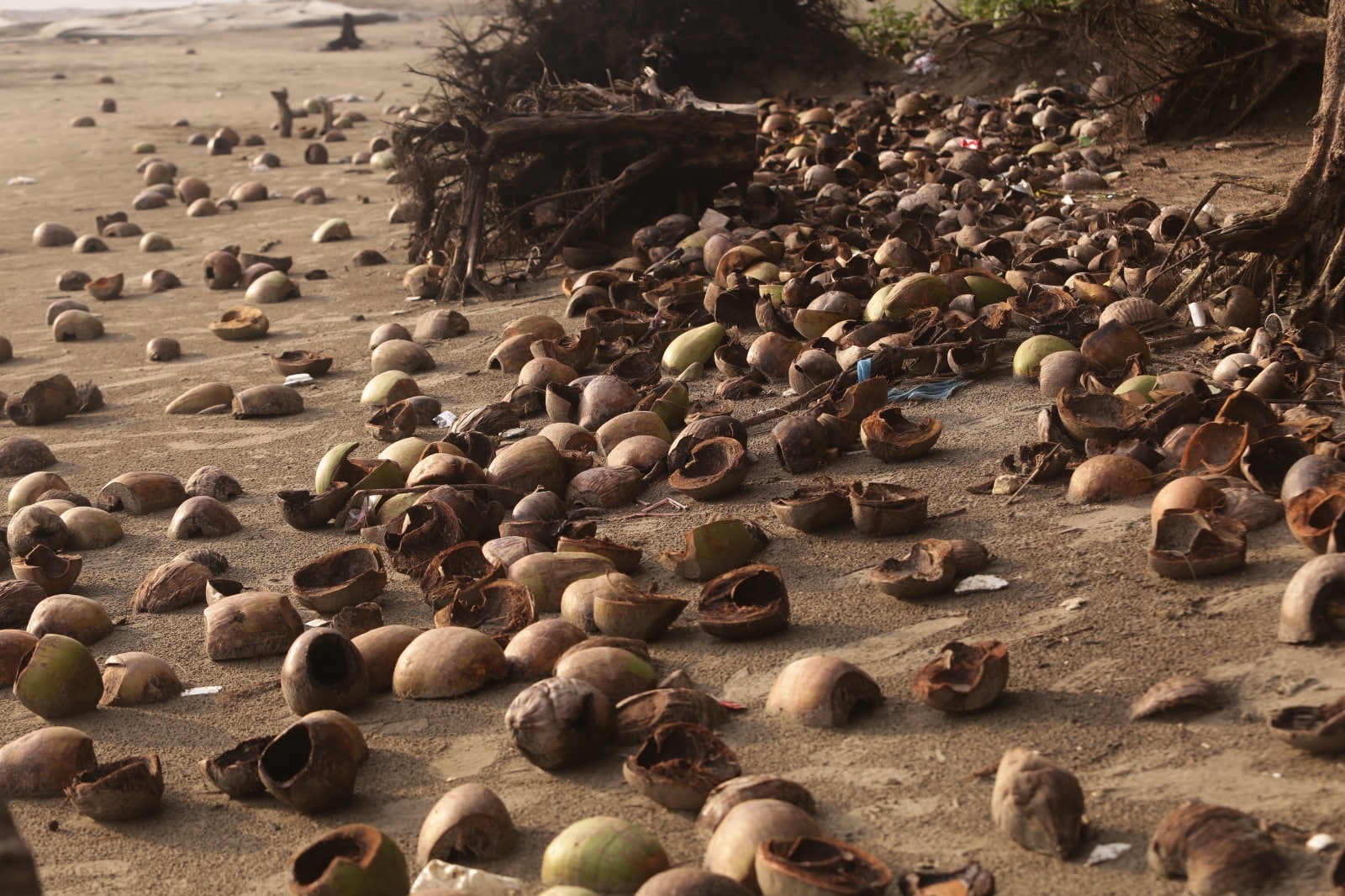
However, coconut husks are now tarnishing the beauty that once made Sonar Para appealing to tourists. Hundreds of discarded coconut shells are scattered across the sandy beach, around the roots of casuarina trees and in nearby areas.
Some husks are partly buried in the sand while others are lodged among tree roots. The litter is spoiling the beach’s appearance and raising environmental concerns.
A recent visit to Sonarpara beach found coconut vendors displaying rows of green coconuts beside the casuarina forest and at various points along the beach.
The sight of coconuts hanging among the trees is easily visible from Marine Drive and attracts tourists, many of whom stop their vehicles, head to the beach and buy coconuts.
However, after the coconut water and flesh are consumed, many of the husks end up on the beach and around the casuarina forest. As a result, piles of coconut shells can be seen in places where the natural beauty of the sand should dominate the landscape.
According to local traders, around 12 vendors currently sell coconuts at Sonarpara beach. They display coconuts at different spots around the casuarina forest to attract tourists.
Although many tourists buy coconuts from the vendors every day, there is no adequate system for storing and removing the discarded husks.
The vendors, however, claim that they keep the husks at designated spots before selling them. They said heavy rain and strong currents during the monsoon washed many of the husks toward the beach.
A visit to the area found coconut husks scattered across different parts of the beach rather than being confined to one or two locations. Many had become embedded in the sand, while those accumulated around the roots of casuarina trees had begun to rot after lying there for a long time.
The decomposing husks have started producing an unpleasant smell and are making the beach increasingly untidy.
“I have been doing business here for around seven years. We keep the coconut husks in a designated place and later sell them,” said coconut vendor Mahi Uddin.
“Many husks have now washed towards the beach because of the rain during the monsoon.”
Another vendor, Mohammad Zamir, acknowledged the problem.
“We admit that the husks lying on the beach have damaged its beauty. We also need to be more conscious about this. Tourists sometimes leave coconut husks and other waste wherever they want, but as traders we also have a responsibility,” he said.
Vendor Maymun Uddin said they would try to keep the beach clean in the future.
He said, “There are so many husks now that we can’t remove them all at once.”
Locals demand action
Local residents complain that despite the husks lying around for a long time, no effective initiative has been taken to clean them up. The lack of a proper waste management system for vendors has worsened the situation.
As new tourists continue to arrive at the increasingly popular beach, many are reportedly becoming annoyed by the coconut husks and other waste scattered around the area.
Mahabub Kawsar, a local resident and conscious citizen of Sonarpara, said the husks should be removed as soon as possible.
“We have also asked the traders to keep the beach clean during cleanliness drives organised by social organisations. We suggested that they contribute money among themselves and jointly maintain the area. But they did not do so,” he said.
“If this trend continues, the beauty of our beach will be destroyed.”
“There is nothing wrong with selling coconuts to attract tourists and doing business. But the environment cannot be damaged because of business. Alongside the traders, the administration also needs to ensure regular monitoring,” he added.
According to locals, the casuarina forest and natural surroundings are among the main attractions of Sonarpara beach. Many tourists come here to enjoy the quiet environment away from the town’s bustle.
But continued accumulation of coconut husks around the tree roots and dunes could gradually undermine that natural beauty, they said.
Plastic waste another concern
The problem is not limited to coconut husks. Locals are also concerned about plastic bottles, polythene bags and other waste left behind by tourists.
They fear that unless waste management improves alongside the growing number of tourists, environmental risks at Sonarpara beach could increase further.
Ukhiya Upazila Nirbahi Officer (UNO) Panna Akter told Cox’s Bazar Life that the beach would be cleaned soon.
“The traders will also be warned, and awareness will be raised. Those doing business there must use dustbins. Waste must be disposed of in dustbins, and the beach area must be cleaned after business hours,” she said.
Tour Operators Association of Cox’s Bazar (TOAC) president Anwar Kamal said Sonar Para had strong potential to be developed as a planned tourist destination.
“Alongside attracting tourists, environmental protection must receive equal importance. Local businesses, such as coconut selling, are attracting tourists, but the traders must also take responsibility for managing the waste generated by their businesses,” he said.
He suggested placing dustbins beside every coconut stall, storing husks at designated locations, ensuring regular waste collection and strengthening administrative monitoring.
Tourists should also be encouraged not to throw coconut husks and other waste indiscriminately and to use designated disposal points, he added.
Tourist arrivals at Sonarpara are increasing day by day, along with the scale of business activity.
Locals fear that if an effective waste management system is not introduced now, the promising tourist destination could eventually become an example of environmental degradation.
Clearing the piles of coconut husks and keeping the beach clean, they say, would not only protect Sonar Para’s natural beauty but also make it even more attractive to tourists.
By Abdu Rashid Manik
Photo: Hussain Shetu