
August 25, 2017. As Myanmar’s military launched a brutal crackdown and violence swept through Rakhine State, hundreds of thousands of Rohingyas began crossing the border into Bangladesh. Nine years have passed since that mass influx began, but not a single Rohingya has been repatriated to Myanmar.
Conditions for a safe, voluntary, dignified and sustainable return have yet to be established in Rakhine. Instead, the crisis has become increasingly complex. Since 2024, renewed fighting between Myanmar’s junta forces and the Arakan Army (AA) has driven more Rohingyas into Bangladesh, further swelling the refugee population in the camps.
UNHCR communications officer Shari Nijman said Bangladesh was hosting 1,202,034 registered Rohingya refugees as of July 31, 2026. Of them, 39,856 were registered refugees from the 1990s, while 1,007,488 arrived after 2017. Another 154,690 Rohingyas have arrived since 2024.
The figures raise fresh questions on the ninth anniversary of the mass influx: when will the Rohingyas return? Under what conditions? And who actually controls the territory in Rakhine to which they are expected to return?
Two attempts, no return
Bangladesh and Myanmar have made several bilateral efforts to begin repatriation, but none has materialised. At least two formal attempts were made for large-scale repatriation after 2017—in November 2018 and August 2019. On both occasions, no Rohingya agreed to return voluntarily.
Refugee expert and Chittagong University anthropology professor Rahman Nasir Uddin said Bangladesh had been pursuing bilateral efforts to repatriate the Rohingyas since the mass influx began in August 2017.
A repatriation agreement was signed with Myanmar on November 23 that year, followed by the formation of a task force on December 19 and an initiative to prepare a joint work plan, or ‘physical arrangement’, on January 18, 2018.
But he said the current situation was significantly different from previous repatriation efforts.
Prof Rahman said the 1978 repatriation was a bilateral initiative between Bangladesh and Myanmar, while the United Nations was involved in the repatriation process between 1992 and 2005.
The Rohingya crisis, he said, could not be reduced to setting a date for repatriation. If any return is to be sustainable, historical and political disputes regarding the Rohingyas’ identity, citizenship, and rights must also be addressed.
United Council of Rohingya President Syed Ullah questioned the approach taken by Bangladesh over the years.
“There are specific steps required for repatriation to take place. A strategic plan is needed to implement those steps. Repatriation does not happen simply by talking about it,” he said.
According to Syed Ullah, Rohingyas have been hearing since 2018 that repatriation would happen “today or tomorrow”, but there has been no tangible progress.
He said Bangladesh now needed to develop an effective plan based on the current situation rather than simply discussing the possibility of repatriation. National, global and Myanmar’s domestic political realities all needed to be considered in framing such a strategy.
He also rejected the idea of treating the Rohingya crisis solely as Bangladesh’s problem. He said it was first a problem of Myanmar, then Bangladesh, and also the international community.
Marcel Colun, head of UNHCR’s Cox’s Bazar sub-office, said the Rohingyas want to return to their homeland, but even after nine years, there is still no clear plan on how the repatriation can be carried out.
“Repatriation remains an aspiration, but there is still no concrete plan for how it will be implemented,” he said.
He said ending all forms of conflict in Myanmar should be the first prerequisite for repatriation, as returning Rohingyas amid insecurity would not be sustainable.
Who controls Rakhine?
The changing military and political landscape in Rakhine has emerged as a major new obstacle to repatriation.
Fighting between Myanmar’s junta forces and the Arakan Army intensified in 2024, creating widespread instability across the state. Various reports suggest the AA now controls large parts of Rakhine.
This has raised questions over how effectively the bilateral arrangements reached between Bangladesh and Myanmar’s central government can be implemented on the ground.
Mujibur Rahman, a Rohingya youth leader and president of the Arakan Football Federation, said the Rohingya crisis was not a small or purely Bangladeshi problem but an international and global one.
He said any future repatriation plan must take into account the current realities in Arakan. According to him, the Arakan Army now controls around 90 per cent of the territory.
He stressed the need for necessary diplomatic initiatives and understandings with China and India as part of efforts to advance repatriation.
Prof Rahman Nasir Uddin also emphasised the importance of considering the AA’s control over parts of Rakhine when planning repatriation.
He questioned whether Myanmar’s central government had the capacity to implement the agreements it had reached with Bangladesh.
“The central government does not have the capacity to implement the agreement. So, with whom did we make the agreement?” he asked.
In the current circumstances, he said, any repatriation process must consider the relationships and positions of three key parties—the Myanmar central government, the Arakan Army and the Rohingyas.
He said interviews with Rohingyas who arrived in Bangladesh after 2024 indicated even more intense violence than in previous periods. He also believed there were signs that “genocide is continuing”, while the relationship between the Rohingyas and the Arakan Army had emerged as another crucial factor in any repatriation process.
Security, legal recognition and dignity
Prof Rahman emphasised that any repatriation must guarantee at least three issues: legal recognition, security and social protection, and human dignity.
Any attempt to repatriate Rohingyas without ensuring their security could once again expose them to serious risks, he warned.
“Having come here to escape death, should we jump back into the face of death?” he asked.
The question captures the central dilemma facing hundreds of thousands of Rohingyas in Bangladesh’s refugee camps. They want to return home, but remain fearful of going back unless their security, citizenship, rights and dignity are guaranteed.
Nine years of waiting
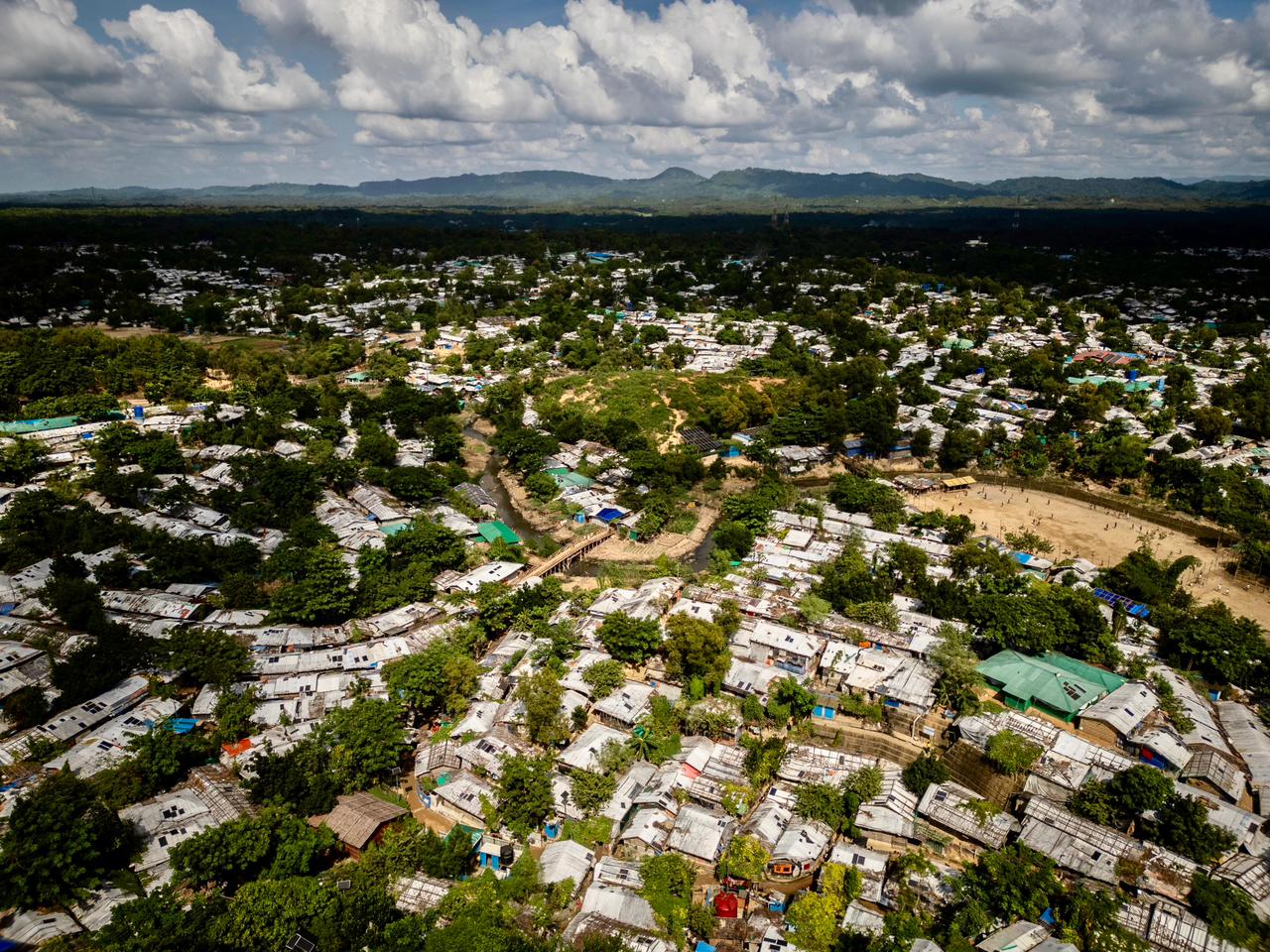
After August 25, 2017, refugee camps were established one after another in Ukhia and Teknaf. Over the years, a new generation of Rohingyas has grown up in the camps—many of them born as refugees despite having roots in Myanmar.
For nine years, Bangladesh has carried much of the responsibility for providing shelter, food, healthcare, education and security to the Rohingya population. The enormous humanitarian operation has also remained heavily dependent on international assistance.
But the arrival of more Rohingyas fleeing the conflict in Rakhine since 2024 has added another layer of complexity. While repatriation of those who arrived earlier remains stalled, registering and sheltering the newly arrived refugees has also become a pressing concern.
Foreign Secretary Asad Alam Siam said Bangladesh was continuing diplomatic efforts to build pressure through international and regional forums to ensure the safe, dignified and sustainable repatriation of Rohingyas.
He said Bangladesh was working diplomatically to keep the crisis on the international agenda and ensure effective action to resolve it despite wars, conflicts and humanitarian disasters elsewhere in the world.
Yet the reality on the ground is clear: nine years after the mass influx began, security and trust remain the biggest barriers to repatriation. Rohingyas want to return to their homeland, but they also want to return with citizenship, rights, security and dignity.
With conflict continuing in Rakhine, control over territory having changed and the Myanmar central government remaining locked in conflict with armed groups, the path to repatriation has become even more difficult.
From August 25, 2017 to August 25, 2026, not a single Rohingya has returned to Myanmar through the formal repatriation process. Instead, the crisis has become increasingly protracted, complex and multidimensional.
By Abdur Rashid Manik
Photo: UNHCR