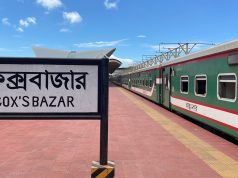

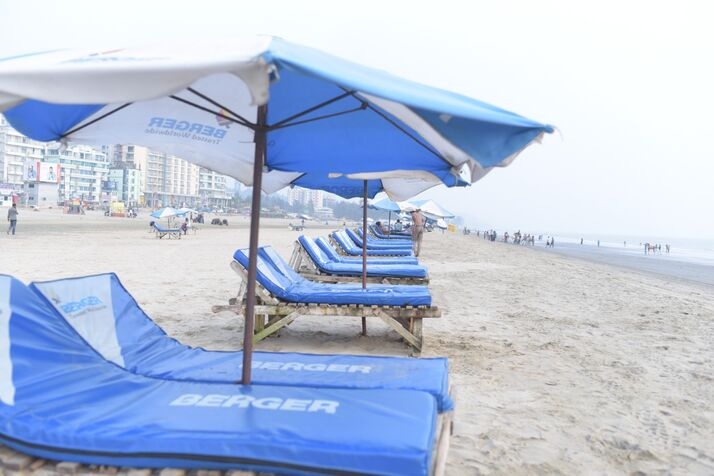
Cox’s Bazar has seen more than 250 new hotels, motels, and resorts emerge over the past five years as tourist arrivals continue to grow, but ensuring sustainable management has now become a major challenge for the country’s premier tourism destination.
The expansion has benefited the tourism economy, but rapid and often unplanned growth is raising concerns about the environment, urban management, and the carrying capacity of tourism areas.
Mukim Khan, general secretary of the Cox’s Bazar Hotel-Resort Owners’ Association, said the number of hotels and resorts in the district had increased by 200 to 250 over the past five years.
The association currently registers over 450 hotels and motels.
However, the actual number is believed to be higher. Tourism operators estimate that the number of hotels, resorts, cottages, and apartments along Kalatoli, Sugandha, Laboni, and the Inani-Teknaf road has crossed 550 to 600.
The rapid growth in accommodation facilities is also putting additional pressure on urban services.
Urban planners say traffic congestion and inadequate parking have emerged as major problems in the city. Congestion on major roads and near the beach has become a daily concern and could worsen during the upcoming tourism season.
Waste management at hotels, excessive groundwater extraction, and inadequate drainage are also emerging concerns.
Urban planners have warned that unplanned development could affect the coastal area’s natural characteristics, including its vegetation, sand dunes, and beachfront ecosystem.
Mahbubur Rahman, a representative of Cox’s Bazar civil society, stressed the importance of properly implementing the government’s development plans for the district.
Urban planner Hisam Uddin Chisty said simply increasing the number of hotels and resorts would not be enough.
“What is needed now is quality and sustainable management,” he said, stressing the need to consider construction plans, environmental impact assessments, waste management, water supply, and sewerage systems when approving new hotels and resorts.
Cox’s Bazar Deputy Commissioner Md A Mannan said various development initiatives, including implementing a long-term master plan, were underway to develop Cox’s Bazar as a planned tourism hub.
“The administration is also working to ensure a safe, clean, and attractive environment for tourists,” he said.
The growing pressure from tourists and the expansion of the accommodation sector are now realities of Cox’s Bazar’s tourism economy.
Tourism sector stakeholders say the challenge is to turn this growth into planned, environmentally friendly, and sustainable tourism. Failure to do so could put the destination’s long-term appeal at risk.
By Mohammad Morshed
Cox’s Bazar Life