
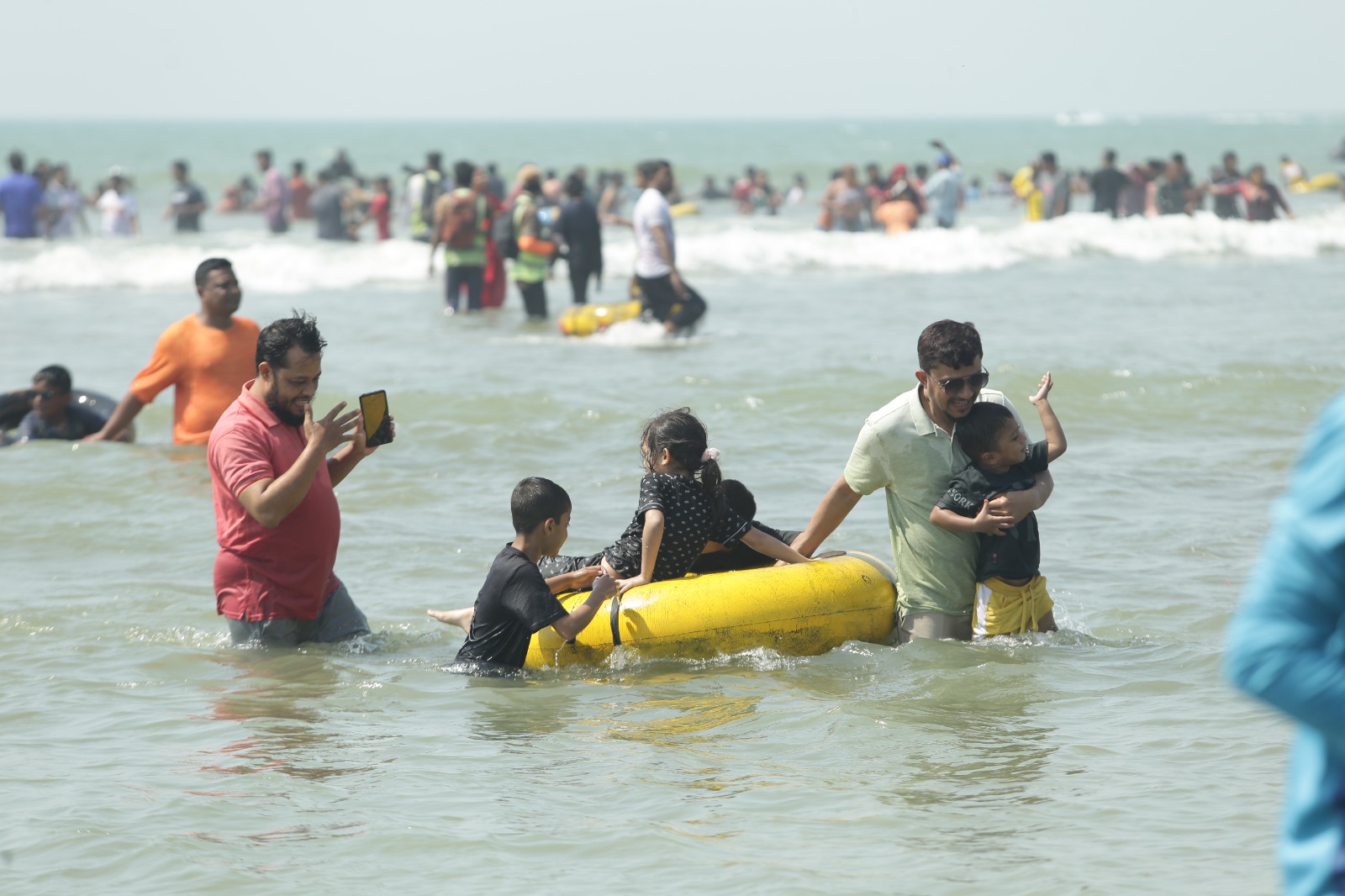
The sea, hills, islands and heritage sites make Cox’s Bazar one of Bangladesh’s most attractive destinations, and tourism generates substantial economic activity and government revenue. But questions remain about how much is spent on tourist safety, rescue services, children’s recreation, cultural programmes, and public amenities. Tourists say facilities for comfort and variety are limited, and rescue and first-aid services are unevenly accessible.
Little to do beyond the beach
Ramisa Haider, visiting from Dhaka’s Banasree, found no children’s park when her daughter Shimla asked for one. Monika Saha, from Cumilla, wanted evening music or dance performances, but with few programmes open to tourists outside hotels, her family listened to street children singing near the beach chairs.
Her father, Apan Saha, said the destination needed a wider range of activities. Her mother, Tithi Saha, said, “Cox’s Bazar has everything in nature; it is the management that is lacking.”
Mizanur Rahman Milky, convener of the Tour Operators Association of Cox’s Bazar (TOAC), said beggars, transgender people, street children and litter made a peaceful beach stay difficult, and the association had yet to see effective changes. Tourists Nimai, Ratul, and Arpan reported similar experiences, while Sushanta from Sylhet also cited hawkers’ persistent sales pitches.
Extra charges alleged at Maheshkhali ferry terminal
Atul Prasad’s family alleged paying Tk 50 per person against a Tk 5 terminal fee at the Bangladesh Inland Water Transport Authority (BIWTA) terminal in Cox’s Bazar, bound for Maheshkhali’s Adinath Temple, and sought clearer fare information. BIWTA employees said the fee was Tk 5 for locals and Tk 50 for tourists, a difference that has also prompted questions.
Gaps in safety and rescue services
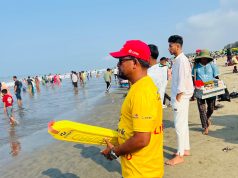
Turya, a tourist from Rajshahi, said his friend Simanta went missing in the sea near Sugandha point on September 18. They found no divers and, after rescuing two submerged friends, found no nearby first-aid centre; they took them by autorickshaw to Cox’s Bazar Sadar Hospital, about five kilometres away. A sea ambulance could not be arranged. Lifeguards, beach workers and Fire Service personnel recovered Simanta’s body about two and a half hours later. Turya said the experience raised serious questions about rescue and medical facilities.
Aritra Hasan, a University of Chittagong student, went missing at sea on July 25, 2025. More than a year later, his father, Sakib Hasan, questions bathing safety arrangements, red-flag placement in hazardous areas, and the authorities’ role, alleging repeated assurances have not produced the progress he expected.
According to the relevant lifeguard service, tourists bathe along about three kilometres of beach, but 27 lifeguards monitor only 1.5 kilometres; the rest reportedly lacks adequate visible guidance on bathing risks. Sea-Safe Lifeguard reported 40 deaths outside lifeguard coverage in the past three years.
Many attractions, little variety
Beyond the main beach, the district offers hills, rivers, waterfalls, Adinath Temple, Sonadia Island, Ramu’s Buddhist monasteries, tea and rubber gardens, Garjan forest areas, Matin’s Well, Saint Martin’s Island and Kutubdia’s lighthouse. According to the district administration and Bangladesh Parjatan Corporation, many remain little known because of gaps in promotion, transport, services, and planning.
Entertainment options are also limited: few children’s parks, family recreation centres, evening cultural shows, heritage programmes, night markets, walkways or beach sports for young people, so many tourists stay confined to the beach. Public toilets, changing rooms, signage, tourist-friendly transport and facilities for people with disabilities are also in question, affecting service quality, safety and long-term appeal.
Where is the accounting for tourism revenue?
Tourism business transactions, revenue deposited in the public exchequer, and direct spending on tourist facilities are not the same. Stakeholders say transparent accounts should show annual government tourism revenue, its sources, spending on management and infrastructure, and the lasting facilities created, including spending on safety, rescue, cleanliness, toilets, children’s recreation and cultural programmes, with results.
Rayhan Uddin Ahmed, manager of the Bangladesh Parjatan Corporation, said spending covers beach lighting, electricity bills, beach workers’ salaries and events, and the government plans an exclusive zone he hoped would offer wider facilities.
Deputy Commissioner Md Ab Mannan acknowledged limitations, saying the administration and ministries were working on them, and that lifeguards and beach workers were warning bathers, while Tourist Police and district police patrols were strengthened; he hoped tourists would feel safer.
Cox’s Bazar-3 lawmaker Lutfur Rahman Kajal said the area lacked diverse activities and organised facilities beyond natural attractions. He said the government was planning to reorganise tourism, with tourism-focused hubs along the 120-kilometre coastline.
Observers say the key question is how much tourism income translates into better safety, comfort and lasting facilities, which must become visible for Cox’s Bazar to match its natural assets.
By Tarekur Rahman
Photo: Hussain Shetu