Over Tk5 crore worth of dried fish remains unsold as daily sales plunge from Tk50,000 to Tk3,000
A quiet, secluded beach, the sound of waves, fishing trawlers moving across the sea, and flocks of seagulls flying overhead — Nazirartek offers a different coastal experience from the crowded beaches of Cox’s Bazar.
Located at the far end of Cox’s Bazar sea beach, Nazirartek remains largely overlooked despite its natural beauty and is home to South Asia’s largest dried-fish market. While thousands of tourists visit Kolatoli, Sugandha and Laboni points every day, relatively few make their way to this quieter stretch of the coast.
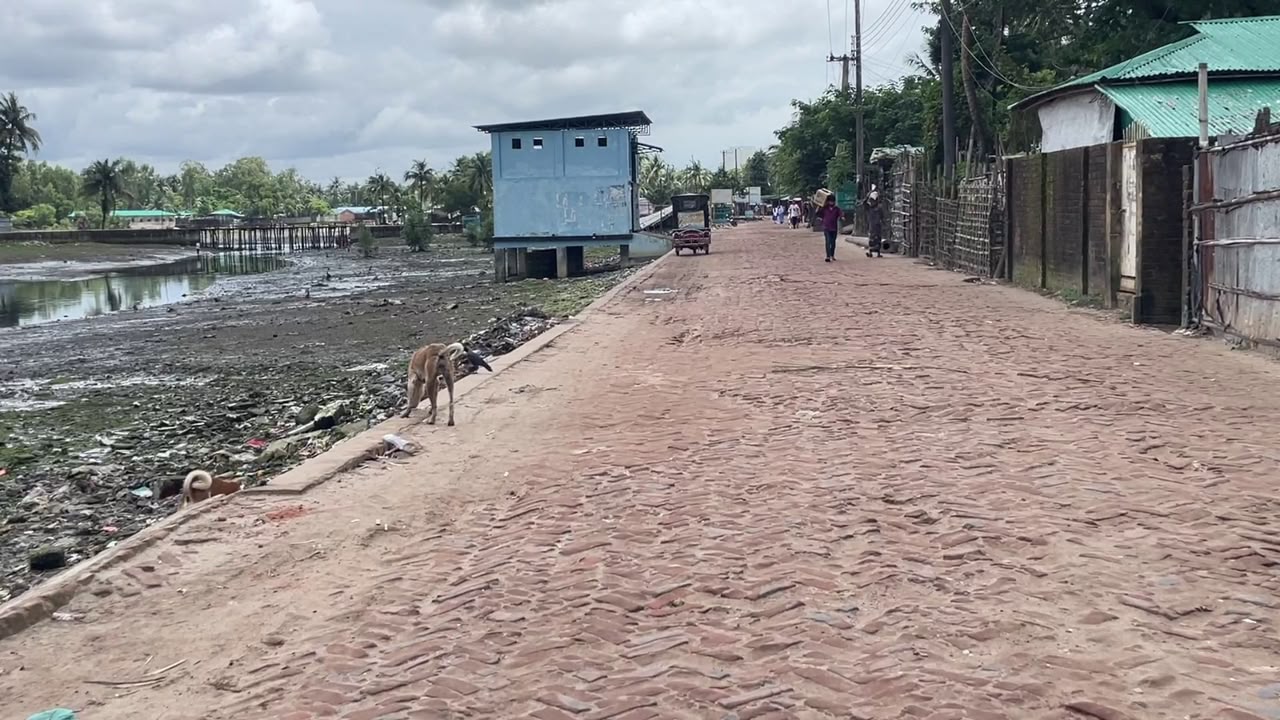
Local people say the beach has considerable tourism potential, but poor road conditions have become the main obstacle. The road connecting the area to the town has remained dilapidated for a long time, discouraging tourists and other visitors.
Local resident Rahim Uddin said Nazirartek had many attractions, but people were reluctant to visit because of the poor road. He said repairing it would increase tourist arrivals and benefit local residents.
One of the area’s major attractions is its dried-fish market, which has developed around a large wholesale and retail market. Buyers visit the area for different varieties of dried fish, including chhuri, loittya, maittya, popa and surma. The market also attracts tourists visiting Cox’s Bazar.
But traders say the poor road has reduced the number of tourists and buyers, leaving them struggling with unsold stocks. Traders say at least 45 shops in the market currently hold more than Tk5 crore worth of dried fish.
A visit to the market found shopkeepers waiting for customers. Some were passing time idly, while others listened to music on their mobile phones. Previously, individual shops sold dried fish worth Tk50,000 to Tk2 lakh a day. Sales at some shops have now fallen to just Tk3,000–Tk3,500.
At a shop named Fish Market on the western side of the road, dried fish of different varieties were displayed for sale. Chhuri was selling for Tk900–Tk3,000 a kilogram, loittya for Tk700–Tk2,200, maittya for Tk1,800–Tk2,500, popa for Tk600–Tk900 and surma for Tk1,000–Tk2,500.
Other varieties included lakshya at Tk2,500–Tk3,500 a kilogram, shrimp at Tk500–Tk1,300, kamila at Tk800–Tk1,200 and small dried fish at Tk300–Tk600.
Mohammad Faruk, manager of Fish Market, said his shop had around Tk7 lakh worth of dried fish in stock. Daily sales, which used to reach Tk50,000, had fallen to Tk3,000–Tk3,500.
He said dried fish sales depend heavily on tourist arrivals.
The neighbouring Shutki Market has around Tk12 lakh worth of dried fish in stock. Its owner, Mohammad Mojibur Rahman, said he had stored a large quantity of dried fish anticipating a shortage in the market but had not received the expected response from tourists.
Some local traders buy dried fish wholesale from his shop and sell it at retail outlets across the town, adding Tk100–Tk300 to the price per kilogram, he said.
Other shops, including Shutki Plus, Shah Jabbaria Shutki Bitan, Allandan Shutki Arat and Shutki Mart, are facing similar difficulties. Each has stocks worth Tk7 lakh to Tk20 lakh, but sales remain low because customers are scarce.
Traders who borrowed from banks to stock dried fish are now struggling to repay their instalments and meet business expenses.
Azizur Rahman, a shop owner, said he took a bank loan to buy dried fish, but declining sales have made repayment difficult. If the situation continued, he said, sustaining the business would become increasingly difficult.
Traders said nearly two kilometres of road through Samitipara, Kutub Bazar and Paschim Kutubdiapara remained in poor condition on the route from the town to Nazirartek. The stretch of about one kilometre leading into Nazirartek through Kutubdiapara has become almost unusable.
At least 20,000 local residents use the road, along with tourists and traders travelling to the dried-fish market and beach.
Traders said tourists often chose not to return after experiencing the poor road conditions during their first visit. The resulting decline in tourist arrivals has hit dried-fish businesses, which depend partly on tourism.
A shortage of fish in the sea and lower dried-fish production have further worsened the business downturn, they added.
Asked about plans to repair the road, Cox’s Bazar Municipality engineering department sub-assistant engineer Shimul Chandra Das told Cox’s Bazar Life that a survey had been completed under the municipality’s supervision as part of the Rural Urban Transport Development Project (RUTDP).
Work on the road was likely to begin within the next four to five months, he said, adding that its completion would ease the long-standing difficulties faced by local residents.
Residents and traders say Nazirartek is not merely a dried-fish market but also an important potential tourism destination for Cox’s Bazar. They believe that planned development, improved road links and a tourist-friendly environment could turn the secluded beach into a new attraction.
They have called for the road to be repaired quickly so that the area’s tourism potential can be realised.
By Abdu Rashid Manik
Photo: Abdu Rashid Manik