
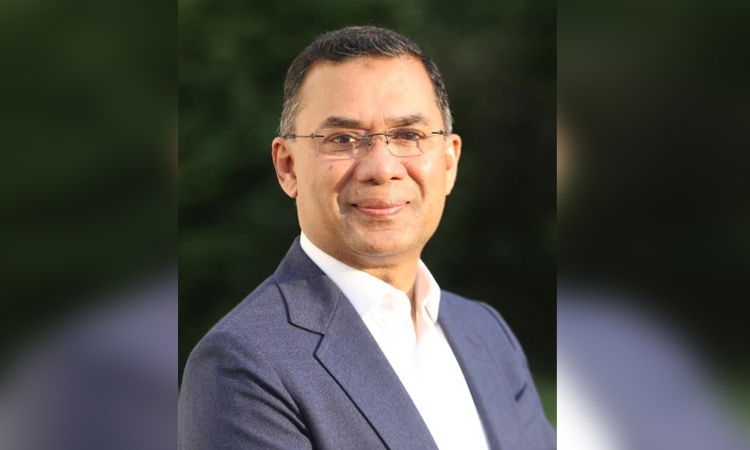
As Bangladesh’s Prime Minister celebrates his first birthday in office, the nation looks towards a new chapter of democratic aspirations and national development.
November 20 is a special day for Bangladesh. It marks the birthday of Tarique Rahman, the country’s Prime Minister and Chairman of the Bangladesh Nationalist Party (BNP). This year, the occasion carries a particular significance as he celebrates his 62nd birthday, his first birthday as the elected head of government of Bangladesh. It is not merely a personal milestone; it is also an occasion to reflect on a remarkable political journey marked by struggle, sacrifice, perseverance and an eventual triumph through democratic means.
Tarique Rahman’s journey to the highest office of the state was neither easy nor smooth. It was shaped by political challenges, years of exile, personal suffering and an enduring commitment to democratic rights. From being a young political organiser to leading a major political party and eventually securing a landslide victory in the 13th parliamentary election, his journey represents one of the most significant political developments in Bangladesh’s recent history.
Born on November 20, 1965, Tarique Rahman grew up in a family deeply involved in the country’s political history. His father, Shaheed President Ziaur Rahman was a valiant Freedom Fighter, Proclaimer of Independence in 1971 and first elected president of Bangladesh, while his mother, Begum Khaleda Zia, a democratic champion, served three times as the country’s prime minister. Growing up in such an environment, he witnessed political struggles, public service and the importance of democratic values from an early age.
His formal involvement in politics began in 1988, when he took primary membership of the BNP in Gabtali Upazila of Bogura, the birthplace of his father. He subsequently became a member of the Bogura district BNP in 1993. His early political experience gradually helped him develop organisational skills and an understanding of grassroots politics.
During the 1991 parliamentary election, Tarique Rahman played an important role in mobilising public support for his mother’s election campaign. As a member of the party’s National Campaign Strategy Committee, he coordinated campaigns in five constituencies contested by Begum Khaleda Zia. Her victory in all five constituencies demonstrated his emerging organisational ability and political acumen.
He further consolidated his position within the party during the 2001 parliamentary election. His organisational strategies and grassroots mobilisation contributed to the nationwide electoral wave in favour of the BNP. The party secured a two-thirds majority, and in recognition of his contribution, the BNP Standing Committee unanimously appointed him Senior Joint Secretary-General in 2002. After taking charge, he travelled across the country and organised grassroots representatives’ conventions nationwide to strengthen the party. Then he became widely known as “Another Zia.”
However, his growing political influence also brought severe challenges. The military-backed caretaker government of 2007 subjected him to arrest and detention. He was reportedly subjected to physical and mental torture during his confinement, suffering serious health complications, including spinal injuries. Eventually, he had to leave Bangladesh for London to receive medical treatment. What was initially a journey for medical recovery turned into nearly 17 years of exile.
But geographical distance could not separate him from the politics and people of Bangladesh. Even while living in London, Tarique Rahman remained actively engaged with his party’s leadership and grassroots workers. He continued to provide political direction, maintain organisational unity and campaign for the restoration of democratic rights. From London, he spent up to 16 hours a day coordinating party activities through video conferences with party leaders and activists.
During the nearly 16-year fascist rule of the Awami League government led by Sheikh Hasina, the BNP faced repeated political challenges, including arrests, legal cases, restrictions on political activities and allegations of repression. Tarique Rahman himself became the target of numerous criminal cases, which were politically motivated. A ban was imposed on media coverage of Tarique Rahman’s statements. Even he was exposed to staged trial as the court handed down verdicts convicting him one after another. Despite these circumstances, he continued to lead the party from abroad and remained a central figure in the opposition’s movement for democracy.
His mother, Begum Khaleda Zia, was also imprisoned in 2018, further deepening the political crisis within the Zia family. In the same year, Tarique Rahman assumed the responsibility of acting chairman of the BNP. His leadership during this difficult period was instrumental in maintaining the party’s organisational structure and political momentum.
The political landscape of Bangladesh changed dramatically following the July-August 2024 mass uprising. The movement, which resulted in the deaths of around 1,400 people and injuries to thousands more, brought an end to Sheikh Hasina’s nearly 16-year autocratic rule on August 5, 2024. The uprising also created a new opportunity for Bangladesh to return to a democratic political process.
For Tarique Rahman, the moment marked the beginning of a new chapter. After nearly 17 years away from his homeland, he finally returned to Bangladesh on December 25, 2025. His homecoming was greeted by millions of people, supporters and well-wishers.
However, his homecoming was soon overshadowed by a personal tragedy. Just five days after his return, his mother, Begum Khaleda Zia, passed away. On January 9, 2026, he assumed the chairmanship of the BNP, taking forward the political legacy of his parents at a particularly challenging moment.
The decisive moment came with the 13th parliamentary election held on February 12, 2026. Under his leadership, the BNP secured a landslide victory, winning 211 parliamentary seats. The election was widely welcomed by international observers, including the European Union Election Observation Mission, which described the electoral process as credible and broadly in line with democratic standards. Tarique Rahman subsequently assumed office as the Prime Minister of Bangladesh.
His electoral victory was particularly significant against the backdrop of the controversial elections held in 2014, 2018 and 2024, which had severely undermined public confidence in the country’s electoral institutions. The 2026 election offered voters an opportunity to participate in a competitive political process and choose their representatives through the ballot.
Now, as Tarique Rahman celebrates his 62nd birthday, he does so from a position he once struggled for years to reach. His first birthday as Prime Minister is therefore more than a celebration of age. It is a moment that symbolises the extraordinary distance he has travelled-from political adversity and forced exile to electoral success and national leadership.
Yet, assuming the highest office is only the beginning of another demanding journey. The expectations of the people are enormous. They want good governance, accountability, economic stability, employment opportunities, quality education, improved healthcare, stronger institutions and the restoration of public confidence in the state. They also expect a political culture where differences are respected and democratic institutions function independently.
Tarique Rahman has repeatedly spoken of his plans for the people and the country. Now, with the mandate of the electorate and the responsibility of governing, he has the opportunity to translate those promises into tangible achievements.
Yes, he is steadily moving forward towards that goal. Upon returning home, Tarique Rahman told millions of people, “I have a plan.” It was more than a political slogan. It was a firm commitment to transform the country and improve the lives of its people. Over the past nine months, various initiatives undertaken by his government have begun to reflect the implementation of that vision.
A range of people-oriented programmes has been introduced. These include the Family Card to provide financial assistance to low-income households, the launch of the Farmer Card, the waiver of agricultural loans for small and marginal farmers, financial support for working-class people, and the Health Card to expand access to healthcare. Other initiatives include expanding higher education opportunities for girls, introducing mid-day meals in primary schools, clearing outstanding dues of retired MPO-listed teachers, and providing honorariums to imams and muezzins. Alongside these measures, the government is pursuing canal excavation, tree plantation, increased investment and job creation, as well as various initiatives to revitalise the economy. The central objective is to improve people’s living standards while strengthening the foundations of the national economy.
Even as the country’s highest executive authority, Tarique Rahman has maintained a modest lifestyle. His preference for simple white attire, avoidance of unnecessary protocol, and willingness to wait at traffic signals like any other citizen despite being stuck in traffic reflect a distinct approach to leadership. His emphasis on tolerance towards political opponents and the practice of non-violent politics also sends a positive message.
Even amid recent incidents of arson, vandalism and attacks on the residences of ruling party lawmakers in different parts of the country, the government has focused on restoring calm and maintaining law and order rather than pursuing a politics of retaliation. The peaceful celebration of this year’s Durga Puja has also offered a positive example of the government’s efforts to uphold communal harmony.
Taken together, these initiatives suggest a visible effort to translate the vision behind Tarique Rahman’s declaration, “I have a plan,” into reality. Through welfare-oriented programmes, a modest personal lifestyle, responsible governance and an emphasis on political tolerance, he is seeking to turn that promise into tangible outcomes for the people and the country.
On this special occasion, the nation has reason to reflect on his long political journey and the responsibilities that lie ahead. His 62nd birthday comes at a defining moment in Bangladesh’s democratic history. It offers an opportunity to wish him good health, wisdom, strength and success in fulfilling the aspirations of the people.
Happy Birthday, Prime Minister Tarique Rahman. May your new year of life bring renewed commitment to democracy, justice, national unity and the welfare of the people of Bangladesh. May your leadership help build a peaceful, prosperous and democratic Bangladesh for generations to come.
Cox’s Bazar Life Desk/BSS