

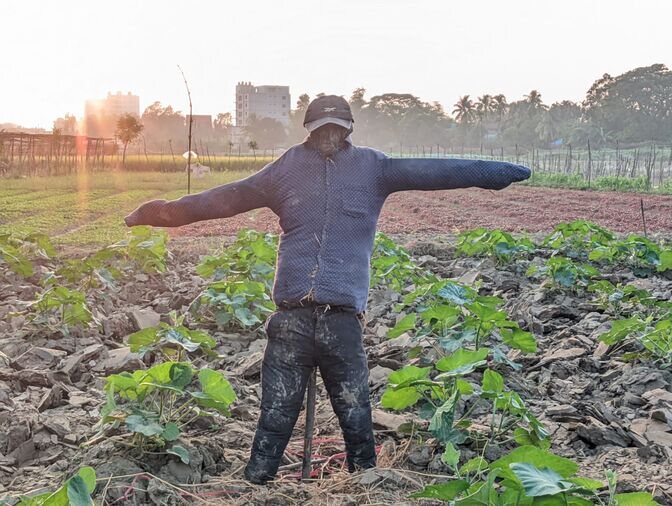
With its lifeless face, it holds no protest and shows no recklessness. It doesn’t laugh, it doesn’t cry, it doesn’t walk, and it doesn’t speak. The scarecrow remains unmoving and steadfast, standing its ground through monsoon rains, storms, and harsh heat.
Over time, however, scarecrows have faded into the past. Today, most farmers rely on modern agricultural techniques, using chemical fertilizers and pesticides to cultivate crops and ward off pests.
Yet, some farmers still employ the traditional method of scarecrows to protect their fields.
In the village of Nayapara in Bangla Bazar, Cox’s Bazar, Nurul Hakim continues cultivating winter vegetables, watching over his fields with his handmade scarecrow.
Crafted to ward off birds from damaging the crops, it stands tall, almost human-like, from afar.
Farmers strategically position the scarecrow, a crude effigy of a person, to prevent crows and other animals from feasting on crops.
It serves as a silent guardian, a reminder of more straightforward agricultural practices once central to farming life.
By Rajin Saleh