
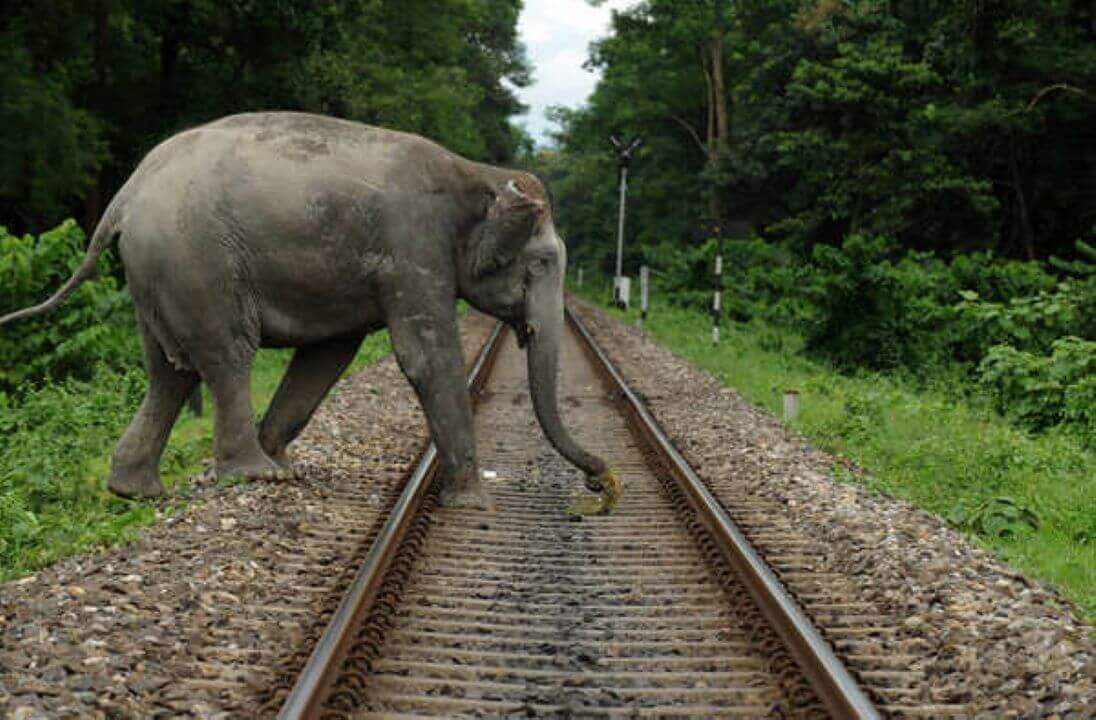
The new Dohazari-Cox’s Bazar railway line, cutting through traverses three forested areas, is likely to disrupt the movement of critically endangered Asian elephants that rely on these forests as corridors.
Elephant experts and forest officials emphasize the importance of these corridors for Worelephants, which use them to travel between habitats in search of food and water. They believe that the overpasses and underpasses constructed by Bangladesh Railway are insufficient and could endanger the elephants’ survival.
Out of the 102-kilometer rail line, 27 kilometers pass through the Chunati Wildlife Sanctuary, Fasiakhali Wildlife Sanctuary, and Medhakoccopia National Park—key habitats for Asian elephants in the Chattogram-Cox’s Bazar region. These corridors were first documented in 2016 by the International Union for Conservation of Nature (IUCN) during a survey of the regional elephant population.
In 2016, the government de-reserved 276 acres of forest, felled 720,443 trees, and altered 26 hills to facilitate rail line construction, as detailed in a forest department inventory report.
Construction of the Dohazari-Cox’s Bazar railway began in March 2018.
As part of the ongoing construction, Bangladesh Railway has built one overpass and two underpasses, following recommendations from the project’s funding partner, the Asian Development Bank.
International Union for Conservation of Nature’s (IUC) Elephant Route Identification Study in 2014 identified 16 key crossing points along the 27-kilometer track and recommended overpasses at 13 of them. The decision to reduce the number of overpasses will increase the risk of elephant-train collisions and risk the elephants’ survival as the height of the underpasses is inadequate for large animals like elephants to pass through, it noted.