
Cox’s Bazar is witnessing a gradual rise in dengue infections even as health authorities continue efforts to contain an ongoing measles outbreak, with officials urging residents to remain vigilant during the monsoon season.
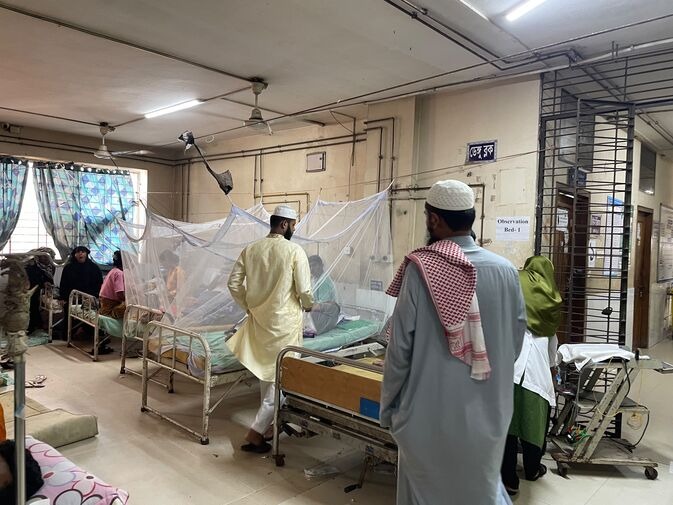
According to the Civil Surgeon’s Office, 176 dengue cases were reported in the district between January 1 and July 2 this year. As of the latest update, 15 patients were receiving treatment at hospitals across the district.
Of those undergoing treatment, 11 were admitted to Cox’s Bazar Sadar Hospital, 2 to Ukhiya Upazila Health Complex, and 2 to Moheshkhali Upazila Health Complex.
During the past 24 hours, 10 patients were discharged after recovery, while five new patients were admitted. Four of the newly admitted patients are residents of the Rohingya camps in Ukhiya and Teknaf, while the remaining patient is from Moheshkhali.
Pankaj Pal, a statistical officer at the Civil Surgeon’s Office, said no dengue-related deaths had been recorded in the district so far this year, despite 176 confirmed cases.
“This is encouraging, but everyone must remain vigilant. Most dengue patients recover if they receive timely treatment,” he said.
Higher infection rate in Rohingya camps
Health department data show that dengue infections are significantly higher in the Rohingya camps than among the host community.
From January 1 to July 2, a total of 471 dengue cases were reported in the Rohingya camps in Ukhiya and Teknaf. However, no dengue-related deaths have been recorded in the camps during the period.
Health experts attributed the higher infection rate to overcrowded living conditions, stagnant water during the monsoon and environmental factors that create favourable breeding grounds for Aedes mosquitoes.
They said surveillance and public awareness campaigns had been intensified in the camps to curb the spread of the disease.
Authorities intensify awareness campaign
Civil Surgeon Dr Mohammad Saber said the health department, district administration, local government bodies and other government and non-government organisations were jointly carrying out extensive dengue prevention campaigns across the district.
He said awareness rallies, leaflet distribution, public campaigns and community meetings had already been organised, with preventive activities extended to remote areas.
The programmes are being implemented in coordination with upazila health complexes, upazila health and family planning officers and local administrations. Awareness activities have also been launched in educational institutions to educate students about dengue prevention.
“The government has issued comprehensive guidelines for dengue prevention, and we are making every effort to implement them at the field level. However, controlling dengue will not be possible without public awareness,” he said.
Symptoms and medical advice
Assistant Professor Dr Mohammad Shahjahan Nazir of the Department of Infectious Diseases and Tropical Medicine at Cox’s Bazar Medical College said dengue is a viral disease transmitted by Aedes mosquitoes.
He said the main symptom is a high fever, which may range from 99 to 106 degrees Fahrenheit and can persist continuously or subside before returning.
Other common symptoms include severe body aches, headache, pain behind the eyes, nausea and skin rashes.
He urged people experiencing such symptoms to seek medical attention without delay.
“Many people buy medicines from nearby pharmacies as soon as they develop a fever. This can be risky. Anyone suspected of having dengue should consult a qualified physician because inappropriate medication, particularly certain painkillers, may increase the risk of bleeding,” he said.
Prevention remains the best defence
Dr Saber said Aedes mosquitoes breed in clean, stagnant water.
He urged residents to prevent water from accumulating in flower pots, rooftops, discarded containers, tyres, coconut shells and other places where clean water may remain for two to three days.
He also advised people to keep their homes and surroundings clean, avoid mosquito bites during the daytime—particularly in the morning and late afternoon—and use mosquito nets where necessary.
Health officials also recommended installing screens on doors and windows to reduce mosquito entry, especially in high-risk areas such as the Rohingya camps.
The health department warned that the risk of dengue could increase further during the monsoon and urged people not to ignore fever, but to seek prompt testing and medical advice while eliminating mosquito breeding sites around their homes.
By Abdu Rashid Manik
Photo: Abdu Rashid Manik