
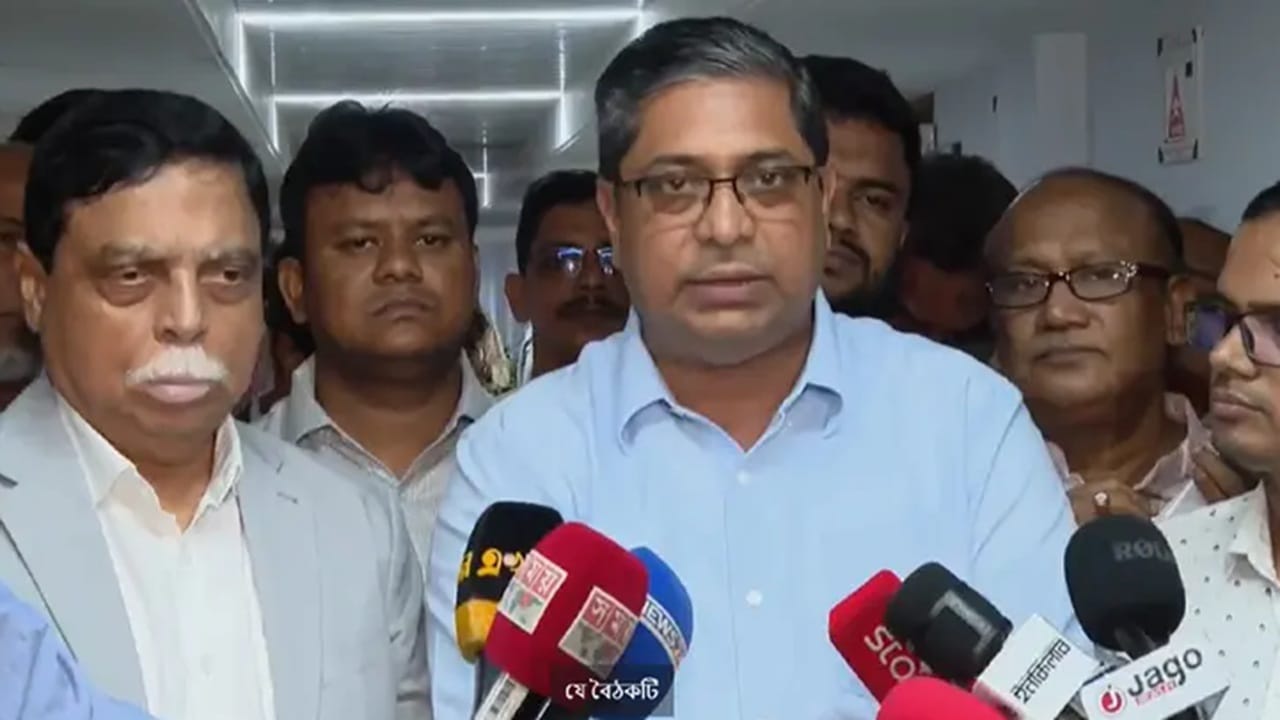
The Danish government will provide Tk 100 crore for water treatment in the Rohingya camps in Bangladesh, said State Minister for Local Government, Rural Development and Cooperatives Mir Shahe Alam.
He also said Denmark had expressed interest in investing in Bangladesh’s renewable energy and waste management sectors.
The state minister disclosed the information while speaking to journalists after a meeting with the Danish ambassador on Tuesday.
He said a meeting with the Election Commission would be held next week to discuss preparations for the local government elections.
Regarding water supply to Dhaka, Mir Shahe Alam said the government had undertaken the Tk 16,000-crore Sayedabad Project to bring water from the Meghna River. The project is expected to supply 950 million litres of water to Dhaka every day.
The project began in 2015 and now targets completion by 2029, he said, though it was originally scheduled for 2030. Work worth Tk 11,000-12,000 crore has already been completed.
The Danish government will provide around Tk 4,500 crore in assistance for the final phase of the Sayedabad Project, the state minister said. Of this, Tk 1,500 crore will be provided as a grant and the remaining Tk 3,000 crore as a low-interest loan, repayable over 20 years.
He also said the prime minister had directed authorities to explore desalination as an alternative water source to reduce pressure on groundwater.
The government is planning feasibility studies at locations such as Chandpur and Mongla, he said, adding that the Asian Development Bank had assured support for the initiative.
According to the state minister, the government plans to distribute treated water across the country at the district and upazila levels through pipelines, in a system similar to gas distribution.
He said around 74 per cent of Dhaka’s water currently comes from groundwater, which is environmentally risky and increases the potential for earthquakes. According to international standards, he added, groundwater should account for around 30 per cent of the city’s water supply.
Cox’s Bazar Life Report
Photo: Courtesy