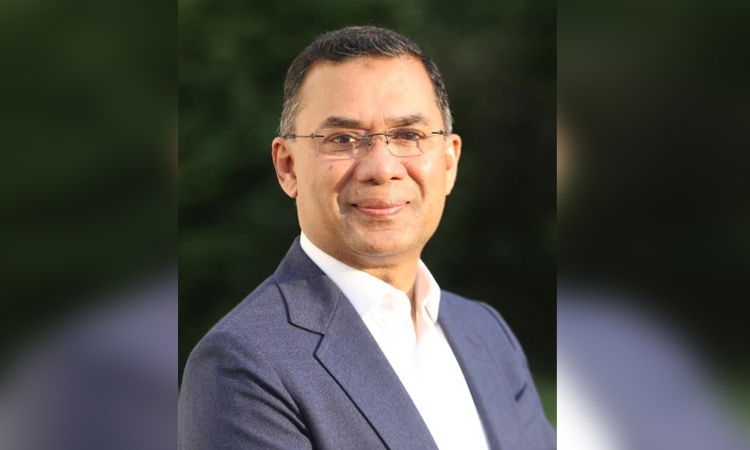
Prime Minister Tarique Rahman’s three-day official visit to Turkiye to attend the COP31 has opened fresh avenues for Bangladesh to advance its climate interests, strengthen bilateral relations and expand international economic and diplomatic cooperation.
The visit, from November 10 to 12, brought Bangladesh’s climate vulnerability and demands for climate justice to the attention of world leaders and provided the prime minister with an opportunity to engage directly with the leaders of Turkiye, Australia, China, Uzbekistan and several other countries.
His presence at the World Leaders’ Summit of the 31st Conference of the Parties (COP31) to the UN Framework Convention on Climate Change was very significant for Bangladesh, particularly at a time when the country is badly exposed to the adverse impacts of climate change despite contributing less than 0.5 percent of global greenhouse gas emissions.
Climate justice at the centre of Bangladesh’s position
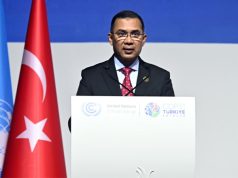
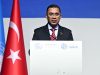
Addressing the High-Level Segment of COP31 on November 12, Tarique Rahman presented five urgent proposals for protecting climate-vulnerable countries, calling for a more equitable international climate finance system.
He urged the international community to allocate at least 50 percent of international climate finance to adaptation, introduce debt-relief measures for vulnerable countries, ensure fair access to climate-friendly technologies, accelerate the transition to renewable energy and adopt the proposed Belem-Antalya Action Mechanism for a just transition.
Emphasising that climate-vulnerable countries need grants rather than additional loans, he argued that the existing climate finance system does not adequately reflect the needs and priorities of developing nations.
The prime minister also highlighted Bangladesh’s commitment to achieving sustainable economic growth alongside environmental protection. He outlined the government’s target of meeting 20 percent of the country’s electricity needs from renewable sources by 2030 and developing 4,000 megawatts of solar power capacity.
He further referred to plans to plant 250 million trees over five years, excavate 20,000 kilometres of rivers and canals, promote waste-to-energy initiatives and restore mangrove forests to strengthen coastal protection.
The country’s nearly 300 LEED-certified ready-made garment factories, promotion of environmentally friendly jute products and initiatives to develop a national carbon-trading framework were also highlighted as examples of its green transition.
For Bangladesh, the importance of the address lies in taking its climate concerns beyond a general appeal for assistance and placing specific demands on adaptation financing, technology transfer, debt sustainability and equitable energy transition before the international community.
The proposals also provide Bangladesh with a clear diplomatic framework for subsequent negotiations with development partners and climate financing institutions.
Meeting with Erdogan gives fresh impetus to Dhaka-Ankara ties
A major highlight of the visit was the prime minister’s bilateral meeting with Turkish President Recep Tayyip Erdogan at the Maxx Royal Hotel in Antalya on November 10.
The approximately 30-minute meeting, attended by Foreign Minister Dr Khalilur Rahman and State Minister for Foreign Affairs Humaiun Kobir, focused on strengthening political relations, expanding mutual cooperation and discussing international issues.
The two leaders also discussed Bangladesh’s potential contribution to promoting peace and stability in the Muslim world.
Tarique Rahman highlighted Bangladesh’s long experience and contribution to United Nations peacekeeping operations, underscoring the country’s capacity to contribute to international peace and security.
The meeting was significant in the context of growing economic and commercial engagement between Dhaka and Ankara. Expanding bilateral trade, investment and cooperation in key sectors offers opportunities for Bangladesh to attract Turkish investment, benefit from technological expertise and explore new avenues for industrial development.
Turkiye’s experience in manufacturing, infrastructure, defence-related industries, renewable energy and waste management could offer areas for further cooperation.
The prime minister’s engagement with Erdogan also provided an opportunity to strengthen political understanding between the two countries and explore Bangladesh’s role in broader international and Islamic diplomatic initiatives.
Although no specific new agreement or financial commitment was announced during the meeting, the high-level engagement reinforced the political foundation for expanding bilateral cooperation.
Engagements with China, Australia, UK and Uzbekistan
The prime minister’s meetings with other international leaders were equally important in terms of Bangladesh’s economic and strategic interests.
In his meeting with Chinese Vice President Han Zheng on November 11, Tarique Rahman discussed strengthening political and economic relations, with particular emphasis on Chinese investment in energy, heavy industries, infrastructure and employment generation.
China is already an important development and investment partner of Bangladesh. The discussion offered an opportunity to encourage greater Chinese participation in infrastructure development and industrial expansion, particularly in sectors capable of generating employment and supporting economic growth.
With Australian Prime Minister Anthony Albanese, Tarique Rahman sought cooperation in expanding Australian investment in Bangladesh and securing the safe repatriation of Rohingyas sheltered in Bangladesh to their homeland in Myanmar.
The Rohingya issue remains a major humanitarian, security and economic challenge for Bangladesh. Australia’s diplomatic engagement could therefore be valuable in maintaining international attention on the crisis and encouraging greater pressure for a sustainable solution.
In his meeting with British Foreign Secretary Edward Miliband, Tarique Rahman sought stronger British diplomatic engagement to ensure the safe, voluntary and dignified return of Rohingyas to Myanmar.
They also discussed Bangladesh’s climate adaptation initiatives, migration and ways to strengthen economic relations.
The discussion was particularly relevant given the United Kingdom’s diplomatic influence and its role in international development and climate cooperation.
Another important engagement was with Uzbek President Shavkat Mirziyoyev. The two leaders discussed establishing direct air connectivity, easing visa procedures and expanding cooperation in different fields.
The Uzbek president invited Tarique Rahman to visit Uzbekistan, while the prime minister expressed hope of undertaking the visit in the new year.
Improved air connectivity and easier visa procedures could facilitate trade, tourism, business exchanges and people-to-people contacts between the two countries.
Wider international outreach
Apart from the formal bilateral meetings, the prime minister exchanged views and greetings with several other world leaders and senior representatives of international organisations during the summit.
He paid courtesy calls on the presidents of Brazil, the Maldives, Iran, Syria and Somalia, as well as the prime ministers of Moldova, Pakistan and Kuwait.
He also met Organisation of Islamic Cooperation (OIC) Secretary-General Ismail Ould Cheikh Ahmed and London Mayor Sadiq Khan, among other dignitaries.
In his discussions with Syrian President Ahmed al-Sharaa, the latter sought Bangladesh’s cooperation in reconstruction, investment, skilled manpower and employment.
His meeting with Pakistani Prime Minister Shehbaz Sharif covered regional stability, the Middle East situation and issues of mutual interest, while discussions with Kuwaiti Prime Minister Sheikh Ahmad Abdullah Al-Ahmad Al-Sabah focused on traditional friendly relations and opportunities for stronger investment and economic partnerships.
The leaders also congratulated Tarique Rahman on Bangladesh’s democratic transition and his electoral mandate, expressing interest in strengthening relations with the country.
These engagements enhanced Bangladesh’s diplomatic visibility and provided opportunities to explore cooperation with countries across South Asia, the Middle East, Central Asia and Europe.
Zubaida’s engagement with Turkish First Lady
The participation of Prime Minister’s wife Dr Zubaida Rahman added an important environmental and diplomatic dimension to the visit.
A major highlight was her meeting with Turkish First Lady Emine Erdogan, wife of President Recep Tayyip Erdogan, during a luncheon hosted for spouses of heads of state and government and distinguished guests at the Regnum Hotel in Antalya on November 12.
The two exchanged greetings and held cordial discussions, while Dr Zubaida also met spouses of other international leaders.
She subsequently joined Emine Erdogan in inaugurating the Zero Waste Museum, an initiative showcasing practical approaches to waste reduction, recycling, resource conservation and environmental protection.
The Turkish First Lady launched the Zero Waste movement in 2017, promoting sustainable consumption, recycling and responsible management of natural resources.
Dr Zubaida’s participation was particularly relevant to Bangladesh’s efforts to promote waste management, recycling and environmentally sustainable development.
She also attended a side event on zero-waste management, where she highlighted the government’s initiatives to transform waste into resources and energy and stressed the importance of international technical cooperation.
Earlier, Prime Minister Tarique Rahman and Dr Zubaida attended a dinner hosted by President Erdogan and the Turkish First Lady in honour of world leaders participating in COP31.
These engagements offered an additional platform for environmental cooperation and people-to-people diplomacy beyond formal government-level discussions.
Bangladesh Pavilion at COP31 venue
Prime Minister Tarique Rahman also visited the Bangladesh Pavilion at the conference venue, where he toured an exhibition of environmentally friendly jute products and viewed presentations on the country’s environmental conservation initiatives.
The pavilion provided an opportunity to showcase jute as a biodegradable and sustainable alternative to plastic and other synthetic materials, potentially opening opportunities for international markets and investment in Bangladesh’s jute sector.
Bangladesh also planned side events on women’s particular vulnerability to climate change and the challenges of promoting biodegradable, zero-waste jute products as alternatives to synthetic polymers.
A broader diplomatic opportunity
Overall, the visit provided Bangladesh with an opportunity to combine climate diplomacy with economic engagement and international political outreach.
While the climate proposals and bilateral discussions will require sustained follow-up to translate into concrete financial support, investment and cooperation, the visit helped articulate Bangladesh’s priorities at the highest international level.
For a climate-vulnerable country facing mounting environmental and economic pressures, the challenge now will be to turn the diplomatic contacts, policy proposals and expressions of interest secured in T rkiye into tangible benefits for its people.
Cox’s Bazar Life Desk/BSS