
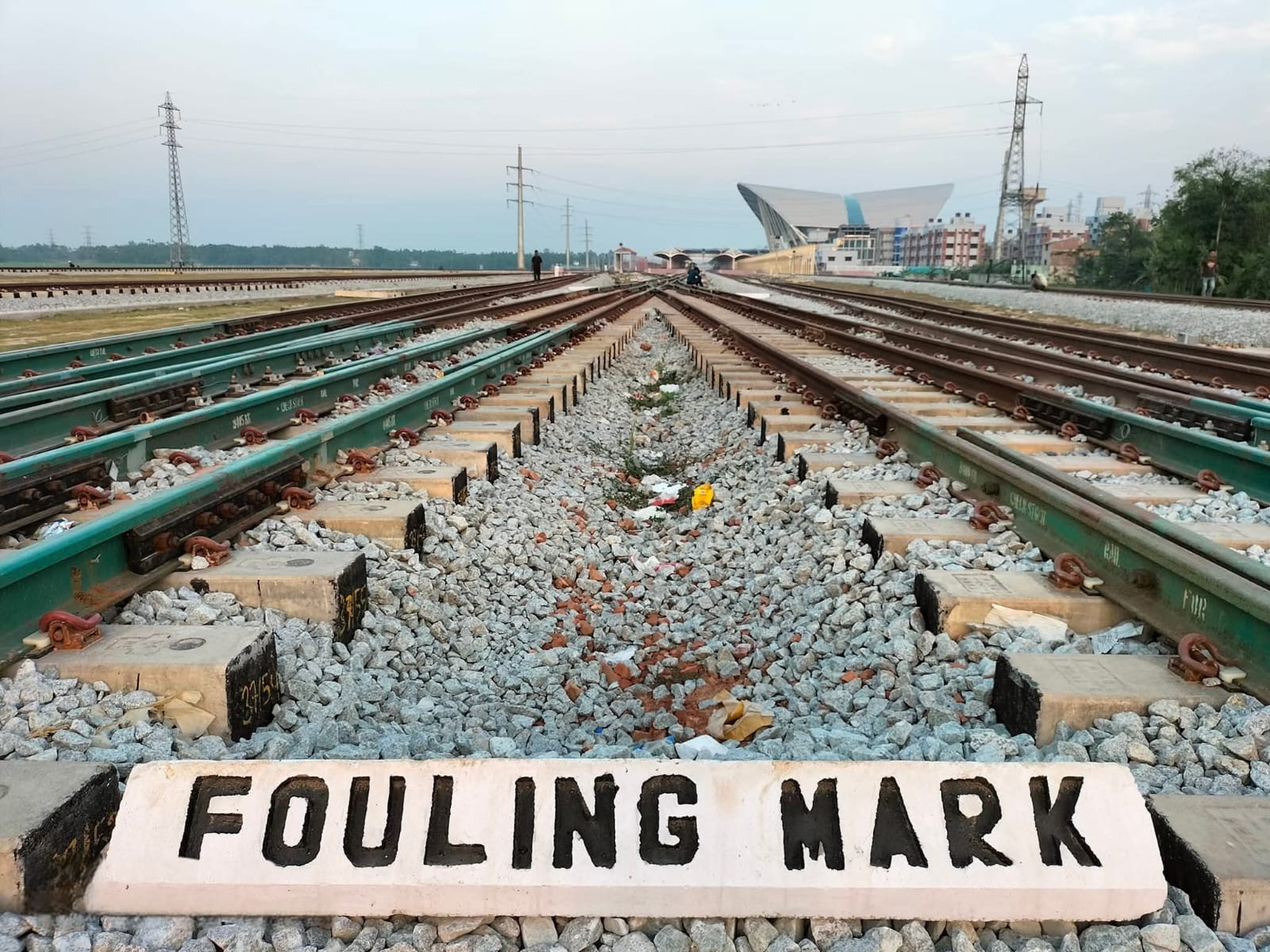
The railway link to Cox’s Bazar has opened new opportunities for tourism and the local economy, but Bangladesh Railway has yet to utilise the full capacity of the Tk11,335-crore project.
Although the infrastructure is ready to handle up to 14 pairs of trains a day, only five pairs are currently operating because of shortages of locomotives and coaches.
The limited service is leaving passenger demand unmet and costing the railway opportunities to increase revenue.
According to railway officials, the Cox’s Bazar route was designed to accommodate 14 pairs, or 28 trains, a day.
Train services officially began on 1 December 2023, but the railway has yet to reach the planned capacity three years later.
Currently, five pairs of trains run from Dhaka and Chattogram to Cox’s Bazar.
Ticket demand to Cox’s Bazar rises sharply during the tourist season.
With limited trains, many tourists are forced to travel by road, despite the longer journey and greater exposure to road accidents. Rail could have offered a more comfortable alternative.
Railway officials said several trains operating between Chattogram and Chandpur, Sylhet and Mymensingh could potentially be extended to Cox’s Bazar.
This would create direct rail links between the resort town and several other regions, while boosting tourism and local businesses.
But locomotives and coach shortages remain the main obstacle.
Eastern Railway needs around 115 to 119 locomotives to run its regular services, but only 70 to 75 are currently operational. The shortage has made it difficult not only to introduce new services but also to maintain existing schedules.
Mohammad Shafikur Rahman, chief operating officer of Eastern Railway, said passenger demand on the Cox’s Bazar route was high.
“There is a need to introduce new trains on the Cox’s Bazar route and extend existing services to the destination. We are also trying to do so, but it is not possible to operate trains according to plan because of the shortage of locomotives and coaches,” he said.
According to railway sources, two pairs of non-stop trains and one pair of intercity trains currently operate from Dhaka. Two pairs of trains are operated from Chattogram using a single rake, meaning one complete train set consisting of an engine and coaches.
Using the same rake for multiple services often disrupts schedules. Passengers have also complained about the seating and service quality of the Chattogram service, which has no air-conditioned coaches or seats.
On 26 October, the Dhaka-Chattogram route’s Mahanagar Express was extended to Cox’s Bazar, increasing the number of services. However, overall capacity remains far below the route’s potential.
In the 2025-26 financial year, Eastern Railway’s intercity trains generated around Tk9.47 billion in fares. Four pairs of trains operating on the Cox’s Bazar route accounted for Tk1.407 billion, or around 15 per cent of the Eastern Railway’s total intercity revenue.
Those four pairs carried around 2.38 million passengers during the year, averaging about 6,521 passengers a day. Railway estimates suggest adding the Mahanagar Express could generate another Tk500 million in annual revenue.
Despite operating a limited number of trains, the Cox’s Bazar route is already generating significant revenue. Expanding services could increase earnings further while bringing more tourists to the district and benefiting hotels, restaurants, transport operators and local businesses.
Sujit Kumar Biswas, chief commercial manager of Eastern Railway, said demand for Cox’s Bazar trains was high, but the railway also had to consider passengers on other routes.
“Railway is a public transport system, so we have to consider passenger demand across all routes rather than prioritising one route. However, the process of procuring locomotives and coaches is under way. Once they are added to the fleet, there are plans to operate more trains on the Cox’s Bazar route,” he said.
HM Nazrul Islam, member secretary of the Cox’s Bazar Citizens’ Forum, said building the railway line alone was not enough to ensure the benefits of rail connectivity.
“Necessary locomotives, coaches and workforce must also be ensured for regular train operations. These issues were not properly considered when the Cox’s Bazar railway project was planned,” he said.
Abu Morshed Chowdhury Khoka, president of Cox’s Bazar Civil Society, said the railway had brought significant improvements to connectivity, but further progress required more locomotives, coaches and human resources.
“There should have been proper planning for these requirements. Because of the lack of planning, passengers are being deprived of services, and the railway is also missing out on opportunities to increase revenue,” he said.
By Tarekur Rahman