
South Korea has provided another 15,000 tonnes of rice for humanitarian assistance to Rohingya refugees sheltered in Ukhia and Teknaf of Cox’s Bazar, along with 150 tonnes of fortified rice kernels containing essential vitamins and minerals.
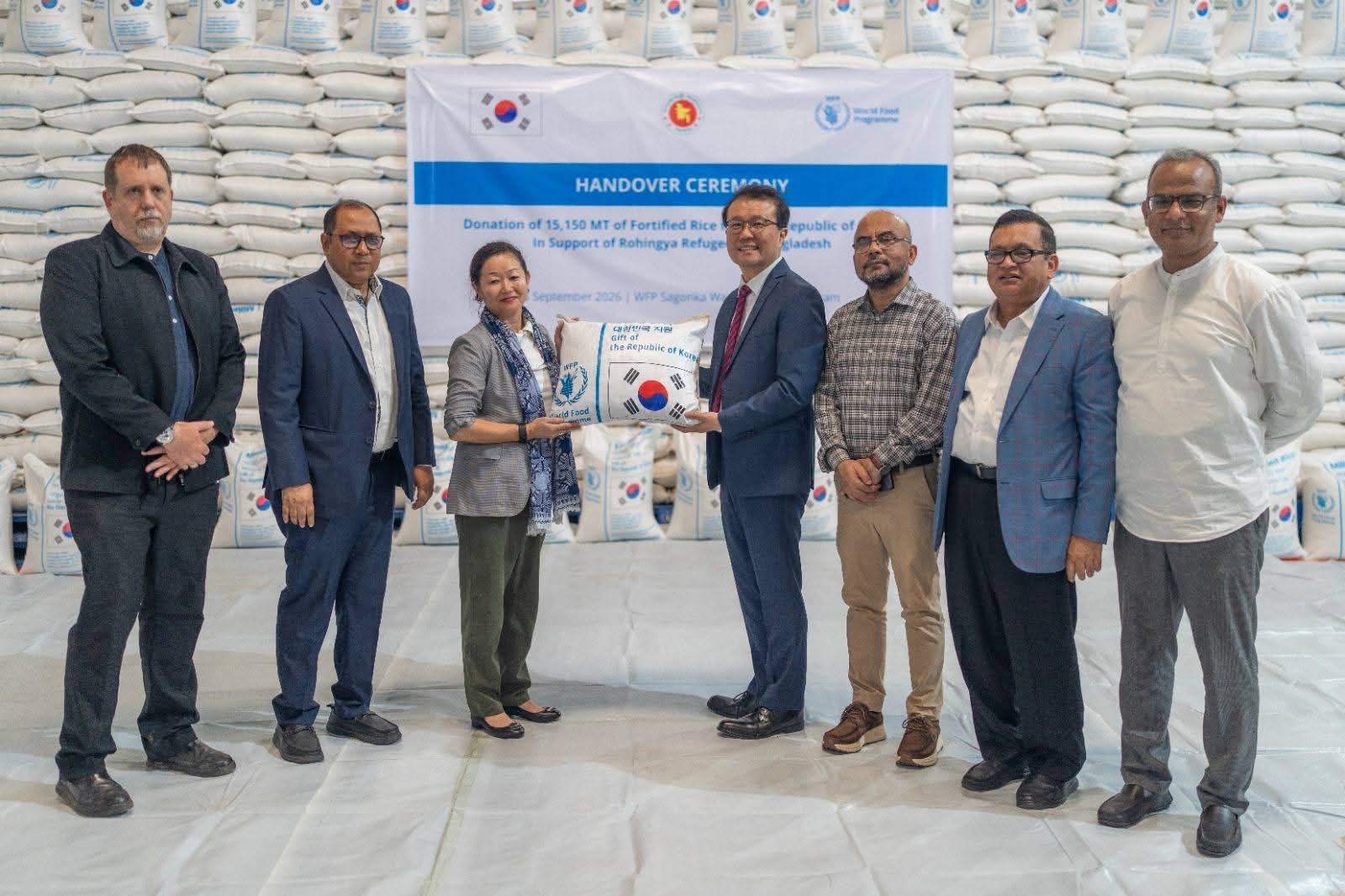
The food assistance was formally handed over to the Bangladesh government at a ceremony at the World Food Programme’s Sagarika warehouse in Chattogram on Thursday.
Provided through South Korea’s Ministry of Agriculture, Food and Rural Affairs, the rice will be directly used in the WFP’s food assistance programme for Rohingya refugees in Cox’s Bazar camps.
South Korea previously provided 15,000 tonnes of rice for Rohingya assistance in 2024 and another 20,265 tonnes in 2025.
Speaking as the chief guest at the handover ceremony, Disaster Management and Relief Ministry additional secretary ABM Shafiqul Haider said South Korea had stood by Bangladesh consistently since the beginning of the Rohingya crisis.
“The handover of this rice is a unique example of the strong partnership between the two countries,” he said.
South Korean ambassador to Bangladesh Kim Ji-joon said Seoul would continue its assistance to Rohingya refugees through rice and fortified rice kernels.
The assistance would not only help address food shortages but also significantly improve the refugees’ overall nutritional status, he said.
WFP Bangladesh representative and country director Coco Ushiyama said humanitarian needs were increasing worldwide while funding for humanitarian assistance was declining.
South Korea’s rice donation at this difficult time would play a timely role in ensuring food security for Rohingya families, she said.
Refugee Relief and Repatriation Commissioner Mizanur Rahman said the assistance reflected South Korea’s longstanding solidarity, strong partnership and humanitarian commitment towards addressing the Rohingya crisis.
The fortified rice kernels would further improve the nutritional value of food assistance, particularly for children and other vulnerable groups, he said.
According to the WFP, the fortified rice kernels will be mixed with regular rice for distribution to meet the nutritional needs of vulnerable groups, including children and pregnant women.
Around 1.2 million Rohingya refugees living in different camps in Cox’s Bazar depend entirely on humanitarian assistance, the agency said.
As conditions for safe, voluntary and dignified repatriation to Myanmar have yet to be established, the WFP stressed the need for continued international support to ensure food and nutrition security for the large refugee population.
Cox’s Bazar Life Report
Photo: Courtesy