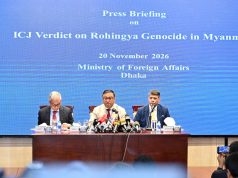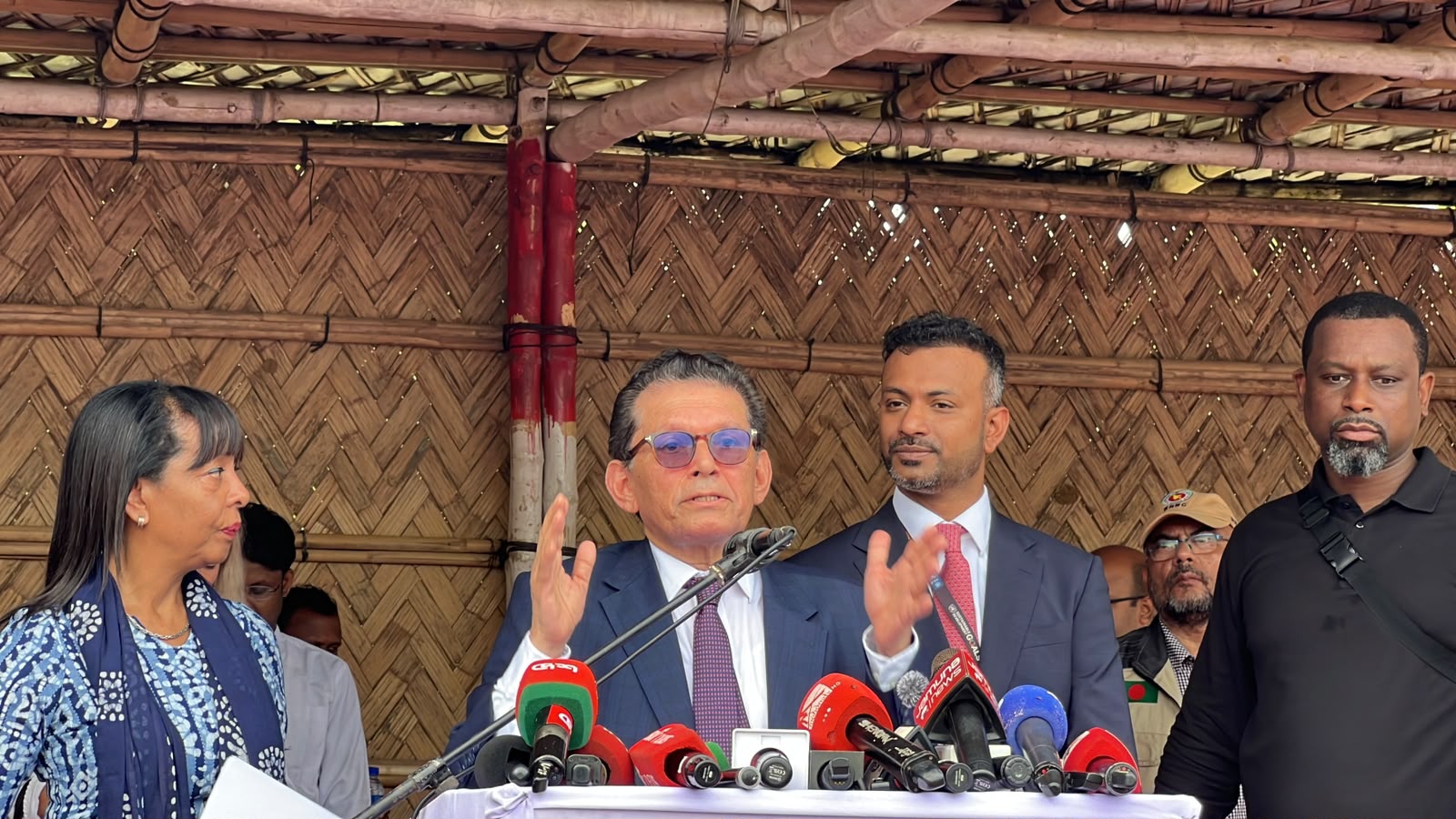
UN General Assembly President Khalilur Rahman has called on Myanmar to immediately investigate, prosecute and punish those responsible for the Rohingya genocide, saying the International Court of Justice’s ruling is final and binding. He was speaking at a special gathering at a Rohingya refugee camp in Ukhia, Cox’s Bazar, on Friday.
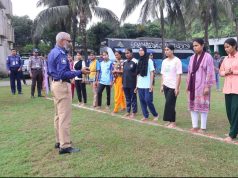
Thousands of Rohingya refugees from different camps filled the football field of Refugee Camp 4 from around 9:00 am.
Many carried placards demanding justice for the genocide, safe and dignified repatriation and restoration of their rights in their homeland. Khalilur Rahman, president of the 81st session of the UN General Assembly, attended as chief guest.
Khalilur Rahman said what happened to the Rohingya in Myanmar in 2017 was genocide. The ICJ in The Hague had issued a clear ruling, he said, finding evidence of crimes including mass killings, sexual violence, attacks on women and children and the destruction of villages by Myanmar security forces.
Evidence of at least 10,000 deaths also emerged during the proceedings, he added.
The court had, for the first time, held a state responsible for genocide and recognised the Rohingya as a distinct ethnic group. “This ruling is recognition of the Rohingya’s long struggle and their voices,” he said. No ruling could bring back the dead or heal all wounds, he said, but the journey towards justice begins with the truth.
The ruling is final, with no scope for appeal. “Implementing this ruling is not optional for Myanmar,” he said.
He made four key calls: genuine justice for the genocide, safe and dignified repatriation, adequate compensation for victims and effective measures to prevent such atrocities in future.
The Rohingya have repeatedly expressed their desire to return to their homeland, he said, but repatriation must be safe, voluntary and dignified, with guarantees of security, citizenship, freedom of movement and non-discriminatory treatment. “No one should be sent back to face danger under any circumstances,” he said.
Myanmar must also compensate the victims, he said, and humanitarian assistance in the camps must continue until safe repatriation is possible. Bangladesh’s people and government cannot bear such a huge responsibility alone, he said, urging the international community and development partners to increase humanitarian funding.
Addressing the Rohingya directly, he said they had not been forgotten. He would carry their voices to the 193 UN member states in New York, he said, highlighting in particular the concerns of Rohingya women, children and young people. Justice had been established in The Hague, and everyone now shared responsibility for seeing it implemented. “Justice must reach from the refugee camps in Cox’s Bazar to the villages of the Rohingya in Rakhine,” he said.
Rohingya leader Master Mozammel Hossain said the ICJ ruling had established recognition of the Rohingya as a distinct ethnic group. The Rohingya were driven out of Myanmar after facing genocide, he said, and were grateful that justice had at least been achieved in one international court. He said the UNGA president’s visit to meet them directly was another source of happiness.
“We want to return to our homeland with dignity, security and honour. We are not people of another country. We have been inhabitants of Burma from the beginning and have lived in Myanmar for thousands of years,” he said.
Mohammad Alim, from Longabil in Buthidaung, said they were forced to flee to Bangladesh, leaving behind relatives, homes and possessions, because of various forms of persecution. “Bangladesh has helped us greatly, and we are grateful. We want to return to Myanmar only after our citizenship and all fundamental rights are guaranteed,” he said.
Another Rohingya leader, King Mong, said the ruling had shown the world how Myanmar’s military persecuted the Rohingya and given international recognition that they were victims of genocide. “We hope Dr Khalilur Rahman will use his position and authority to help implement the ICJ ruling and advocate for the issue internationally,” he said.
He called on the international community to ensure the Rohingya can return home with citizenship and full rights in a dignified manner. He said he hoped 19 November 2026 would be remembered in history as the day the Rohingya journey toward returning to their homeland began.
Cox’s Bazar Life Report
Photo: Abdu Rashid Manik