

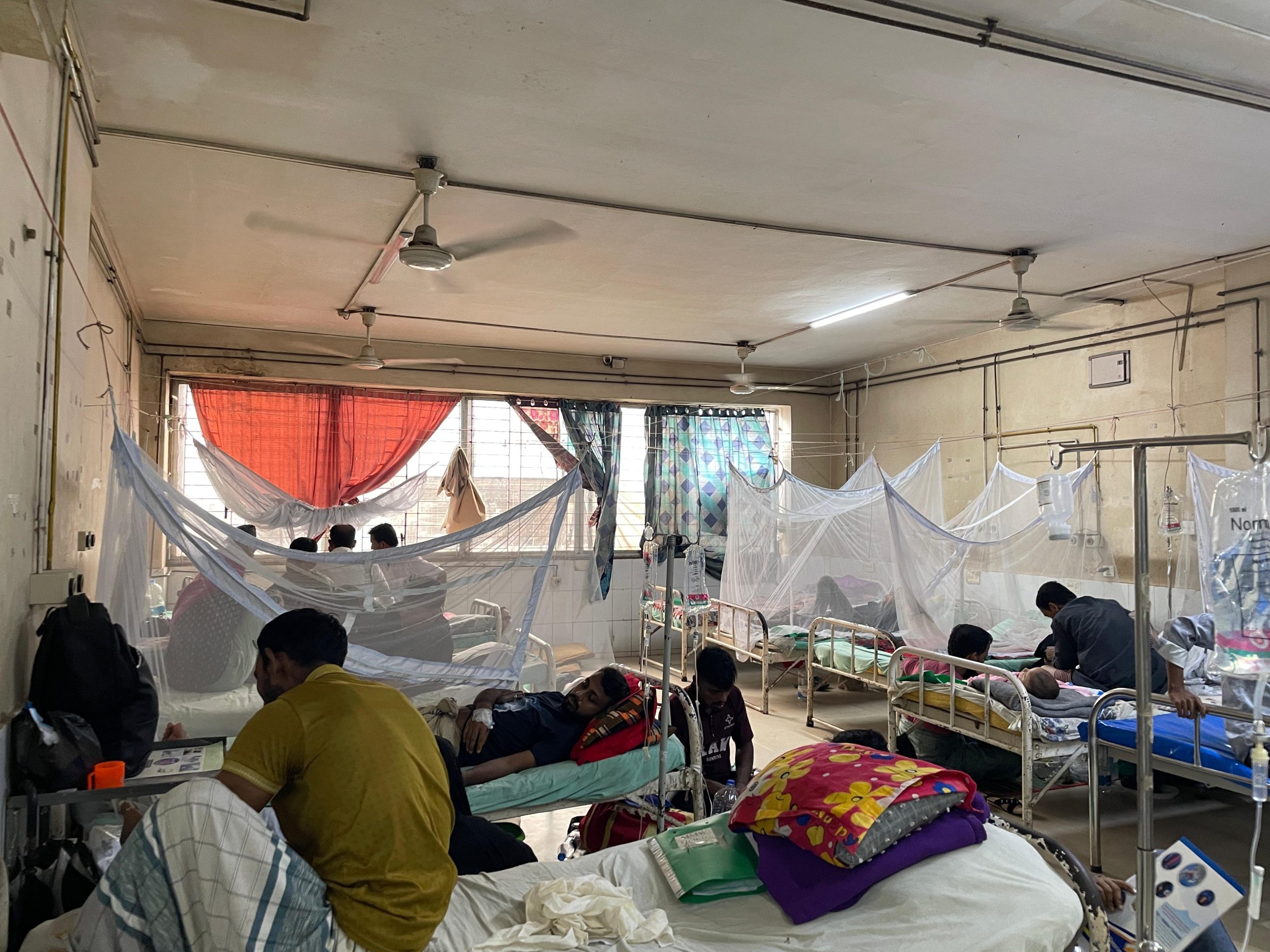
A total of 4,708 dengue cases were reported in Cox’s Bazar in the first nine months of this year, with Rohingya people accounting for nearly 58 per cent of the cases, according to district health authorities.
Of the total patients, 2,745 were from the Rohingya community, officially categorised as FDMNs. Six people died of dengue during the period, and all of them were from the FDMN community, the health department said.
The data covers January 1 to September 30, while district health authorities updated the FDMN figures through September 12.
Among the local population, Chakaria recorded the most dengue cases, with 453 patients. Teknaf followed with 412, Moheshkhali with 361, Ukhiya with 255, Cox’s Bazar Sadar with 174, Ramu with 99, Eidgaon with 76, Cox’s Bazar municipality with 31, Pekua with 29, and Kutubdia with 27.
Another 46 cases were reported from other areas.
Combining the upazila and other area figures, 1,963 dengue cases were reported among the local population. Of them, 1,595 patients were admitted to hospitals.
Among the FDMN population, 2,745 cases were reported, with 2,743 patients admitted to hospitals.
Overall, 4,338 of the 4,708 patients reported in the district during the nine-month period were admitted to hospitals.
Pankaj Pal, statistics officer at the Civil Surgeon’s Office in Cox’s Bazar, said updated figures for October 1–3 were not available earlier as he was on leave.
He said 16 new cases were detected on Friday, of whom three were admitted to hospitals. A total of 53 dengue patients were receiving treatment at hospitals that day.
In the following 24 hours, 33 new cases were detected, with 30 patients admitted to hospitals. As of Saturday, 55 dengue patients were receiving treatment at the district’s Sadar Hospital and upazila health complexes, he said.
Cox’s Bazar Civil Surgeon Mohammad Saber said awareness activities had been underway since before the dengue season began.
“Many people are being infected because of a lack of awareness. We have conducted cleanliness drives, and similar activities are continuing at schools,” he said.
He urged people to prevent stagnant water from accumulating, which can create breeding grounds for Aedes mosquitoes.
“Water should not be allowed to accumulate anywhere. Even clean water left in flowerpots, coconut shells or plastic containers can create conditions for dengue mosquitoes to breed,” he said.
He also advised residents to keep their surroundings clean and sleep under mosquito nets. Anyone developing dengue symptoms should seek treatment at an upazila health complex or Cox’s Bazar Sadar Hospital rather than relying on pharmacies, he said.
Meanwhile, officials conducted a weekly cleanliness drive in different parts of Cox’s Bazar town on Saturday as part of efforts to prevent dengue and maintain a clean environment.
District Commissioner Md Abdur Mannan led the drive, with Cox’s Bazar-3 lawmaker Lutfur Rahman Kajal in attendance. Officials, elected representatives and local residents removed accumulated waste, cleaned drains and identified and cleared potential breeding grounds for Aedes mosquitoes.
Additional district commissioner (revenue) and officials and employees of relevant departments also took part in the programme.
Kajal said the administration, municipality and political leaders had joined the initiative following instructions from Prime Minister Tarique Rahman to keep Cox’s Bazar clean.
He urged residents to stop dumping household waste in drains and other places where it can obstruct water flow and contribute to mosquito breeding.
District Commissioner Md A Mannan said political leaders, government officials and conscious citizens had joined the cleanliness campaign.
He said the initiative focused on keeping schools and government offices clean, while coordinated waste-management efforts were also being undertaken because Cox’s Bazar, as a tourism city, generates a significant amount of waste.
The authorities urged residents to keep their homes and workplaces clean and prevent stagnant water from accumulating as part of efforts to contain the spread of dengue.
By Abdu Rashid Manik
Photo: Abdu Rashid Manik