
Media consultation held in Cox’s Bazar to explore how journalism can support peacebuilding, social cohesion, and harmony between Rohingya refugees and local communities.
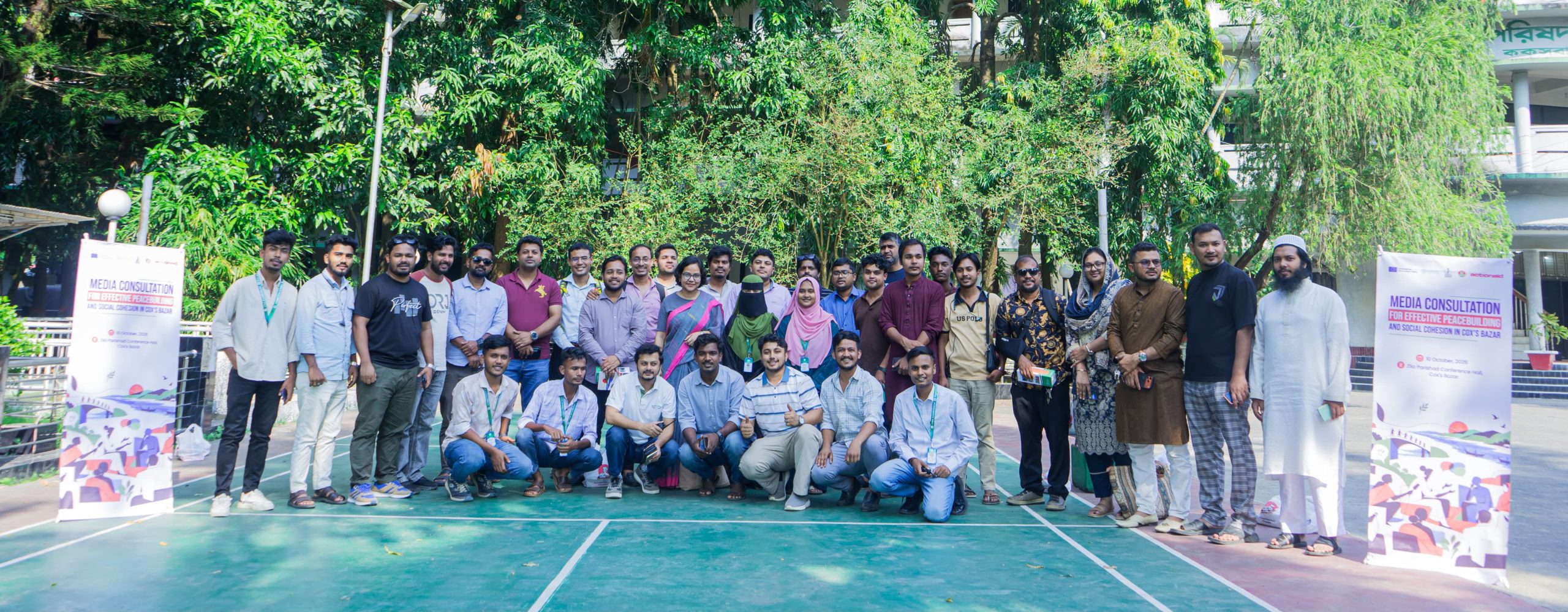
Jointly organised by JYDA Bangladesh and SURGE Bangladesh, the event, titled “Media Consultation for Effective Peacebuilding and Social Cohesion in Cox’s Bazar”, took place at the Cox’s Bazar District Council auditorium from 9:30 am to 2:00 pm.
The consultation was organised under the project “Youth-led Peacebuilding and Social Cohesion Initiatives in Bangladesh and Myanmar”, co-funded by the European Union, implemented with support from ActionAid Bangladesh and receiving technical assistance from SHED.
Journalists discussed their field experiences, challenges, and prevailing narratives in reporting on relations between Rohingya refugees and local communities. They also explored ways to strengthen responsible, conflict-sensitive journalism and improve media coverage of peacebuilding and social cohesion initiatives.
SURGE Bangladesh representative Mojahidul Islam conducted the opening session and delivered the welcome address. He stressed the joint role of young people and the media in countering misinformation at the grassroots level, reducing conflict and fostering positive social cohesion.
Tanvirul Miraj Ripon, The Economist’s Bangladesh correspondent, moderated the main discussion. The consultation included live digital polling to assess the language, tone and challenges of current media coverage in Cox’s Bazar. Participants also used VIPP post-it cards and group presentations to discuss underreported human-interest stories and standards for verifying information about sensitive incidents.
ActionAid Bangladesh project manager Fariha Hossain attended the event and outlined the project’s strategic context and objectives.
“Media is one of our key partners in achieving sustainable peacebuilding and social harmony. Responsible journalism can pave the way for positive change by countering misinformation on the ground and protecting marginalised communities,” she said.
JYDA Bangladesh executive director Shah Rukh Karim said the organisation wanted to work with journalists to identify ways accurate, responsible reporting could strengthen harmony, drawing on their experiences and recommendations.
Ripon said journalists needed to use language carefully when reporting on conflict and sensitive situations. He emphasised verifying information through multiple sources rather than relying on one-sided accounts, and highlighted positive stories of people living together peacefully.
Journalists and editors from local, national and international media outlets attended the consultation. Participating organisations included Risingbd, Barta24, Cox’s Bazar News (CBN), The Morning Post, TTN, Ekhon TV, Cox’s Bazar Life, Asia Post, Dainik Cox’s Bazar, GTV, Independent Television, Deutsche Welle, Channel 24, bdnews24.com, The Daily Star, Channel One, Bangladesh Betar and NTV, along with other local media representatives.
Mojahidul Islam delivered the closing remarks, thanking the participating journalists and partner organisations for their contributions. He praised their collective efforts to promote positive social cohesion in Cox’s Bazar. The event concluded with a group photograph and a lunch for participants.
Cox’s Bazar Life Report
Photo: Courtesy