
Cox’s Bazar is seeing a slowdown despite the start of the winter tourist season, with around 70 per cent of hotel rooms remaining vacant, according to tourism businesses.
Beach chairs are going unused, beach bikes and jeeps are getting fewer bookings, and shopkeepers at tourist markets are spending long hours waiting for customers. Hotel and resort operators say bookings have fallen to around 30 per cent, with adverse weather, students’ examinations and concerns over possible political unrest keeping tourists away.
Businesses estimate that hotels, restaurants, transport services, shopping outlets and other tourism-related sectors generate at least Tk 50 crore in daily transactions during the peak season. The current downturn, however, is affecting thousands of small traders and workers as well as larger businesses.
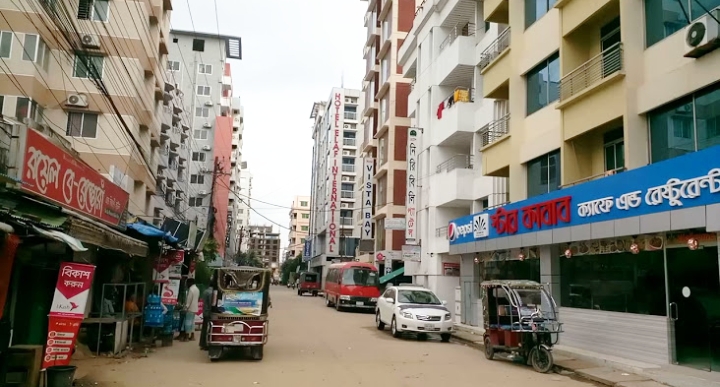
A visit to Laboni, Sugandha and Kolatoli points and the hotel-motel zone on Monday (Nov 23) found tourism-dependent businesses struggling with low customer turnout.
At Laboni Point, beach-chair operator Asad Ullah said he had earned only Tk 1,500–2,000 from each of his 20 chairs over the past two weeks. In normal times, he said, each chair could generate around Tk 5,000 during a comparable period.
Beach-bike rider Junaid said a bike previously could be rented up to 20 times a day, but now he gets no more than five bookings. He earns Tk 1,500–2,000 a day, while fuel alone costs around Tk 700.
Another rider, Amir Hossain, said a bike could previously generate Tk 4,000–5,000 in daily rental income against fuel costs of Tk 1,000–1,200. “For the past 10 to 15 days, it has been difficult even to recover our costs,” he said.
At Sugandha Point, jeep driver Ali Ahmed said he could previously earn Tk 5,000–6,000 a day. “I have not received a single booking in the past five days,” he said.
Another driver, Siraj Mia, said bookings had remained so low for the past 10 days that covering the cost of operating his vehicle had become difficult.
Lifeguard Rashid Ahmed said the number of tourists had fallen significantly over the past two weeks because of adverse weather, students’ examinations and concerns over political unrest.
The slowdown has also hit shopping outlets. Most of the 45 shops at TM Burmese Market in Kolatoli depend heavily on tourists. Traders stocked up on goods worth lakhs of taka ahead of the season, but many have seen weak sales for the past month.
Mohammad Imran, owner of Sweet Gallery Achar Bitan, said his shop previously did well for around four months during the tourist season. “This time, I do not expect more than two months of good business. Ramadan will follow, and there is also uncertainty over the country’s situation,” he said.
He said daily sales had fallen to Tk 3,000–5,000, which was not enough to cover operating costs.
Mohammad Jamal, owner of Abid Burmese Shop, said his daily sales used to reach Tk 15,000–20,000 when tourist numbers were high. Jahidul Islam, owner of SF Pearl Shop, said current sales barely cover electricity bills, rent, and staff salaries.
Rizon Nath, owner of Rizon Store, said his daily operating cost was around Tk 4,000, while sales had fallen to Tk 1,500–2,000.
Hotel and resort operators are also facing a sharp decline in bookings. According to the Cox’s Bazar Hotel-Motel Owners’ Association, the town has around 550 small, medium-sized, and star-rated hotels, motels, and resorts with the capacity to accommodate more than 100,000 people a day.
Nurul Haque Mehdi, accounts officer at Shahjadi Resort in Kolatoli, said only 20–30 per cent of the resort’s rooms were being booked daily in November. Even discounts of up to 50 per cent had failed to attract the expected number of guests.
Joy Goswami, front-desk manager of Galaxy Resort, said only 10–15 of its 40 rooms were being booked on average this month, compared with 60–70 per cent occupancy during the same period in previous years.
Sayeed Alamgir, public relations officer of the five-star Ocean Paradise Hotel, said room bookings fell to 20–30 per cent this month as many parents avoided family trips because of their children’s examinations. The hotel spends around Tk 850,000 a day on salaries, electricity and other operating costs, he said.
He said business could improve from early December, but warned that any escalation in political tensions could cause further losses.
Abul Kashem Sikder, president of the Cox’s Bazar Hotel-Motel Owners’ Association, said tourist numbers were significantly lower this November than in previous years. Fewer than 20,000 tourists were staying in hotels daily, he said, adding that businesses were losing Tk 20,000–50,000 a day despite preparing for the season.
He said political parties had historically maintained a consensus to keep Cox’s Bazar’s tourism industry outside political unrest, protests and strikes. He urged them to maintain a similar environment in the future.
Former president of the Cox’s Bazar Chamber of Commerce Abu Morshed Chowdhury Khoka said tourism-related businesses generate at least Tk 50 crore a day during the peak season across 13 sectors.
“Whenever there is instability in the country, tourism is among the first sectors to be hit. The impact extends beyond large businesses to small traders and workers who depend on tourism,” he said.
He said political and social stability was essential for the tourism industry to function normally, as a decline in tourist arrivals affects the entire tourism economy, from beach photographers and transport workers to small shopkeepers.
By Tarekur Rahman
Photo: Tarekur Rahman