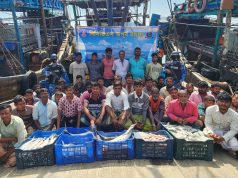

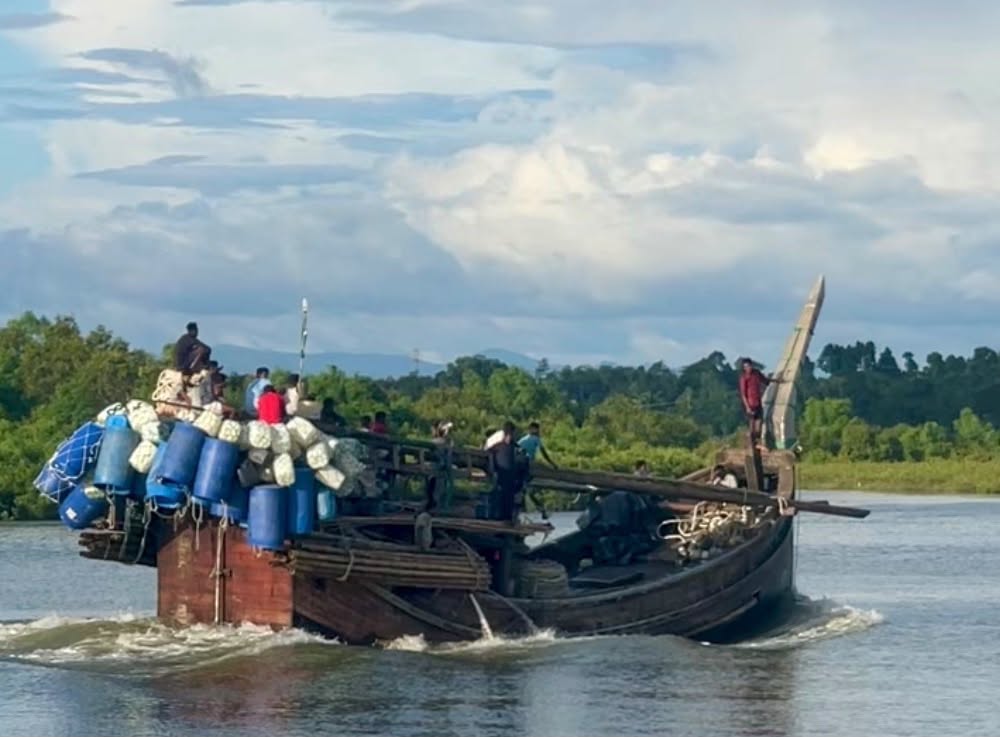
Sea fish prices have risen in Cox’s Bazar markets as catches of marine fish and hilsa have declined at the beginning of the winter season, creating a supply shortage, traders said.
But while consumers pay more for fish, questions remain about how much of the higher market value reaches fishermen who risk their lives in the deep sea.
Fishermen say they often fail to receive fair payment when catches are low, while boat owners blame financial pressures, advance payments and other complications in the fishing business.
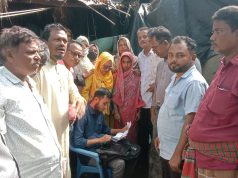
At Cox’s Bazar Fishery Ghat, fisherman Abdur Shukkur said boat owners generally pay fishermen fairly when catches are good.
“Not all boat owners behave the same way. When catches are low, some owners are reluctant to pay us a fair amount,” he said.
Ehsan Ullah, a fisherman from Nazirartek, said most fishermen in Cox’s Bazar are still outside the government’s registration system. As a result, many are excluded from government assistance during fishing bans and natural disasters.
He said fishermen also lose income when adverse weather or warning signals prevent boats from going to sea or when catches are poor.
Outdated government list
Delwar Hossain, general secretary of the Cox’s Bazar District Fishing Trawler Owners’ Association, said nearly 70 per cent of the people included in previous government fishermen lists no longer go to sea for fishing.
“Many have changed professions, while some have died. Others remain on the list but are no longer working as sea-going fishermen for various reasons,” he said.
At the same time, many genuine sea-going fishermen do not have fishermen’s cards and therefore remain excluded from government support, he said.
“There is a significant gap between government statistics and the reality on the ground,” Delwar said, calling for sea-going fishermen to be placed in a separate category.
He proposed issuing fishermen’s cards based on the licences of mechanised fishing boats and recommendations from boat owners and boat skippers. Such a system, he said, could help identify genuine sea-going fishermen and bring them under government support schemes.
The problem is further complicated by changes in occupation. Some people who once worked at sea have shifted to fish farming in ponds or other professions, but remain on official lists, making it difficult to identify those currently dependent on marine fishing.
Advance payments deepen dependence
Delwar also described the financial arrangements between fishermen and boat owners as a source of long-term dependence.
Fishermen working on boats using behindi nets generally work under long-term agreements. Many receive advances of up to Tk 100,000 before the fishing season begins, which they use to buy land, farm, cover family expenses, or send their children abroad.
In some cases, fishermen work under agreements involving advance payments for two to two-and-a-half years, he said.
Boat owners themselves face serious financial constraints, according to Delwar. Most lack formal banking records or documented business capacity and depend largely on loans from moneylenders and advance financiers to operate their fishing businesses.
Some owners also borrow money to advance fishermen. When a fishing season ends in losses, the financial pressure eventually affects fishermen’s earnings, creating disputes and mistrust between the two sides.
Registration to be updated
Cox’s Bazar District Fisheries Officer Md Nazmul Huda said the government plans to update the official fishermen’s database by collecting information on genuine fishermen from the grassroots level.
The move is expected to bring genuine seagoing fishermen into the formal registration system and ensure government support reaches those who depend on marine fishing.
Stakeholders say accurate identification of seagoing fishermen is now essential, particularly as declining catches and rising fish prices continue to reshape the economics of marine fishing.
Without a fairer link between market prices and fishermen’s earnings, they warn, uncertainty will continue to grow for people whose livelihoods depend on the sea.
By Mohammad Morshed
Photo: Mohammad Morshed