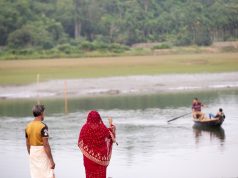

With the arrival of winter, Nazirartek — Cox’s Bazar’s largest dry fish processing hub — has once again turned into a bustling center of activity.
As this is the most crucial season for dry fish production, non-stop work is ongoing day and night across the coastal village.
At the break of dawn, fishing boats return to shore with fresh catches. What follows is a swift and systematic process: sorting, cleaning, salting, and laying the fish out to dry under the sun.
Thousands of workers — men, women, and even adolescents — are now engaged in the labor-intensive production cycle.
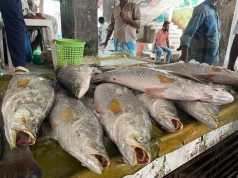
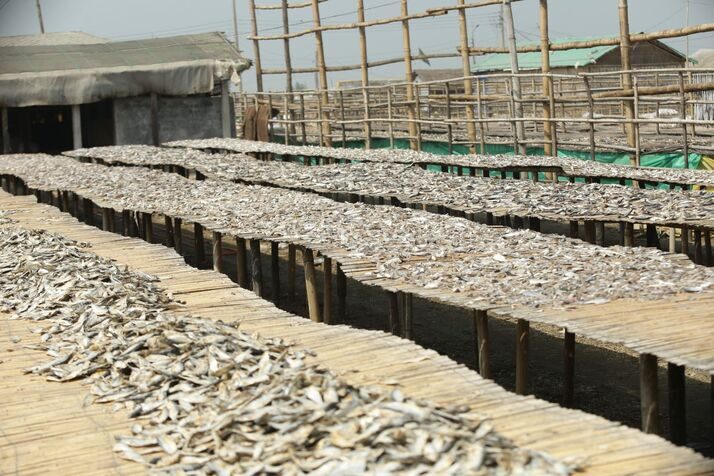
Long rows of bamboo racks and straw mats stretch across the coast, filled with a variety of fish, including ribbonfish, loitta, corvina, kachki, and the prized rupchanda, creating a vibrant and striking scene under the winter sun.
Because of the dry and sunny weather, this is the most suitable time for drying, resulting in nearly double the usual production volumes.
Every day, hundreds of tons of processed dry fish are supplied to different parts of the country.
According to traders, winter is the peak season when a majority of the year’s demand is fulfilled.
Expecting a profitable market, many companies have increased their production scale.
This seasonal demand has also increased employment opportunities, providing financial relief to coastal families who rely on this trade.
Nazirartek’s dry fish has earned a reputation beyond national borders as well.
Its natural sun-drying and improved processing methods have made it popular in international markets, driving rising export demand each year.
By Mohammad Morshed
Photo: Hussain Shetu