
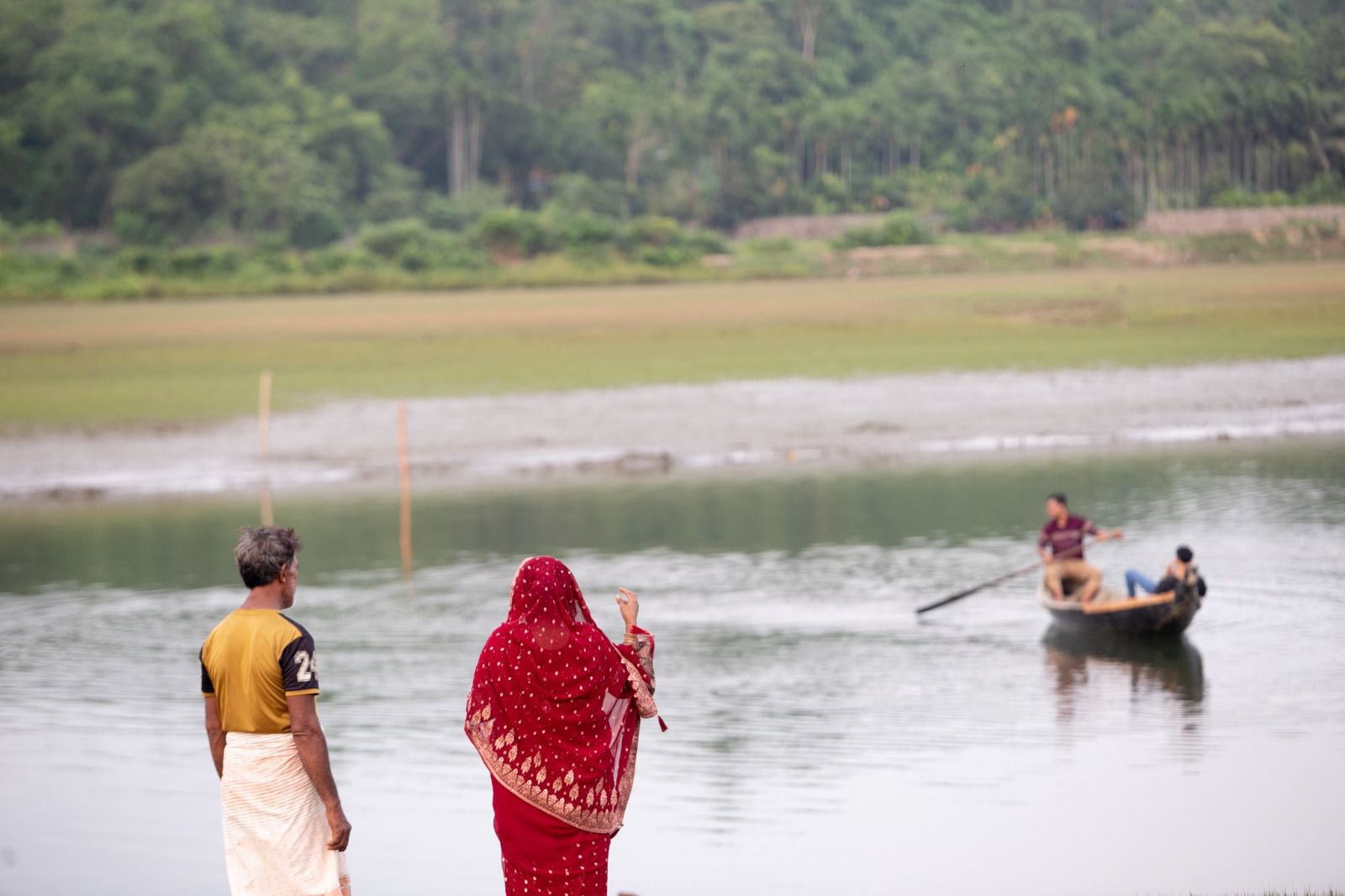
While modernisation has transformed many rural areas across Bangladesh, traditional wooden dinghy boats continue to ply the waters of the Reju Khal in Cox’s Bazar, serving as an indispensable means of transport and livelihood for thousands of people living along its banks.
The canal, which flows through parts of Ukhiya and Ramu upazilas, winds past several villages and unions. On one side, markets, ferry ghats, and residential areas exist, while vast stretches of agricultural land, wetlands, and crop fields occupy the other. As a result, hundreds of residents rely on dinghies every day to cross the waterway for work, farming, and other daily needs.
A recent visit to the Sonarpara area of Ukhiya found local resident Mohammad Khalirul Rahman travelling with family members to the Sonarpara market aboard a traditional dinghy boat. Likewise, residents of Sonarpara regularly use the boats to travel to the neighbouring Goalia village for agricultural activities and personal errands.
Locals said the dinghy boat remains one of the easiest and most affordable modes of transport for communities living on both sides of the canal. In areas where bridges or alternative transport links are unavailable, small boats remain the only reliable means of crossing.
Beyond transportation, the boats also play a vital role in sustaining local livelihoods. Many fishermen who depend on the waterway use dinghies for daily fishing, earning their living from the catches they bring home from the canal.
According to residents, although many traditional aspects of rural life have gradually disappeared with changing times, the dinghy boats that still glide across Reju Khal remain a living symbol of Bangladesh’s rural heritage, culture, and enduring struggle for livelihood.
For many communities along the canal, these modest vessels are not merely a means of transport—they are an integral part of everyday life and a reflection of a tradition that endures amid rapid change.
By Mohammad Morshed
Photo: Hussain Shetu