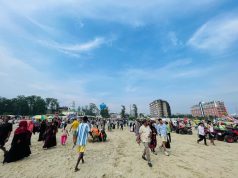

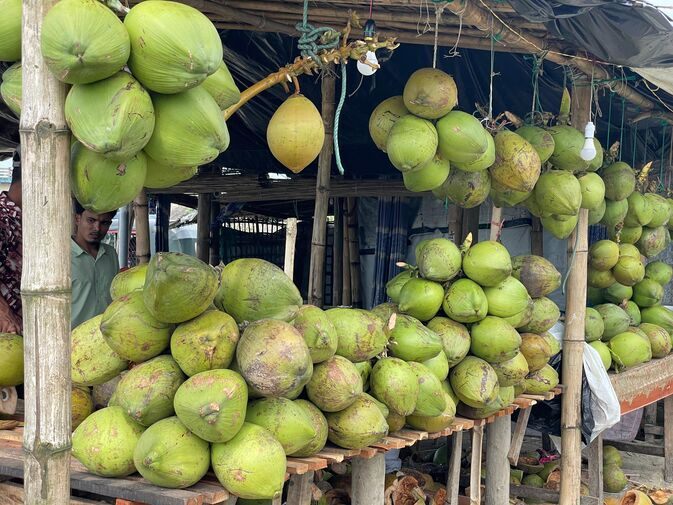
A visit to Cox’s Bazar beach feels incomplete without sipping on a fresh green coconut. The salty breeze, the roar of the waves, and a chilled coconut in hand — together they complete the quintessential seaside experience. From Laboni and Sugandha to Kolatoli, Himchhari, Inani, Patuartek, and Sonarpara — almost every point along the world’s longest sea beach is lined with coconut stalls, always buzzing with thirsty tourists.
As winter tourism picks up and visitor numbers surge, demand for coconuts has also soared. However, Cox’s Bazar itself does not produce enough coconuts to meet this rising consumption. Vendors rely heavily on shipments coming from Chattogram, Feni, Noakhali, and other districts — a dependency that drives up transportation costs and ultimately influences retail prices.
Currently, coconuts are sold for Tk 130–150 at most points along the beach, while larger ones can go for Tk 160–170. Despite occasional complaints about high prices, the refreshing taste of sweet coconut water under the warm beach sun quickly washes away the hesitation.
“There’s always huge demand here,” said Mohammad Abbas, a well-known coconut vendor at Sugandha Point. “Since Cox’s Bazar has very few coconut trees, we bring them from other districts. That increases the cost.”
With the arrival of large numbers of tourists, demand spikes even further. Conversely, during the monsoon or when supply drops, prices rise accordingly.
For tourists, coconut water is more than just a drink — it’s part of the Cox’s Bazar tradition. Many claim it tastes sweeter here, perhaps because of the ambiance and the vacation charm.
By Abdu Rashid Manik
Photo: Abdu Rashid Manik