
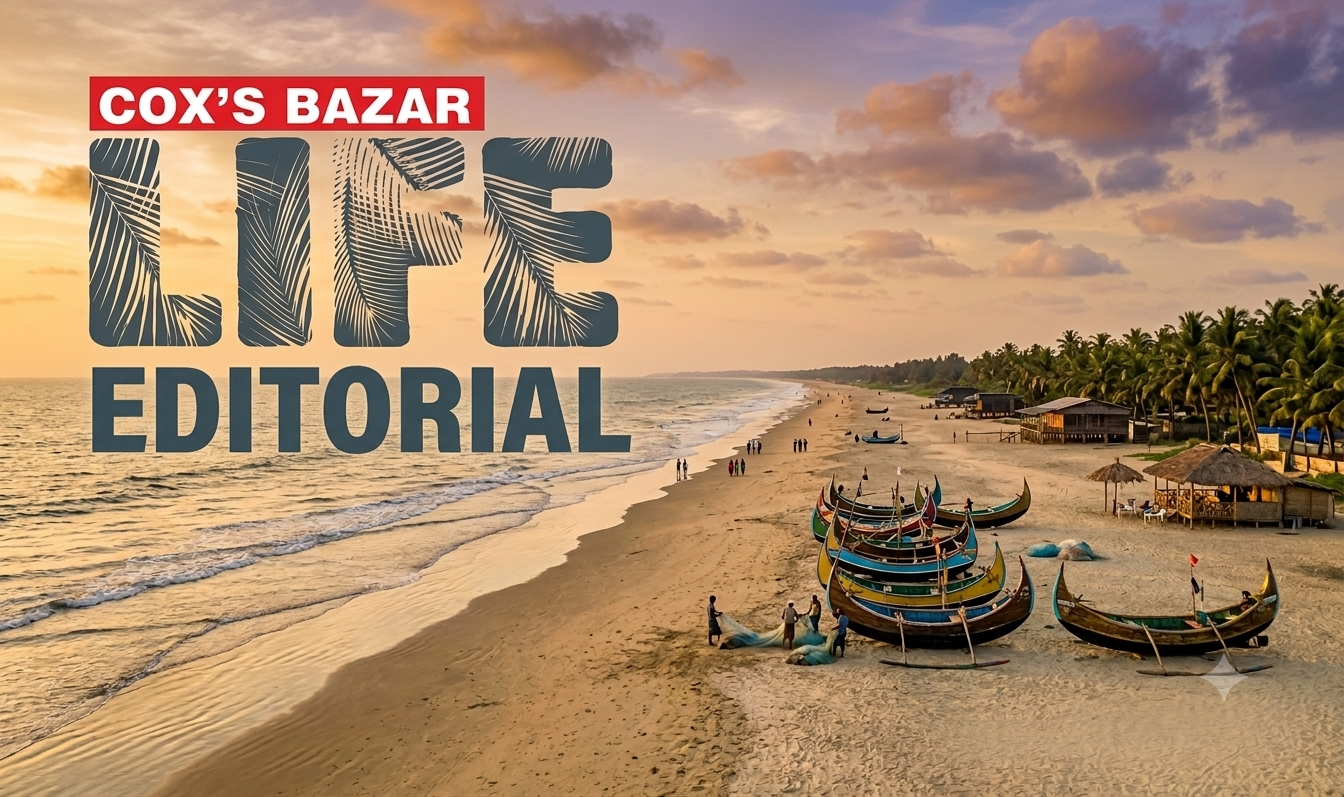
Yesterday marked World Maritime Day, celebrated globally with the commitment to keeping the ocean—the primary artery of global trade—safe and environmentally sustainable. On this World Maritime Day, Bangladesh finds itself at a historic juncture of economic growth. In this pivotal moment, the maritime economy, or Blue Economy, centered around Cox’s Bazar, the world’s longest sandy beach, has unlocked unprecedented horizons. While the maritime sector currently contributes a modest 3 to 4 percent to the national GDP, scientifically harnessing the vast resources of the Bay of Bengal could generate an estimated 10 to 12 billion USD annually. With visionary planning and strategic investment, elevating this sector’s contribution to 10 percent of the overall GDP by 2041 is entirely within reach.
To transform this colossal economic potential into reality, we must break away from traditional mindsets and formulate sustainable policies aligned with the standards of the International Maritime Organization (IMO). Achieving this requires just a few targeted steps that can unlock the full rewards of our ocean resources. As the first step, we must modernize the maritime communication and transport systems in the Cox’s Bazar and Matarbari regions, while scaling up eco-friendly technologies like ‘Green Shipping’ to minimize carbon emissions and curb marine pollution. Secondly, transitioning from conventional, high-risk fishing practices to equipping fishermen with modern vessels and satellite tracking systems for deep-sea fishing will open a lucrative window for exporting premium-grade tuna and other high-value marine species to international markets.
Thirdly, by mirroring successful global models, we can foster marine biotechnology along the Cox’s Bazar coast to cultivate commercial seaweed, tapping into a massive international market for pharmaceutical and cosmetic raw materials. Fourthly, to institutionalize these boundless prospects, it is crucial to establish a dedicated ‘Maritime Special Economic Zone’ suitable for green ship-building and eco-friendly processing units along the coastline, which will directly attract foreign direct investment (FDI). Fifthly, the tourism sector must be made ecologically secure through the timely implementation of sustainable ‘Blue Tourism’ frameworks.Conclusion:Ultimately, by embracing the core spirit of World Maritime Day and resolutely executing these five pivotal steps, we can significantly accelerate our future economic growth. Consequently, the sector’s contribution to the national GDP will not merely be confined to 10 percent in the near future; rather, scaling it further to 20 or even 30 percent will undoubtedly become a tangible reality for Bangladesh.
By Salam Abu
Editor