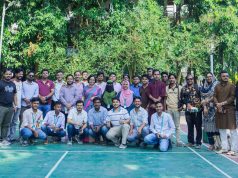

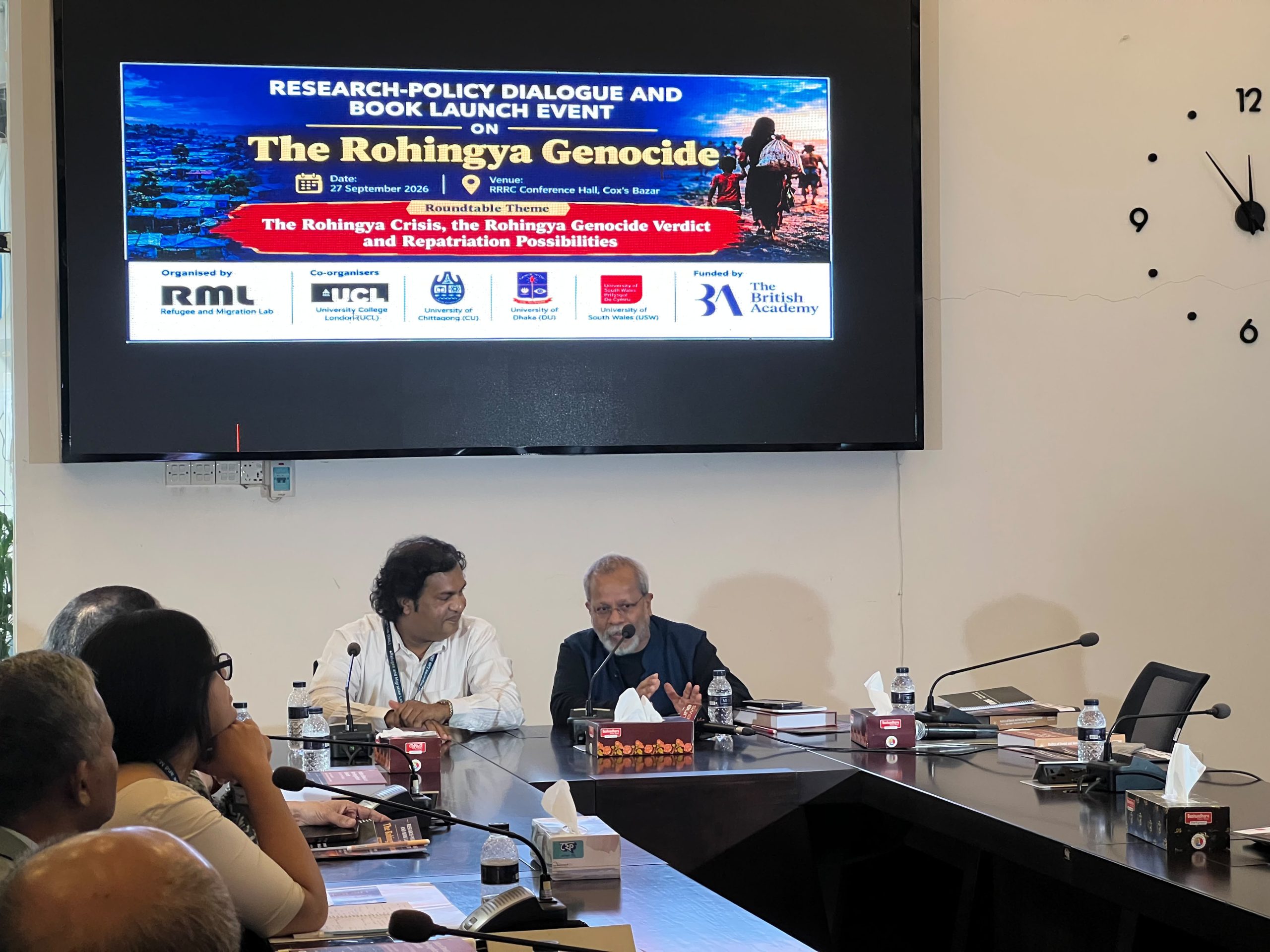
A roundtable discussion on the Rohingya crisis, the ruling on the Rohingya genocide and prospects for repatriation was held in Cox’s Bazar on Sunday, with local and international researchers, academics, government officials, human rights activists and Rohingya youths discussing justice, recognition and the role of the international community.
The event began at 10:00 am in the conference room of the Office of the Refugee Relief and Repatriation Commissioner in Baharchhara, Cox’s Bazar.
The Refugee and Migration Lab (RML) organised the roundtable, with University College London, the University of Chittagong, the University of Dhaka and the University of South Wales as co-organisers. The British Academy funded the event.
The event also unveiled a book titled The Politics of Genocide Denial and Non-recognition: The Rohingya Context.
Professor Imtiaz Ahmed, former professor at the University of Dhaka, executive director of the Centre for Alternatives (CA) and dean of the Asian Institute of Diplomacy and International Affairs (AIDIA) in Nepal, presented the keynote paper on “Genocide, Diplomacy and the Rohingya: The Politics of Justice, Recognition and International Response”.
In his paper, Professor Ahmed discussed various political and diplomatic dimensions of the Rohingya crisis, along with prospects for the safe and dignified repatriation of the Rohingya.
Professor Nasir Uddin of the Department of Anthropology at the University of Chittagong moderated the discussion.
Additional Refugee Relief and Repatriation Commissioner Nazmul Islam Bhuiyan, Major General (retd) A S M Ridwan Rahman, Director of the Myanmar Division at the Ministry of Foreign Affairs Nirjhar Adhikary, academician Professor Someshwar Chakraborty, Dr Arif Rahman, Cox’s Bazar Civil Society president Abu Morshed Chowdhury, ActionAid Bangladesh country director Farah Kabir, University of Dhaka associate professors Dr Kajli Shahreen Islam and Dr Towhidul Islam, and University of Chittagong associate professor Dr Kazim Nur Sohad, among others, spoke at the event.
Rohingya representatives, including youths Mohammad Sahat, Imran and Enamul Hasan, also took part in the discussion.
The participants discussed long-term solutions to the Rohingya crisis, recognition of the alleged genocide, ensuring justice, the role of the international community, and the prospects and conditions for safe, voluntary, and dignified repatriation.
The book The Politics of Genocide Denial and Non-recognition: The Rohingya Context was formally unveiled at the event’s concluding session.
Cox’s Bazar Life Report
Photo: Abdu Rashid Manik