Patients in Cox’s Bazar can now access specialised nuclear medicine services to diagnose and treat certain complex health conditions, including thyroid disorders, bone diseases, and kidney problems, without travelling to Dhaka or other parts of the country for every test.
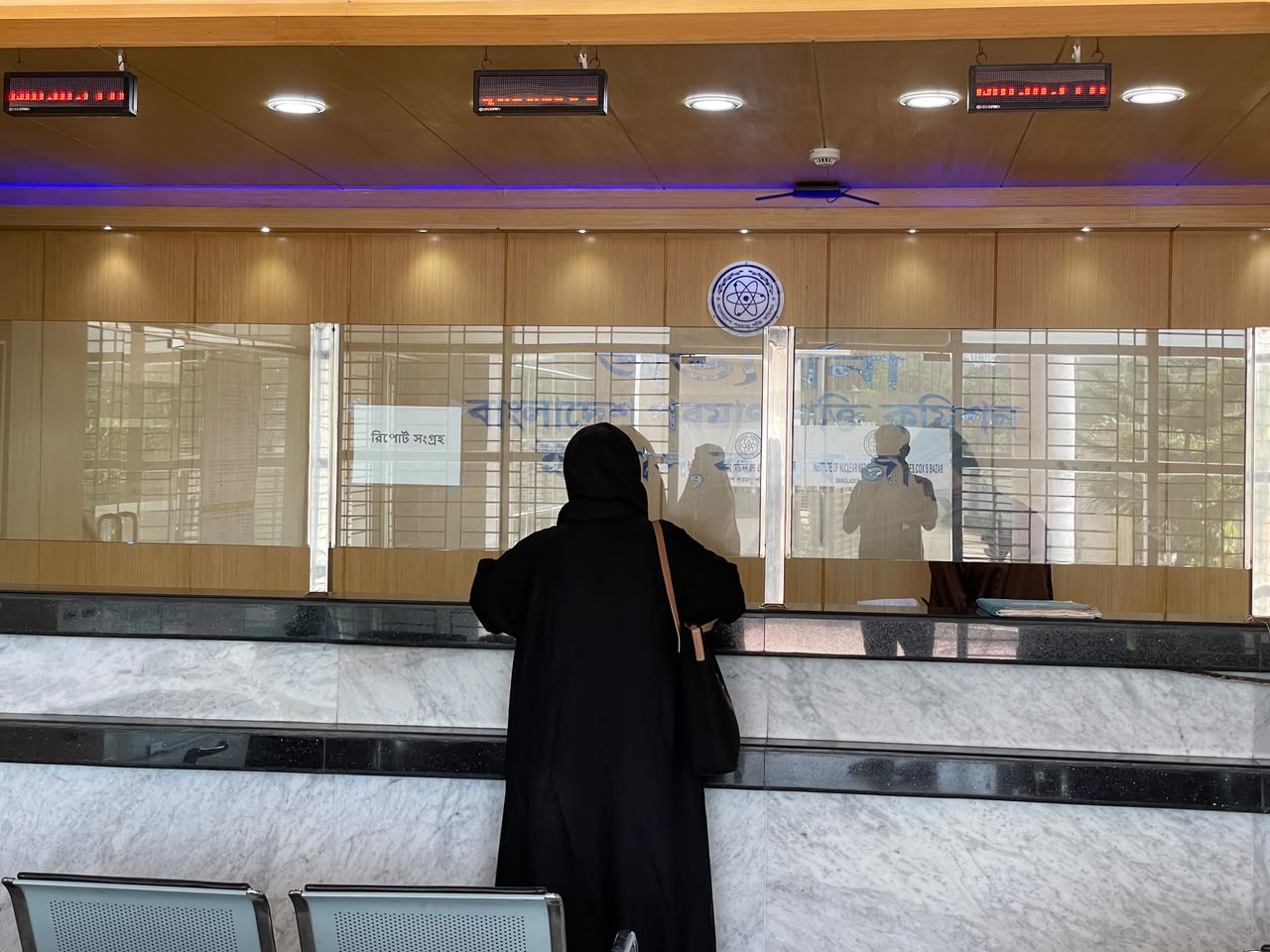
The Institute of Nuclear Medicine and Allied Sciences (INMAS) provides specialised diagnostic and treatment services using nuclear technology and was established in 2023 under the Bangladesh Atomic Energy Commission on the Cox’s Bazar Medical College campus. It also offers ultrasonography, colour Doppler imaging, hormone tests and bone mineral density assessments.
According to the institute, its facilities include a SPECT-CT scanner, a dual-head SPECT scanner, a single-head gamma camera or thyroid scanner, a bone mineral densitometry (BMD) machine, a thyroid uptake system and a colour Doppler ultrasonography machine. It also has radioimmunoassay (RIA) and chemiluminescence immunoassay (CLIA) analysers for hormone and other biochemical tests.
Diagnosis using nuclear technology
Nuclear medicine is a specialised branch of medical science that uses radiation emitted by radioactive isotopes to assess organ function and help identify diseases. The technology is also used to treat certain conditions.
INMAS, Cox’s Bazar, offers scintigraphy tests, including bone scans, renal scans, renograms and thyroid scans. These tests provide important information about organ function, including the bones, kidneys, and thyroid gland. Modern imaging technology also helps doctors diagnose diseases and assess organ function.
Nuclear medicine plays a particularly important role in managing thyroid disorders. The institute conducts radioactive iodine uptake tests to assess thyroid function and provides iodine-131 (I-131) therapy for selected patients. The treatment is used in certain cases of thyroid cancer and hyperthyroidism, depending on the patient’s condition and a doctor’s assessment.
Multiple tests under one roof
Alongside nuclear medicine, the institute provides specialised ultrasonography and colour Doppler services. It also conducts blood tests to measure hormone levels, including T3, T4, TSH, FT3, FT4, LH, FSH, prolactin, testosterone, progesterone and parathyroid hormone (PTH).
Other available tests include vitamin D, prostate-specific antigen (PSA), calcium, SGPT, and blood glucose. The institute also offers BMD/DEXA tests to measure bone density.
These tests help doctors diagnose a range of conditions and monitor patients’ progress during treatment.
Follow-up services are another important part of the institute’s work. Patients with thyroid disorders can receive follow-up tests and medical advice to monitor their response to treatment.
Role in research and medical education
Beyond patient care, the institute is involved in education, research, and developing skilled professionals.
Its research areas include scintigraphy; comparative analysis of scintigraphy and ultrasonography; bone density and hormone-related studies; and evaluation of radioactive iodine therapy and radiation safety.
The institute also offers postgraduate training in nuclear medicine and ultrasonography. The institute links its academic activities to MD, FCPS, MS, and diploma courses, while also contributing to the education of MBBS students.
Service hours and reporting schedules
INMAS, Cox’s Bazar, operates from 8:00 am to 2:30 pm, Saturday to Thursday, except on public holidays. Registration, sample collection, testing, and report collection schedules vary by service.
Per the institute’s schedule, ultrasonography reports are available the day of the test. Colour Doppler reports are generally provided the following day, while scintigraphy reports are usually available on the second day after testing.
Thyroid hormone test reports are issued at 1:00 pm on Mondays and Thursdays. Reports for other hormone tests may take six to 25 days.
The institute is located on the Cox’s Bazar Medical College campus.
The availability of specialised nuclear medicine services in Cox’s Bazar has expanded local patients’ access to modern diagnostic facilities and treatment for selected conditions. Greater public awareness, clear information about available tests and reliable access to services could help the institute play a more significant role for people in Cox’s Bazar and neighbouring areas.
Health professionals say the institute offers modern facilities at relatively low testing fees, making its services accessible to lower- and middle-income patients. However, limited publicity means many people remain unaware of the facilities, leaving the institute largely out of public view.
By Abdu Rashid Manik
Photo: Abdu Rashid Manik