Government tourism agencies accused of prioritising advertising revenue over tourist services
As Cox’s Bazar prepares to welcome tourists and host a tourism carnival, visitors to the country’s main tourist destination face a shortage of travel information, directions and guides to local attractions. Meanwhile, commercial advertisements dominate prominent sites owned by the Bangladesh Parjatan Corporation (BPC), raising questions about whether government tourism agencies are prioritising advertising revenue over visitor services and tourism promotion.
Despite plans to develop Cox’s Bazar into an international-standard destination, tourists often struggle to find official travel guides, attraction maps, and information about essential services. The premises and infrastructure of the BPC and the Bangladesh Tourism Board (BTB), both responsible for promoting tourism, instead feature prominent advertisements for private businesses.
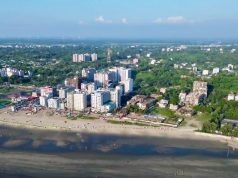
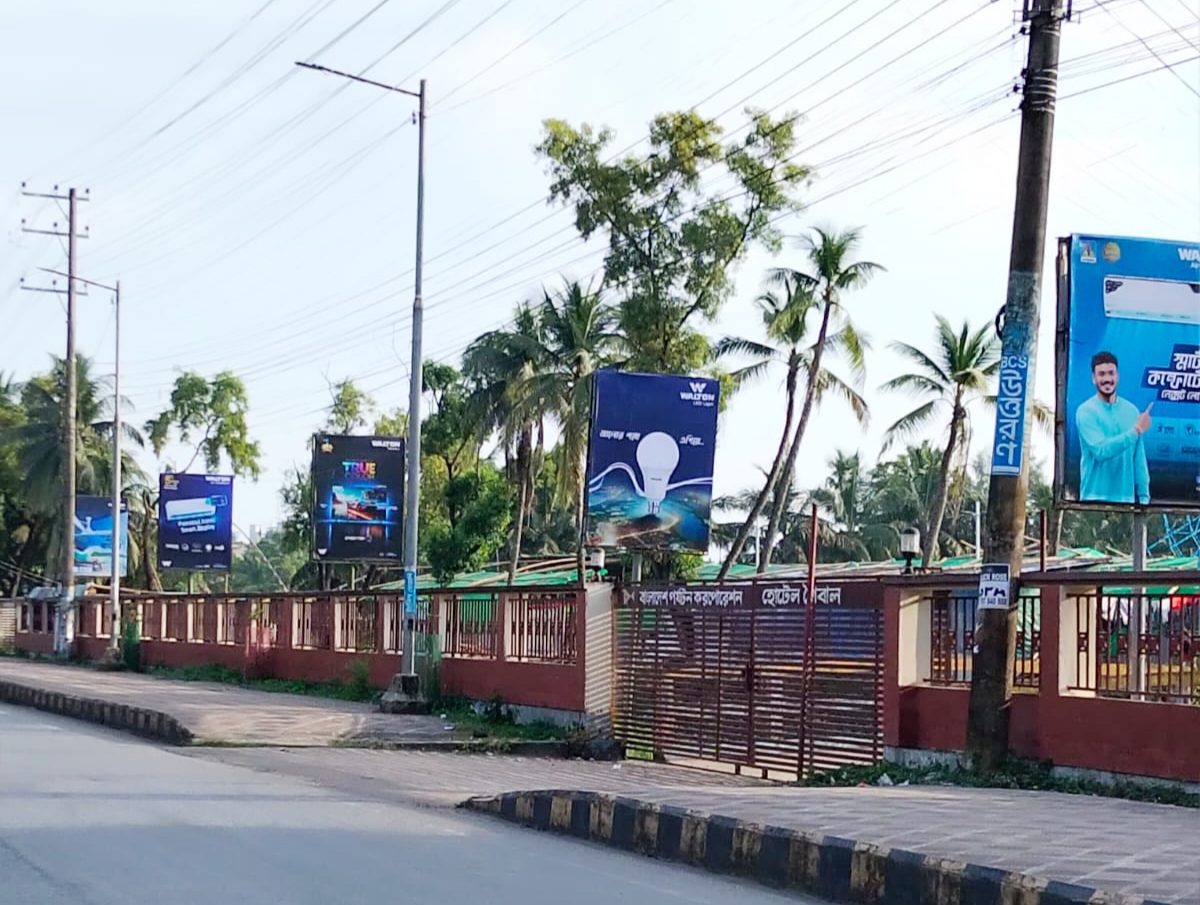
A visit to the area found little visible tourism-related information at BPC-owned sites near Laboni Beach and the adjoining hotel zone. Twenty large advertising banners for Walton, a commercial brand, were displayed on the front and boundary walls of Hotel Shaibal and Motel Upal, both operated by the corporation.
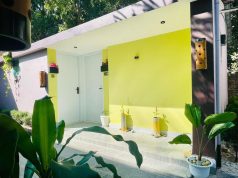
A similar situation was found at Motel Laboni, located near a major entrance to Laboni Point. A large advertisement for a commercial spa business was displayed at its main entrance, leaving visitors to encounter corporate branding rather than travel information on arrival.
Sanjid Alam, who visited Cox’s Bazar with his family from Gazipur, questioned the absence of visitor information at key locations.
‘A major tourist city should have official travel guides, maps of attractions or QR codes at its main points. But here, visitors first see commercial advertisements. If government agencies act like advertising agencies instead of promoting tourism, where will ordinary tourists get information?’ he said.
Asked why commercial advertising space was being leased on land owned by the tourism corporation instead of promoting tourism, Hotel Shaibal manager Raihan Uddin Ahmed said the corporation relied on its own earnings.
‘The corporation mainly operates on its own revenue, so these vacant spaces are leased to increase its income. However, we will consider whether they should carry only corporate advertisements without tourism-related information or visitor services. We will take initiatives to incorporate tourism information in the future,’ he said.
Regarding commercial branding at Motel Laboni’s main entrance, he said the old entrance gate would soon be removed. Construction of a new building at the motel was also under way, and he hoped visitors would receive better services.
He also mentioned plans for trade fairs and a tourism carnival to promote the destination but did not specify any concrete measures to address the shortage of visitor information.
The lack of tourism branding at Cox’s Bazar airport and the district’s main entry points has also raised concerns. Mahibul Islam, deputy director of the BTB’s marketing and branding division, said the issue had been discussed, but implementation plans and funding sources had not been finalised.
Borhan Uddin, deputy director of the board’s public relations division, who was abroad, provided no clear information about recent initiatives.
Tourism entrepreneurs and civil society representatives criticised the government agencies for leasing prominent locations for commercial advertising instead of using them to inform visitors and promote tourist attractions.
Abu Morshed Chowdhury Khoka, president of Cox’s Bazar Civil Society, said Hotel Shaibal, Motel Upal, Motel Laboni, and other facilities under the tourism corporation were originally established to serve tourists.
‘But these government facilities have been leased to NGOs and businesses. Ordinary tourists are not benefiting from them. If the institutions themselves turn towards commercial activities instead of promoting tourism, I see little prospect of improvement for ordinary visitors,’ he said.
Mizanur Rahman Milky, convener of the Tour Operators Association of Cox’s Bazar (TOAC), said government tourism agencies had leased prominent promotional spaces to private companies to generate short-term revenue.
‘Without travel guides or information boards, tourists are falling into the hands of middlemen. If government institutions behave like commercial agents instead of providing information, the entire tourism sector will suffer,’ he said.
Marketing and tourism specialists say consistent promotion, accessible information and effective directions are essential to maintaining a destination’s international profile and appeal. Visitors need not only information about attractions and services but also guidance on transport, accommodation and emergency assistance.
Tourism expert Rafsan Hasan said such information services at a popular destination like Cox’s Bazar could improve visitors’ experiences and strengthen confidence in the tourism industry.
Stakeholders said government agencies needed to balance commercial revenue generation with their responsibility to promote tourism. They called for permanent digital information displays, maps of attractions, QR codes, travel guides and emergency contact details alongside commercial advertisements at key facilities and entry points.
They also urged the BPC and the BTB to allocate dedicated spaces for tourism information and use them effectively, arguing that better access to visitor information would improve the tourist experience and create more opportunities to promote Cox’s Bazar internationally.
By Tarekur Rahman
Photo: Tarekur Rahman