Repeated accidents along the Cox’s Bazar-Chattogram railway route have raised fresh concerns over the safety of unprotected level crossings, many of which have no gates or gatemen.
The latest incident occurred at the Katirmatha crossing in South Mithachhari, Ramu, where four members of a family, including two children, were killed when a Dhaka-Cox’s Bazar-bound Tourist Express train struck their CNG-run autorickshaw on Friday.
The victims were Sajjad Hossain Rubel, 45, his younger sister Kashifa Jannat, 20, and her three-year-old son Sahel and five-month-old daughter Mashrufa.
According to relatives, six family members were travelling by autorickshaw to attend a wedding invitation in Umkhali after Friday prayers. The train struck the vehicle as it crossed the railway line, throwing it into a nearby crop field. Two people died at the scene, and two others died on the way to the hospital.
Sajjad’s wife Tania Akter, 22, Kashifa’s husband Sakil Ahmed, 40, and the autorickshaw driver Zainal were injured. Tania was reported to be in critical condition.
Police, witnesses and railway officials said there was no gate or gateman at the crossing. They also alleged that the driver attempted to cross despite hearing the train’s horn.
Mohammad Mostafizur Rahman, officer-in-charge of Iconic Railway Police Station, said the crossing was risky and unprotected.
“There is no gate or gateman there. We will write to the railway authorities to install a barrier,” he said.
CCTV footage of the accident later circulated on social media. The 1-minute 29-second footage showed the unprotected crossing and the autorickshaw attempting to cross as the train approached. The train’s horn could be heard before the collision.
Stationmaster Zainal Abedin of Cox’s Bazar Iconic Railway Station said the autorickshaw tried to cross just before the Tourist Express arrived and blamed the driver’s negligence for the accident.
District administrator Md A Mannan said the crossing was unprotected and that discussions would be held with railway authorities about installing a gate. He said traffic volume on the road would also be assessed and the accident investigated.
Abu Morshed Chowdhury Khoka, president of Cox’s Bazar Civil Society, called for vulnerable crossings to be identified and equipped with gates, barriers and gatemen.
A local community leader, Nur Mohammad, said many people and vehicles use the crossing every day, but no safety mechanism warns them of approaching trains.
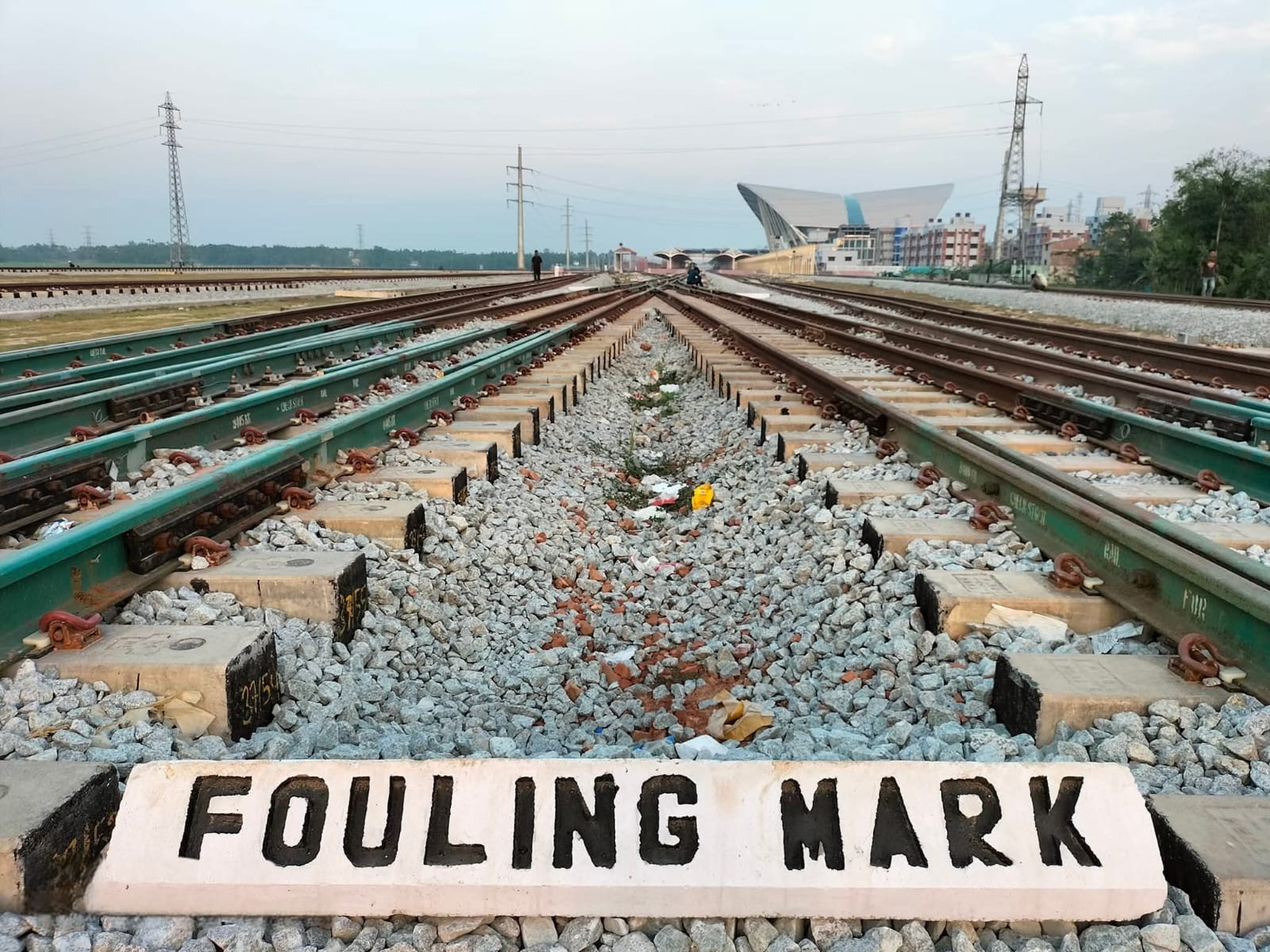
According to railway department data, train services to Cox’s Bazar began on December 1, 2023. Five pairs of trains currently operate on the route, while more than 30 railway crossings along the 102-kilometre Cox’s Bazar-Dohazari section remain unprotected.
By Tarekur Rahman
Photo: Tarekur Rahman