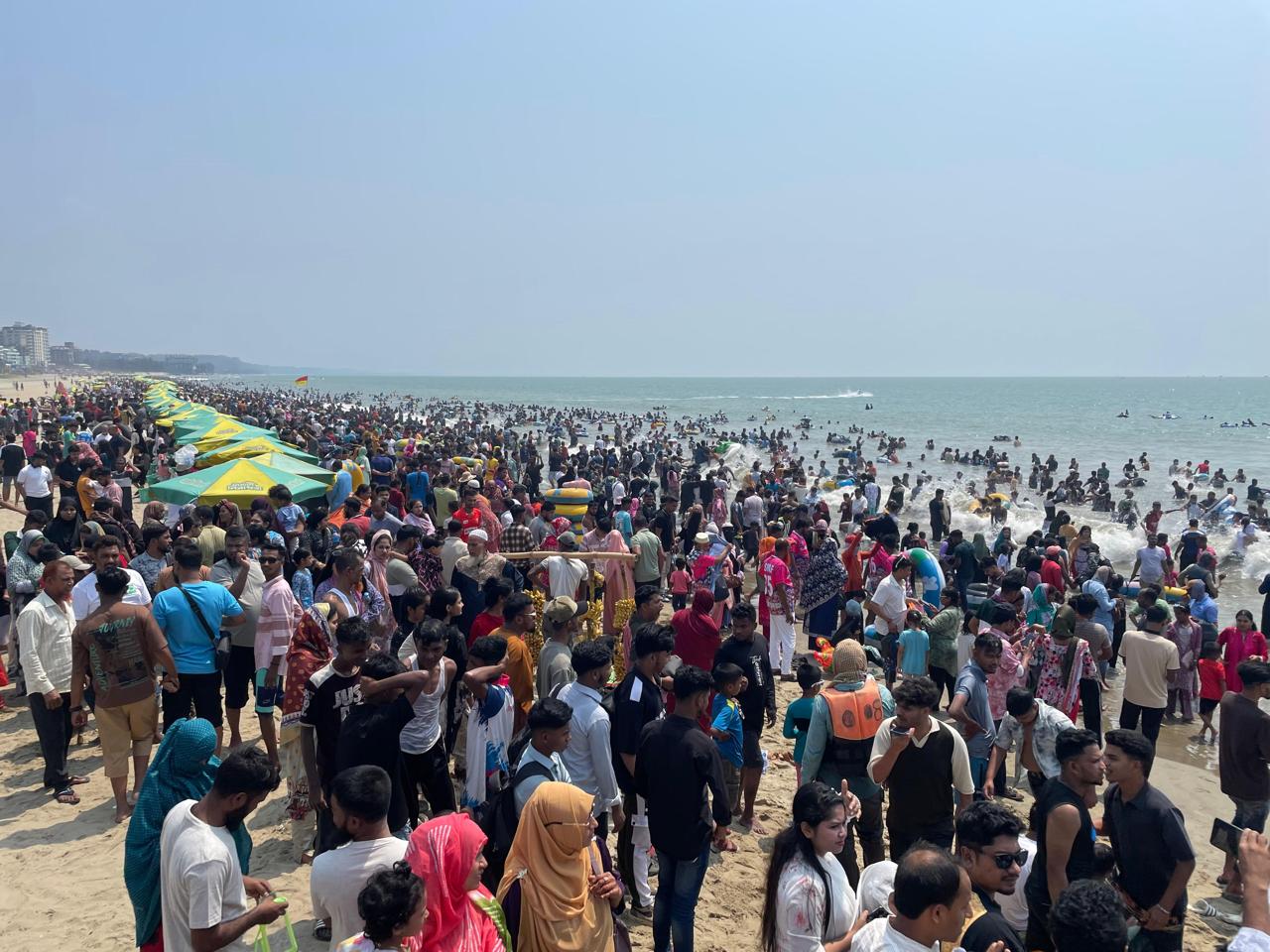
Cox’s Bazar, home to one of the world’s longest uninterrupted natural beaches, has built a substantial tourism economy around its coastline. According to the Hotel and Guesthouse Owners’ Association, more than eight million tourists visited in 2025. Around 538 accommodation establishments operate within three square kilometres of Kolatoli alone. Yet no reliable figure shows how many visitors come from abroad specifically for leisure.
A November report by the South Asia Democratic Forum (SADF), Unlocking International Tourism in Cox’s Bazar, highlights this gap. Available information from the district administration, aviation authorities, tourism agencies and hotels does not provide a dependable count of foreign holidaymakers. The methodology behind widely cited domestic visitor estimates also deserves greater transparency.
Bangladesh Tourism Board figures show foreign arrivals falling from 655,451 in 2023 to 585,145 in 2025, with a reported decline of nearly 20 per cent in the first half of 2026. But these are national arrival figures, not a count of holidaymakers in Cox’s Bazar. They include people travelling for business, official duties and other purposes. International agency staff working in the Rohingya camps, for example, should not automatically be classified as leisure tourists.
In 2025, foreign tourist arrivals reportedly rose by 44.33 per cent in Bhutan, 15.1 per cent in Sri Lanka and 9.8 per cent in the Maldives. Definitions and reporting methods differ, making direct comparisons misleading. Still, these countries track international tourist arrivals, while Cox’s Bazar lacks a reliable local measure of foreign leisure tourism.
This is not simply about counting people; it is about planning an economy. Data on visitors’ countries of origin, length of stay, spending and preferences would help identify promising markets, direct investment and improve tourism services. It would also show how international tourism supports local hotels, restaurants, transport operators and small businesses. Such evidence could help policymakers identify gaps in transport, accommodation and visitor experiences, while enabling local entrepreneurs to develop services that respond to actual demand rather than assumptions. Without reliable data, public planning and private investment remain heavily dependent on guesswork.
A practical response has three parts. Immigration authorities should distinguish arrivals by travel purpose using information already collected or suitably updated. Hotels should report foreign guest stays through a coordinated digital system. The Bangladesh Tourism Board and Bangladesh Bureau of Statistics should conduct sample surveys of visitor spending, experiences and length of stay. With appropriate legal and privacy safeguards, a pilot could begin at Cox’s Bazar Airport and hotels in Kolatoli, whose records would also capture guests arriving by road.
Infrastructure and promotion matter, but neither can substitute for evidence. A destination cannot plan its international future without first understanding the visitors it attracts today.
By Salam Abu
Editor