
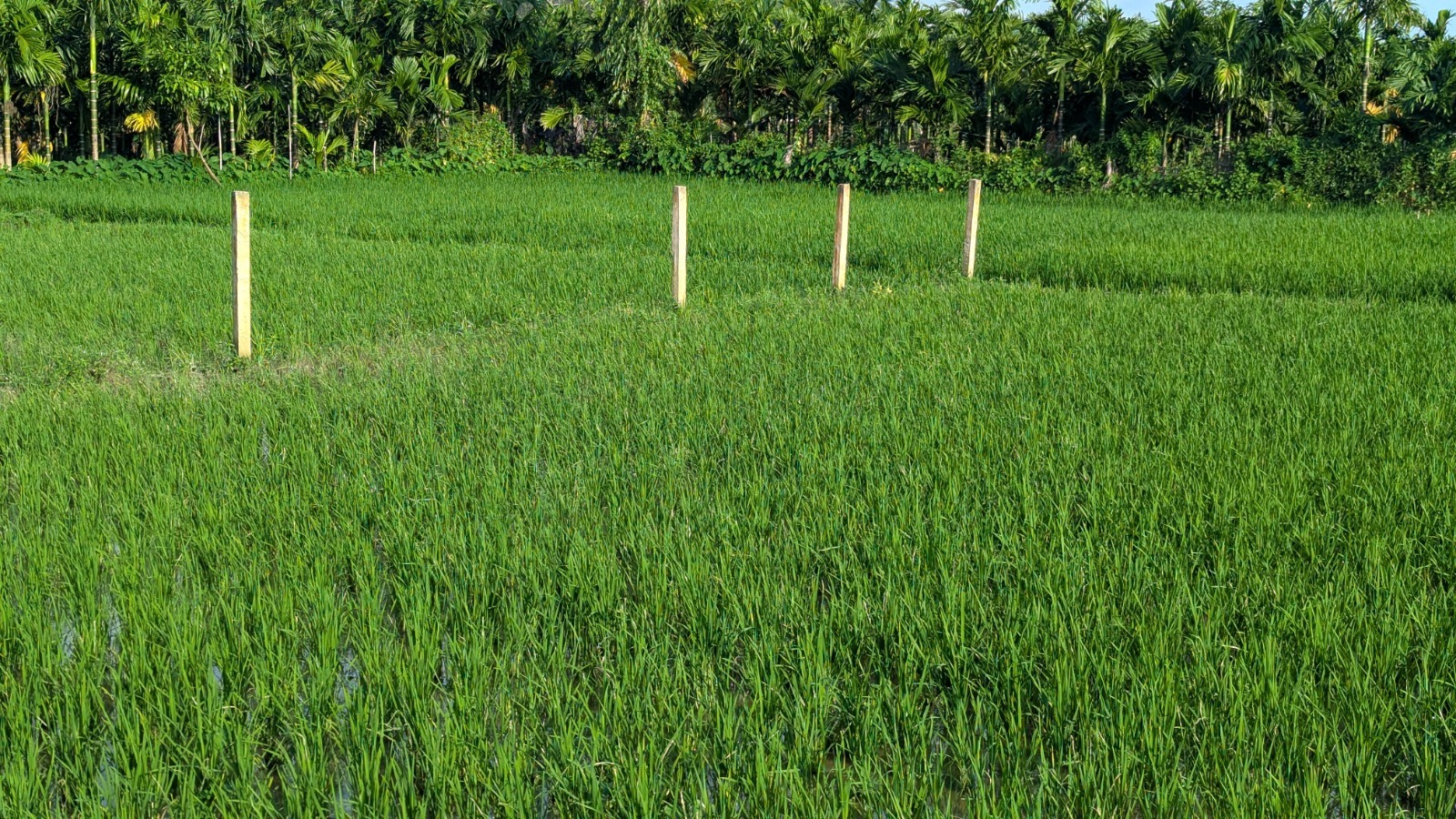
Rice cultivation is expanding on land traditionally used for salt production in Cox’s Bazar’s coastal areas, raising the prospect of producing two different crops from the same fields in a year.
Once left unused for much of the year because of high soil salinity, these lands are increasingly being brought under rice cultivation with salt-tolerant varieties.
Farmers have cultivated rice on 3,607 hectares of salt fields across Cox’s Bazar’s nine upazilas during the current Kharif-2 season.
According to the Department of Agricultural Extension (DAE) in Cox’s Bazar, the nine upazilas—Kutubdia, Moheshkhali, Pekua, Chakaria, Eidgaon, Ramu, Ukhiya, Teknaf and Cox’s Bazar Sadar—have a combined 30,680 hectares of land suitable for salt production.
DAE data show that 5,891 hectares of such land were brought under cultivation across the Rabi, Kharif-1 and Kharif-2 seasons in the 2025–26 financial year. The cultivated area increased by 89 hectares compared with the previous financial year.
Farmers said much of the coastal land traditionally remained unused during the rainy season after summer salt production.
In some areas, farmers tried to cultivate crops by creating enclosures, but excessive salinity prevented satisfactory yields. Attempts were also made to cultivate BRRI dhan-47, but the variety was not equally suitable for all soil conditions.
The situation has gradually changed with the introduction of new varieties that can tolerate salinity.
Farmers are now cultivating BRRI dhan-75, BRRI dhan-33, BRRI dhan-49, BINA dhan-7, as well as local Binny and Paijam varieties. Many of these varieties mature within 100 to 120 days, allowing farmers to harvest rice within a relatively short period.
After harvesting the rice, the same land can again be used for salt production.
Alam, a farmer from Chowfaldandi in Cox’s Bazar Sadar, said farmers were initially uncertain about cultivating rice on saline land.
“After getting good results from trial cultivation, other farmers gradually became interested,” he said, adding that they expected to harvest around 100 ari of rice or more per kani this season if weather conditions remained favourable.
Rice cultivation has also expanded in Teknaf’s Whykong, Hnila, Teknaf Sadar, Sabrang, Shah Porir Dwip and Baharchhara areas over the past several years.
Cultivation scale and yields have changed from year to year, increasing farmers’ interest in growing rice on salt fields.
Farmers Mohammad Zafar, Mohammad Anwar, Mohammad Faisal, Nur Hossain, Nurul Alam and Mohammad Abdul Mannan also reported good yields from rice cultivation on salt fields.
Nazir Ahmed, a farmer from Hariakhali, said the same land could now be used for both salt production and rice cultivation.
“Once salt production ends, we can grow rice on the same land. So we can cultivate two different crops on the same field,” he said, adding that greater support from the upazila agriculture office could help them achieve better yields.
Teknaf Sub-Assistant Agriculture Officer Shafiul Alam Qutubi said cultivating short-duration rice varieties on large areas of land that remain unused for much of the year could help meet food demand.
However, climate-change-driven salinity remains a major challenge.
Sub-Assistant Agriculture Officer Mostak Uddin of Teknaf’s Shamlapur block said rising sea levels and increased tidal pressure were worsening soil salinity in coastal areas.
He said saline water enters through canals during new and full moons and inundates croplands, damaging Aman and Aus rice seedlings.
Farmers are being advised to cultivate salt-tolerant crops. He also recommended increasing the use of organic fertiliser, dolomite and potash while reducing urea application to minimise damage.
The agriculture department is providing regular training, improved seeds and technical support, he said, adding that sluice gates could help control the entry of saline water through canals.
Teknaf Upazila Agriculture Officer Humayun Kabir said climate change has caused major damage to the area’s agricultural sector.
He said rising sea levels and saltwater intrusion have made large areas of farmland unsuitable for cultivation. Cyclones Yaas, Sitrang, Hamoon and Mocha also severely affected crop production in recent years.
According to him, 23 hectares of crops were destroyed by saline water in the 2022–23 financial year, while another 20 hectares suffered partial damage in 2024.
Drought, irregular rainfall, and irrigation shortages have also increased production costs and reduced vegetable cultivation.
The agriculture department is encouraging farmers to grow salt-tolerant rice varieties, including BRRI dhan-23, 40, 41, 53, 54, 73 and 78, as well as vegetables, he said.
DAE Cox’s Bazar Deputy Director Dr Bimal Kumar Pramanik said various disasters damaged around 1,000 hectares of agricultural land in Cox’s Bazar last year.
Although the damage was comparatively lower this year, tidal saline water entered croplands in some areas and damaged crops, he said.
In coastal areas including Saint Martin’s Island, weather-related salinity caused rice and vegetable leaves to turn yellow, he added.
The department is advising affected farmers to apply fertiliser, use clean freshwater for irrigation and cultivate salt-tolerant rice varieties suited to different seasons.
Farmers are getting good results from BRRI dhan-54, 73 and 78 during the Aman season and BRRI dhan-48, 98, 106 and 67 in other seasons, he said, adding that many farmers had recovered their losses and returned to profit.
Pramanik also stressed the need to prevent saline water from entering farmland through canals and streams.
He said installing sluice gates or raising embankments could stop saline water from entering agricultural land and ease farmers’ difficulties.
Climate experts say an integrated approach is needed to address salinity in coastal areas, including water-control infrastructure, developing salt-tolerant crops, farmer training,, and ensuring fair market prices for agricultural produce.
By Tarekur Rahman
Photo: Tarekur Rahman