

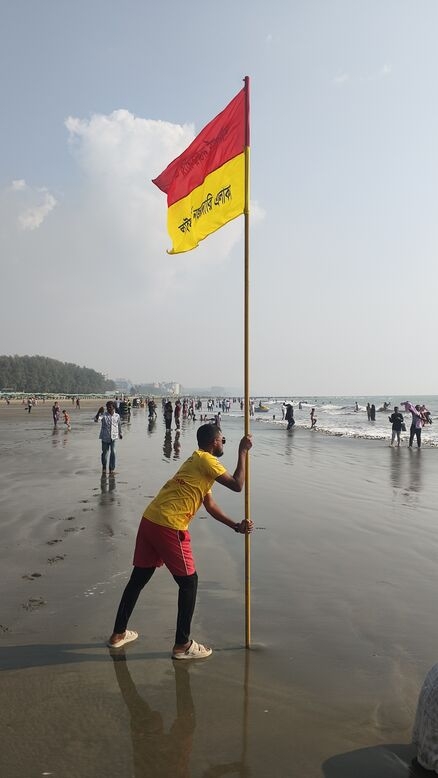
Red-yellow flags have been raised at Cox’s Bazar sea beach after nearly six months, replacing the red flags that had been in place as rough seas prevailed.
As the winter season begins, sea conditions have gradually become calmer. Considering the relatively favourable conditions, lifeguards raised red-yellow flags at designated bathing zones on Thursday.
According to lifeguards, red flags had been flown along the beach since June because of rough seas, warning tourists not to enter the water. With conditions gradually improving in winter, the warning has now been eased to red-yellow flags.
Imtiaz Ahmed, field team manager of Sea Safe Lifeguard, said red flags were used during the monsoon as rough seas create underwater holes and channels at various points, posing risks to tourists.
“As the sea becomes calmer in winter, these holes and channels are gradually being filled. Considering the current conditions, red-yellow flags have now been raised,” he said.
However, he said the red-yellow flags did not mean tourists could bathe anywhere along the beach. Tourists should enter the water only in designated zones at Kolatoli, Sugandha and Laboni points and under the supervision of lifeguards.
“If the sea becomes rough again or weather conditions deteriorate, red flags will be raised again,” he said.
Mohammad Osman Gani, supervisor and senior lifeguard at Sea Safe Lifeguard, urged tourists to follow the flag signals and lifeguards’ instructions.
“Tourists should assess the sea conditions before entering the water. Entering the sea outside designated areas can lead to accidents,” he said.
A red flag indicates dangerous sea conditions, while a red-yellow flag indicates that bathing is permitted in designated areas under lifeguard supervision. It does not, however, mean that the sea is completely risk-free.
Designated bathing zones are available at Kolatoli, Sugandha and Laboni points, where lifeguards monitor tourists from watchtowers and conduct rescue operations when necessary.
Cox’s Bazar Life Report