
Journalists are pivotal in addressing weather and climate change risks by providing accurate information services. This is particularly crucial in high-risk coastal regions like Cox’s Bazar, where timely and accurate information dissemination can significantly mitigate risk.
When people in these areas make informed decisions based on credible media coverage of weather and climate issues, such reporting becomes a public service.
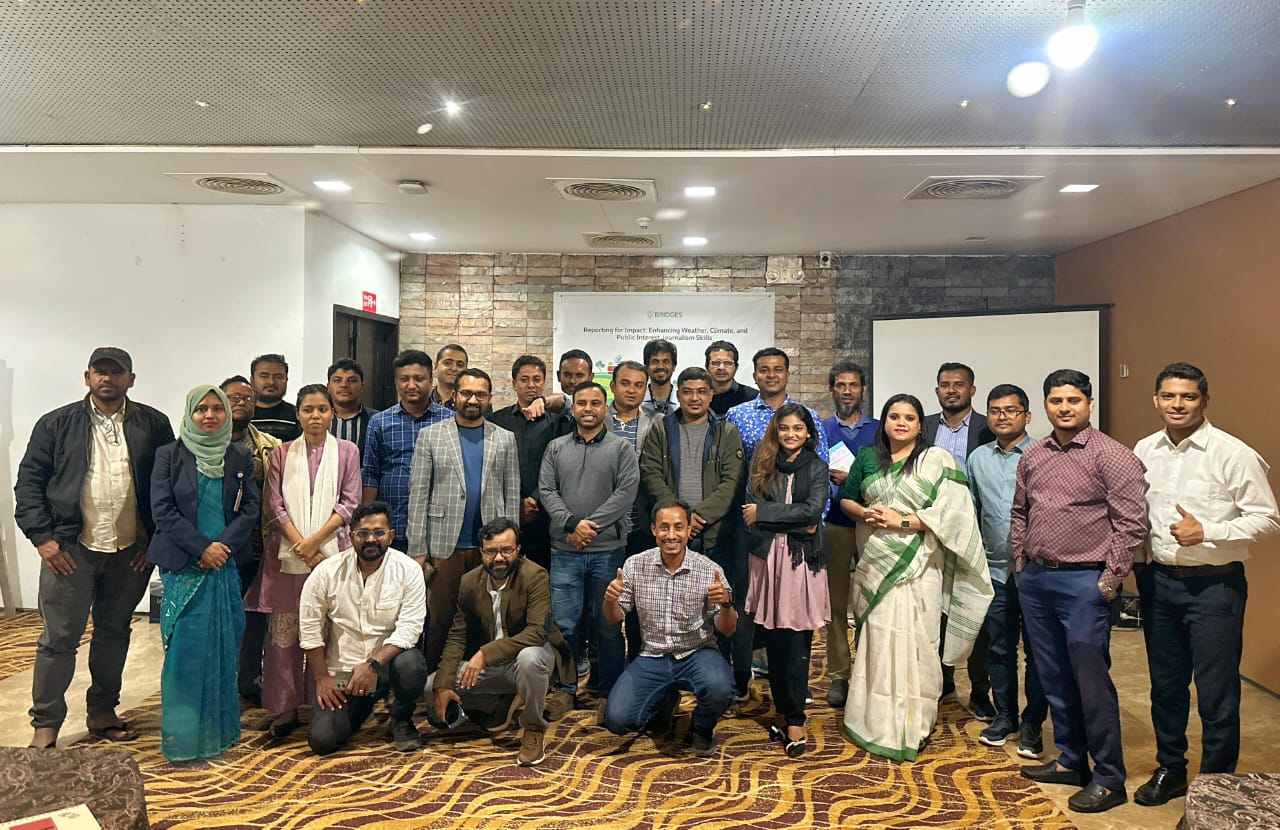
A weather, climate, and public interest journalism training program began on January 12 and shared these insights. Organized under the BRIDGES Project by BBC Media Action, with funding from Norway’s development cooperation agency NORAD, the training aimed to enhance journalistic skills in this critical domain.
The program, held at a hotel in Cox’s Bazar, brought together 22 journalists from national and local newspapers, online platforms, television, and Bangladesh Betar.
The training emphasized hands-on techniques for public-interest journalism, equipping reporters with tools to convey critical information effectively. Participants learned how their reporting can empower at-risk communities to make informed decisions, thereby mitigating the adverse effects of weather and climate change.
On the final day, participants reflected on the challenges of delivering timely information, often due to a lack of technical expertise.
They pledged to improve their efforts to protect vulnerable communities and the region’s biodiversity, urging collective action from the government and all stakeholders.
BBC Media Action’s Media Development Officers Nur Siddique, Ashiqur Rahman Chowdhury, Faisal Titumir, and Ahmed Reza, along with meteorologist Syeda Sabrina Sultana from BBC’s implementation partner RIMES, facilitated the program.
The inaugural session featured remarks from BBC Media Action’s Country Director Md. Al Mamun, Project Director Hasanul Banna, Project Manager Mir Arafat Rahman, and Media Development Manager Rashedul Hasan.
Beyond Cox’s Bazar, the BRIDGES Project will train 100 journalists across Jamalpur, Kurigram, Satkhira, and Sunamganj.
A mentoring program will complement these training sessions to ensure sustained skill development in weather, climate, and public-interest reporting.
By Abdur Rashid Manik
Photo: Courtesy