
The blooming of bhat flowers on the hilly slopes of Moheshkhali Upazila in Cox’s Bazar has recently drawn the attention of nature lovers, highlighting the ecological importance of this native shrub.
Commonly found growing naturally in rural landscapes, along roadsides, fallow lands, and forest edges, the bhat plant is more than just a wild shrub—it is an integral part of local heritage, environment, and biodiversity.
According to botanists, the plant’s scientific name is Clerodendrum infortunatum, belonging to the Lamiaceae family.
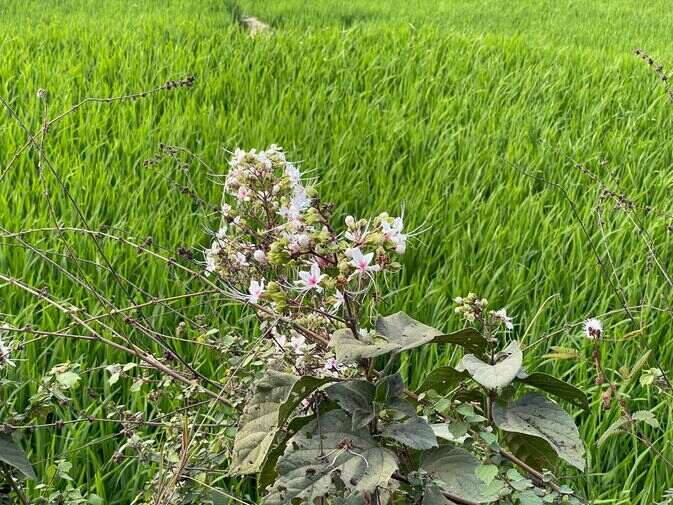
It is a flowering shrub that typically grows between three and five feet in height, with a greenish, sturdy stem and large, oval-shaped leaves that emit a distinct smell.
The flowers are usually white with a slight pink hue and bloom in clusters. Long protruding stamens at the centre give the flowers a striking appearance. The fruits, initially green, turn bluish-black when ripe.
Although the plant generally flowers between July and October, it can also bloom from January to March depending on environmental conditions.
During the flowering season, the contrast of white blossoms against lush green leaves creates a captivating natural scene on the hills of Moheshkhali.
Bhat flowers attract butterflies and bees, which help in pollination and thus contribute significantly to biodiversity conservation.
The shrub also provides shelter for small animals and helps prevent soil erosion in hilly terrains.
In traditional medicine, various parts of the plant are widely used.
Leaves are believed to help treat skin diseases and wounds, while the roots are used to treat fever and stomach ailments,, and as an anthelmintic.
Leaf extracts are also commonly used for relieving rheumatic pain.
Experts say that preserving native plants like bhat is essential for maintaining ecological balance.
They stress the need for greater awareness and conservation efforts to protect such valuable components of the natural environment.
By Abdu Rashid Manik
Photo: By Abdu Rashid Manik