
Waves regularly wash ashore plastic bottles, polythene bags, discarded fishing nets, and other waste in Shamlapur. While many people walk past it, 10 residents see the debris as a threat to marine life and biodiversity.
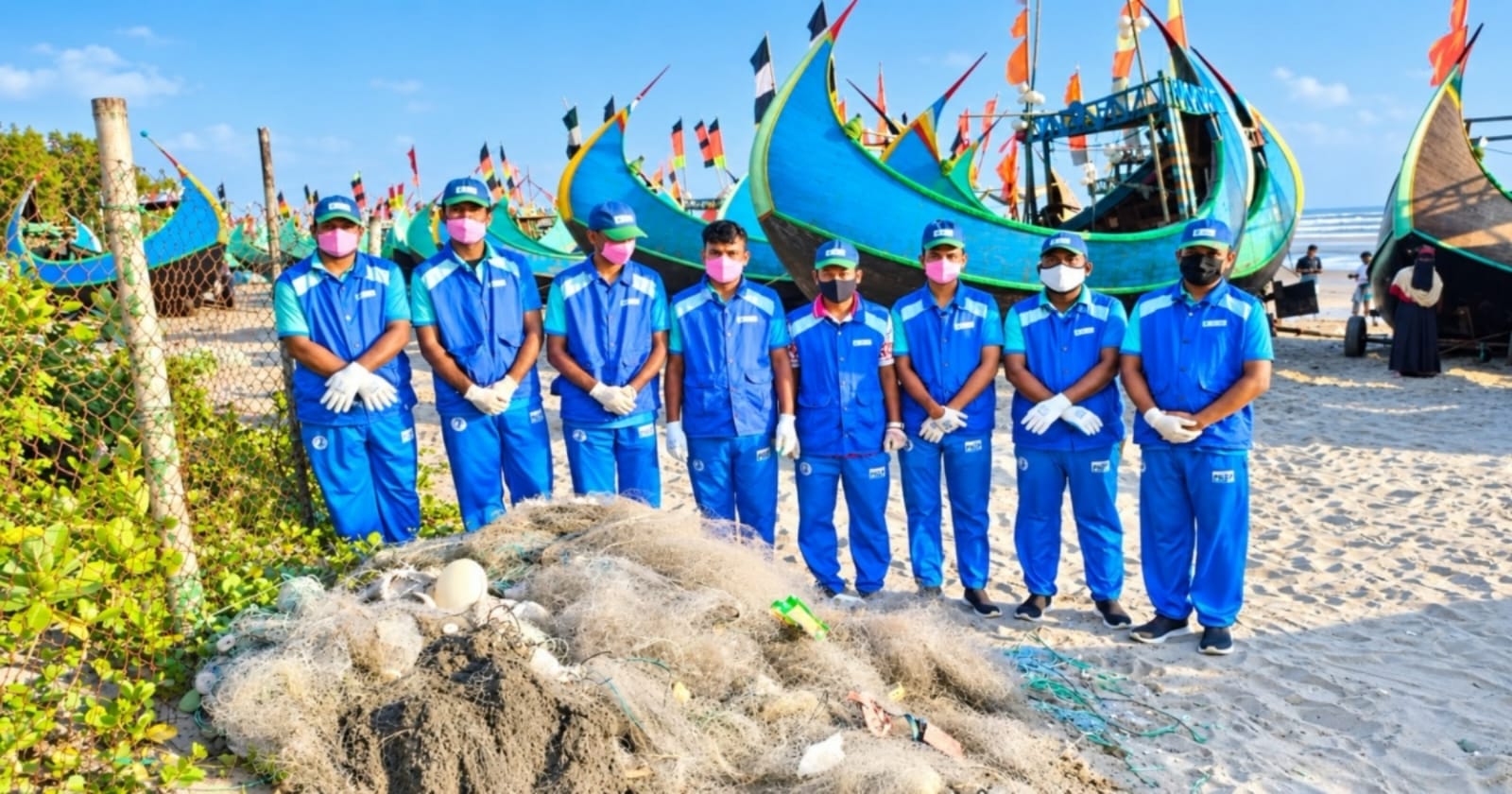
The 10-member Shamlapur Blue Guard team regularly visits the beach to collect marine litter and abandoned fishing nets while also raising awareness among fishermen, residents, and tourists about marine pollution and conservation.
Based in Shamlapur, Baharchhara Union, Teknaf, the team works to protect the marine and coastal environment, reduce marine pollution, and encourage local communities to support the sustainable management of marine resources.
One of the team’s main activities is identifying and collecting marine litter. Members remove plastic bottles, polythene, discarded or damaged fishing nets and other waste from the beach and nearby coastal areas.
The members said abandoned fishing nets pose a particular threat to marine biodiversity. The nets can trap fish, turtles, dolphins, and other marine animals, causing injury or death.
The team does not limit its activities to beach clean-ups. Its members also speak with fishermen and residents about properly disposing of damaged nets and avoiding dumping waste into the sea.
“We are 10 people working regularly along the beach and coastal areas. Whenever we find plastic, polythene, or abandoned fishing nets, we collect them and remove them,” said Blue Guard member Sohel Uddin.
“We also explain to fishermen and residents that dumping waste into the sea harms not only the environment but also marine animals. Our goal is to build long-term awareness for protecting Shamlapur’s sea and biodiversity by involving the local community,” he said.
The team conducts a beach clean-up drive every month, collecting different types of marine litter and waste from the coastal area. During these activities, members also record information on the types and locations of the waste to better understand marine litter and pollution patterns along the coast.
The Blue Guard members are also taking their conservation message to educational institutions.
Mohammad Hossain, another team member, organised monthly awareness sessions with Shamlapur High School students.
“The sessions cover plastic waste management, conservation of marine animals and biodiversity, the harmful effects of marine pollution and the importance of maintaining a clean coast,” he said.
He said cleaning beaches alone would not be enough to keep the sea pollution-free in the long term.
“The sea and coast are integral to our lives. But plastic waste and abandoned fishing nets have become major threats to marine biodiversity. So, alongside clean-up drives, it is important to raise awareness among fishermen, traders, tourists and students,” Hossain said.
The team believes changing people’s behaviour is essential for long-term conservation, as waste generated on land can eventually reach the sea and threaten marine ecosystems.
HM Nazrul Islam, organising secretary of Bangladesh Poribesh Andolon (Bapa), Cox’s Bazar district branch, said that involving local communities was important for protecting marine biodiversity.
“Stopping people from dumping plastic and discarded fishing nets into the sea requires more than enforcement or drives. Awareness among people is essential. The initiative by these 10 people in Shamlapur can help involve more residents in protecting the coastal environment,” he said.
The Blue Guard members say they want to expand their awareness activities and involve more people in keeping Shamlapur’s beach and surrounding waters clean and safe for marine life.
By Tarekur Rahman
Photo: Courtesy