
World Habitat Day Today
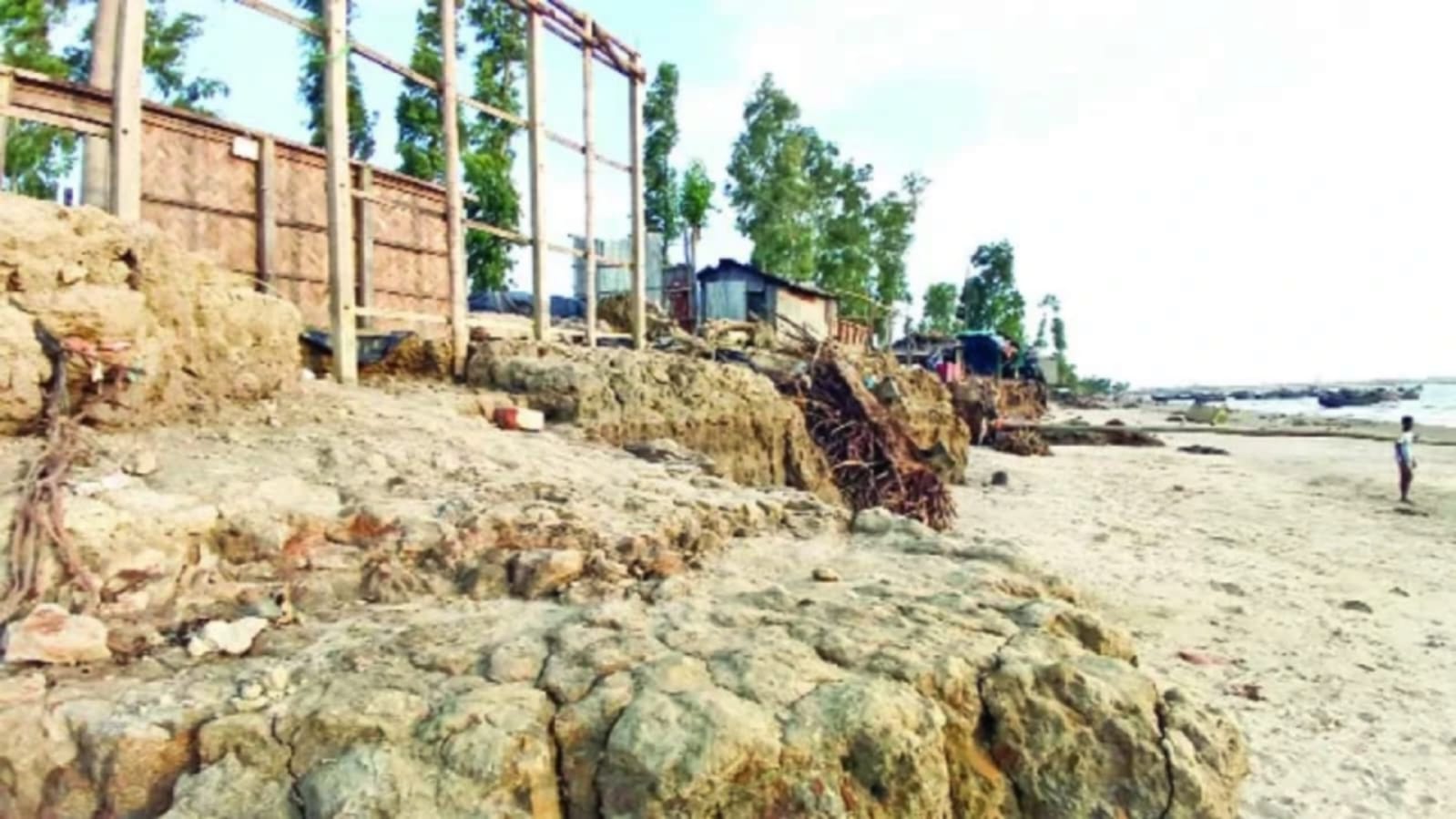
Where homes once stood with trees in their yards and tube wells nearby, waves now crash against the land. Tidal water enters homesteads, parts of houses have disappeared into the sea, and the remaining structures stand precariously close to the eroding shoreline.
In Matarbari, Moheshkhali, one village after another is gradually disappearing as relentless coastal erosion eats away at homes, roads, trees, and other infrastructure.
More than 400 families from five villages, including Jhelepara, have become homeless during the current monsoon season due to sea erosion. Some have taken shelter with relatives, while others have moved to neighbouring villages. Many, however, continue to live in vulnerable areas, clinging to whatever remains of their homes.
A recent visit to Jhelepara in the Sairar Dail area on the western side of Matarbari and neighbouring villages found extensive coastal erosion.
In some places, half of a house has already fallen into the sea. In others, tidal water comes right up to the walls of homes. Trees and roads have collapsed, while many tube wells have also been washed away.
‘Every day I wonder where I will build a home again’
Abu Siddique, a resident of Jhelepara, has watched his homestead gradually disappear over the past several years. The sea recently swallowed his house, forcing him and his family to take shelter with a relative.
“Every day I sit on the broken homestead and wonder where I will build a home again. Living like this without our own land is very difficult,” he said.
Raju Ahmed, another resident of the area, said the authorities had not paid adequate attention to the erosion despite the damage to the entire locality.
“The whole area is being washed away, but no one is paying attention to us. We have taken shelter at a relative’s home in another village. We have no home, but we still have to go to the sea to catch fish. We cannot afford to buy land and build another house,” he said.
Housewife Monowara Begum said half of her home had already disappeared into the sea.
“The remaining part is also flooded during high tide. We have nowhere to go. My husband is sick, and our only son supports the family by fishing in the sea,” she said.
Tube wells gone, drinking water shortage worsens
The erosion has also created a fresh drinking-water crisis. Many local tube wells have been washed into the sea, while those that remain are submerged during high tide.
Shamsul Alam, a resident of Jhelepara, said they now had to travel farther to collect drinking water.
“During low tide, we have to carry pitchers to distant tube wells to collect water. The tube wells go underwater when the tide rises. Many tube wells in the village are already in the sea,” he said.
Locals concerned over dredging for port channel
Local youth Rubaiyat Hossain Anas said regular sand extraction for dredging the channel of Matarbari deep seaport was raising concerns among residents about increased erosion.
“If the villages continue to disappear like this, the sea waves could eventually hit the power plant and port directly. Sustainable measures must be taken now,” he said.
Major infrastructure also at risk
The area is home to two major national infrastructure projects — the Matarbari coal-fired power plant and deep seaport.
Local residents fear that continued coastal erosion, without effective control measures, could eventually threaten these installations as well.
SM Abu Haider, chairman of Matarbari Union Parishad, said the authorities had been informed of the suffering of people in erosion-hit areas during the monsoon.
“We have informed the higher authorities, including the member of parliament, about the situation. If the erosion continues, the coal-fired power plant and deep seaport could also be at risk. He emphasised the need for urgent measures to protect these important installations.
6.5km embankment highly vulnerable
Nurul Islam, executive engineer of the Bangladesh Water Development Board’s Cox’s Bazar office, said 6.5km of the 32km embankment in Matarbari and Dhalghata was highly vulnerable.
“Another 18km of the embankment also needs renovation,” he said.
He said he had obtained permission for emergency repairs at several vulnerable sections, and work had already begun.
Climate change adding to coastal risks
Cox’s Bazar deputy commissioner Md A Mannan said rising sea levels caused by climate change were contributing to erosion in the area.
He said the Water Development Board was preparing a detailed project proposal to implement embankments and other necessary measures to prevent further erosion.
H M Nazrul Islam, organising secretary of the Cox’s Bazar district unit of Bangladesh Poribesh Andolon, said the erosion was damaging not only homes but also trees and the natural environment.
He stated that local biodiversity and aquatic animals are also feeling the impact.
By Tarekur Rahman
Photo: Courtesy