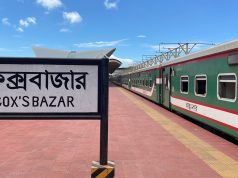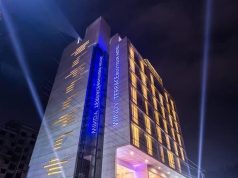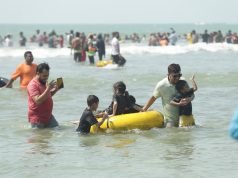

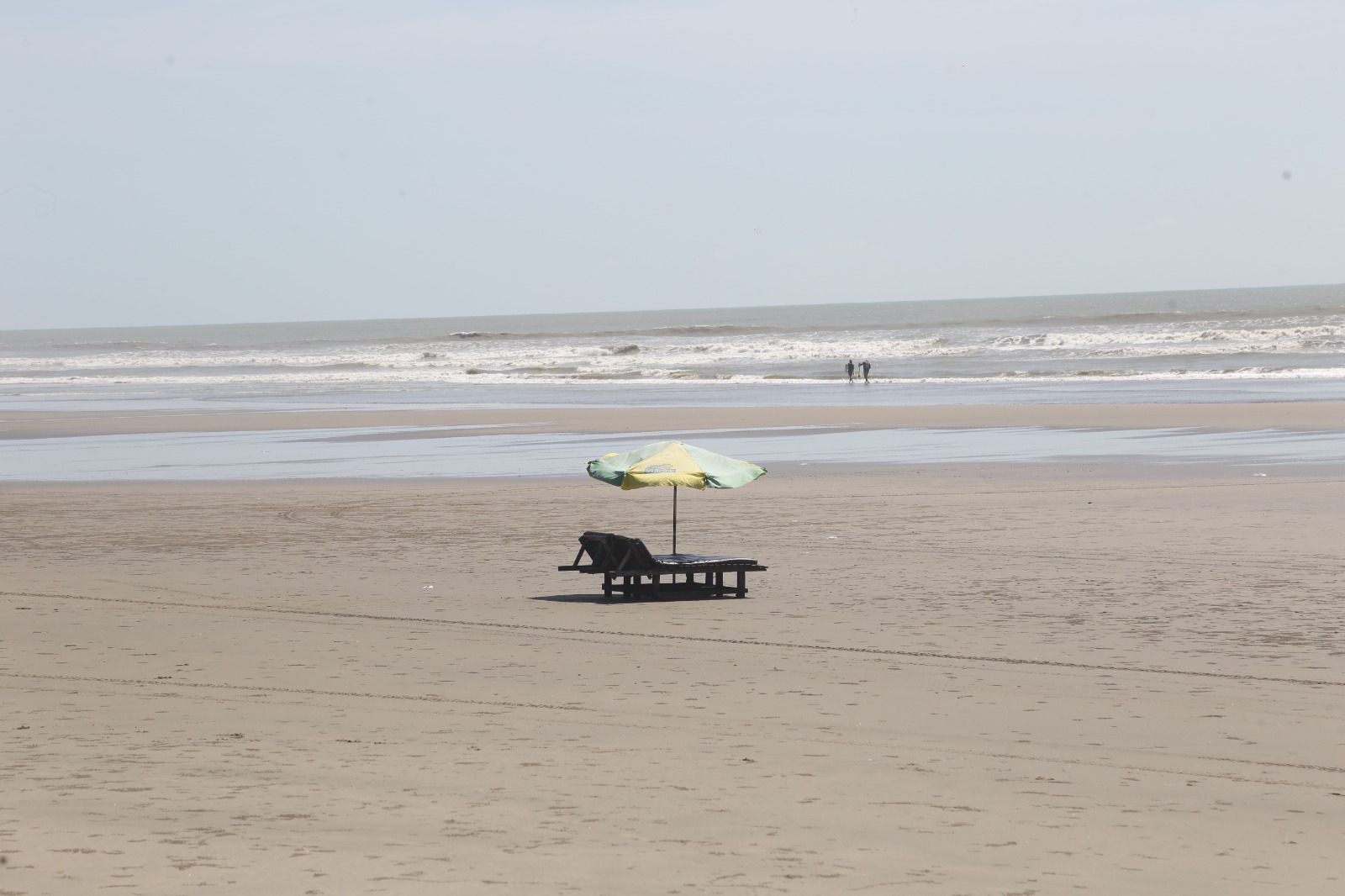
The waves continued to crash against the shore, even as the first light of day had yet to fully spread across the beach. Fishing boats were visible in the distance, while a vast expanse of blue stretched towards the horizon. Thousands of tourists now come to Cox’s Bazar every day to enjoy this familiar scenery. Yet finding foreign tourists among them has become increasingly difficult.
The picture was different more than two decades ago.
In the early 2000s, mornings and afternoons at Cox’s Bazar beach offered glimpses of people from different countries. Some came with cameras to photograph the beach, some dipped their feet into the waves, while others travelled in groups towards Saint Martin’s Island. For people involved in the tourism business, foreign tourists were not a rare sight but a familiar part of Cox’s Bazar’s tourism economy.
Tour operator Kajal Sharma witnessed that period first-hand. He started working as a tour operator for a company in Cox’s Bazar around 2000. After about eight years with other businesses, he established his own tourism company. Over the years, he has closely observed tourism’s rise and decline in the coastal district.
Sharma claims that in the early 2000s, foreign tourists were relatively plentiful in Cox’s Bazar. During the three-month tourism season, he would take tourists to Saint Martin’s Island about 80 days a year. Cox’s Bazar attracted foreign nationals from various countries almost every day, many of whom continued their journey to Saint Martin’s.
He said the trend continued until 2012-13. Foreign tourists regularly came to see Cox’s Bazar beach, the blue waters around Saint Martin’s and Bangladesh’s natural attractions.
However, the picture gradually changed afterwards. The number of foreign tourists began to decline, and tourism operators believe the situation deteriorated further after the Covid-19 pandemic. They claim that foreign tourists are now a rare sight in Cox’s Bazar.
Bad experiences leave a lasting impact
Kajal Sharma, a member of the Tour Operators Association of Cox’s Bazar (TOAC), said weaknesses in tourism management have played a significant role in the decline of foreign tourists.
He said security, cleanliness, hygienic conditions, food, adequate seafood, entertainment, and other tourism facilities were once below foreign tourists’ expectations. Incidents involving the loss or theft of tourists’ personal belongings also contributed to negative experiences.
Sharma recalled that foreign tourists once came to the beach carrying expensive cameras and other equipment. While swimming or sunbathing, they often left their belongings on the beach before entering the water. They occasionally returned to find their possessions gone.
Although the Tourist Police later began operating, he said the service initially lacked experience and modern equipment.
Sharma noted that a negative experience for one foreign tourist can extend beyond that individual. After returning home, the tourist may share the experience with family members, friends and acquaintances. In the age of social media, such experiences can spread much faster, potentially influencing how prospective tourists view a destination.
15-20 foreign tourists once came every day
TOAC president Anwar Kamal recalls something similar. He has been involved in the tourism business since 1996 and began working as a tour operator in 2004.
He said that around 2000, at least 15 to 20 foreign tourists would visit Cox’s Bazar beach every day. Foreign tourists were then a familiar sight to people involved in the tourism trade.
That has changed significantly, he said.
According to Kamal, most foreigners now seen in Cox’s Bazar are people working for NGOs because of the Rohingya crisis, rather than tourists visiting the district for leisure.
He said political and law-and-order conditions had negatively affected tourism in the past. Although the situation has changed in several respects, Cox’s Bazar has still been unable to bring back foreign tourists in the expected numbers.
Kamal said improving law and order alone would not be enough. Cox’s Bazar also needs to be rebranded as an international tourism destination.
He called for active government initiatives to attract foreign tourists, including positive promotion of Cox’s Bazar at airports, on billboards and at other prominent locations in different countries.
Cox’s Bazar should also be presented not simply as a beach destination, but as a complete tourism destination combining its sea, hills, islands, local culture and natural attractions, he said.
Kamal also said a long-term master plan is needed. He suggested that the nearly 100-kilometre coastline could be planned for different tourism purposes, with separate zones for different categories of tourists, including designated areas for foreign tourists.
‘A separate tourism environment is needed for foreigners’
Dr Nusrat Jahan, an associate professor at the Department of Tourism and Hospitality Management at Dhaka University, said natural beauty alone would not be enough to attract foreign tourists.
She said a tourism-friendly environment suited to their needs must also be developed.
According to Jahan, many beach destinations worldwide have different zones for tourists. Some have dedicated arrangements for foreign tourists, while others have separate areas for entertainment, food, shopping and nightlife.
She said Cox’s Bazar could also develop such facilities by balancing tourists’ needs with local realities.
However, she said there was no need to exclude Bangladesh’s own culture to attract foreign tourists. Instead, local culture could become a key attraction.
Jahan suggested that Bangladesh could showcase its local culture, heritage, and way of life in appealing ways without replicating every form of international entertainment.
She suggested organising Baul music performances, establishing small cultural centres where tourists could observe Jamdani making, presenting the history and weaving of muslin, and arranging exhibitions focused on local art and culture.
She also emphasised the need for modern entertainment facilities. A theme park or large entertainment zone could encourage tourists to spend more time in Cox’s Bazar rather than simply visiting the beach and leaving.
Jahan said entertainment options for tourists in Cox’s Bazar remain limited. A tourist generally eats at a restaurant, travels along Marine Drive, spends time on the beach or swims in the sea. There are relatively few planned entertainment facilities where tourists can spend extended periods.
She pointed to popular tourism destinations in Thailand and Indonesia, as well as Bangkok, where beaches are complemented by night markets, cultural events, local food markets, shopping and entertainment facilities.
Cox’s Bazar could similarly develop a planned night market featuring local food, handicrafts, Bangladeshi products, branded shops and cultural activities, she said.
According to Jahan, there is no need to create everything for foreign tourists by imitating their cultures. Presenting Bangladesh’s distinctive characteristics in a modern and tourist-friendly way could instead give Cox’s Bazar a unique identity.
Promotion cannot come before infrastructure
Dr Mohammad Shoaeb Ur Rahman, an associate professor at Dhaka University’s Department of Tourism and Hospitality Management, said Cox’s Bazar has two major shortcomings in attracting foreign tourists — inadequate infrastructure and facilities, and a lack of effective promotion.
He emphasised the need to consider the facilities available to foreign tourists before attempting to attract them to the destination. Promoting Cox’s Bazar without first developing tourism infrastructure would make it difficult to achieve the desired results.
According to Rahman, Cox’s Bazar is not being adequately introduced to foreign audiences. At the same time, those who do come often fail to receive the tourism experience they expect.
Small inconveniences, management shortcomings and weaknesses in service quality can collectively make a tourist’s overall experience negative, he said.
Rahman said technology should be used more effectively in this area. Artificial intelligence and digital platforms could help showcase Cox’s Bazar’s tourism potential to audiences worldwide. But first, tourism infrastructure and services need to meet international standards.
Mukin Khan, general secretary of the Cox’s Bazar Hotel Resort Owners Association, said Cox’s Bazar already has some international-standard hotels. However, building several excellent hotels alone would not be enough to develop international tourism.
He emphasised the need to ensure security, transport, entertainment, and other essential services for foreign tourists.
The entire system should be treated as an integrated tourism service — from how a tourist travels from the airport to a hotel, where they stay and visit, how they safely reach the beach and where they can find entertainment.
Khan said upgrading Cox’s Bazar airport to international standards would not by itself ensure sustainable international flight operations if sufficient foreign tourists do not come. Plans to attract tourists therefore need to be developed alongside airport improvements.
He said tourism operators were still not satisfied with government initiatives and called for deeper and longer-term attention to the planned development of Cox’s Bazar.
He said developing tourism as a planned industry could significantly boost Cox’s Bazar’s contribution to the national economy.
‘A separate zone is needed for foreign tourists’
Abdur Rahman, chairman of Hotel The Grand Sandy and president of the Greater Beach Business Association, said a separate management system for foreign tourists should be developed in Cox’s Bazar.
He said designated areas could be created where foreign tourists could enjoy the beach and other activities while ensuring their security and privacy. Such zones could provide security, transport, guides and other necessary services in an integrated manner.
According to Rahman, Cox’s Bazar currently has no dedicated tourism zone or coordinated service system for foreign tourists. As a result, foreign tourists might not always encounter the atmosphere they anticipate.
He said foreign tourists also offer an opportunity to increase foreign-currency earnings. A foreign tourist spends money on hotels, food, transport, entertainment and shopping, directly contributing to the tourism economy.
He said that developing international tourism would be difficult without dedicated security and tourism facilities for foreign tourists, as well as effective promotion abroad.
The same issue repeatedly emerges from the tourism stakeholders: Cox’s Bazar has no shortage of natural attractions; the greater challenge lies in management.
It has the sea, hills, Marine Drive, islands and local culture. It also has international-standard hotels and years of tourism experience. The airport has also been developed to handle international operations. Yet foreign tourists are still not returning in the expected numbers.
Tourism stakeholders say beach management, security, transport, entertainment, cultural activities, night markets, international-standard services, designated tourist zones and digital promotion should all be brought together under a long-term master plan.
A foreign tourist, they say, does not travel to Cox’s Bazar simply to see the sea. They come for an experience — the experience of travelling safely, discovering a new culture, enjoying delicious food, taking part in entertainment and having a memorable journey.
If Cox’s Bazar can provide that complete experience, tourism stakeholders hope the foreign tourists who once regularly walked its beaches will gradually return.
As the world observes World Tourism Day today, with discussions focusing on the future of tourism, technology and new opportunities, the reality of Cox’s Bazar raises an important question: is natural beauty alone enough to establish an international tourism destination?
With digital technology and artificial intelligence receiving greater attention in discussions about the future of tourism, stakeholders say Cox’s Bazar also needs to rethink how it presents itself to the world.
They say AI and digital promotion can help bring Cox’s Bazar to international audiences, but these efforts must be matched by practical improvements in safety, cleanliness, entertainment, services, and overall tourism management to give foreign tourists an experience that meets international expectations.
By Abdu Rashid Manik
Photo: Hussain Shetu