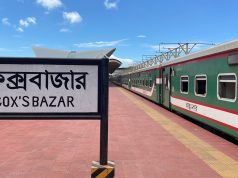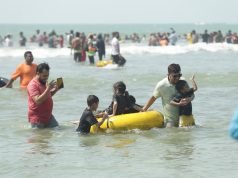

It was 7:25 am. A bus was slowly descending towards Cox’s Bazar town from Kolatoli intersection when a vast stretch of blue sea suddenly came into view through the window.
The sight instantly eased the fatigue of the long journey for Narayanganj resident Saidur Rahman and his family. Excited by their first glimpse of the sea, they waited eagerly to get off the bus and head towards the beach.
But the excitement lasted only a few moments.
As soon as Saidur stepped off the bus with his family, several drivers surrounded them.
“Where are you going?” one asked. “We have a good hotel.” Another offered to take them somewhere by car.
About 10 to 15 people gathered around the family at once, leaving them frightened and uncomfortable. They somehow managed to move away from the group.
Saidur said he had not expected such an experience on his first morning in Cox’s Bazar.
“I was really surprised. Is this the way tourists are welcomed?” he said. “They surrounded us to persuade us to travel in their vehicles. I had already booked a hotel. There should not be this kind of harassment in a tourist destination.”
His experience is not isolated. Several other tourists visiting Cox’s Bazar described similar experiences involving transport operators and people offering accommodation.
Noakhali resident Nishu Hossain had a different but related experience.
Immediately after getting off the bus, a group of electric three-wheeler drivers surrounded him. He hired one of them after the driver promised to arrange a good hotel at a low price.
The driver took Nishu and his two friends to a cottage near the cultural centre, where they paid Tk 1,500 for a room.
But they were disappointed as soon as they entered.
“The condition of the room was very poor. The bedsheet was terrible,” Nishu said.
After asking around, they learned that better hotels were available nearby for less money. But having already paid for the room, they had little choice but to stay.
These experiences illustrate one aspect of Cox’s Bazar’s tourism reality: its natural beauty often comes with complaints of harassment, poor management, and inadequate services.
Is having a sea beach enough to be tourist-friendly?
Cox’s Bazar is home to one of the world’s longest uninterrupted natural sandy beaches and attracts large numbers of tourists every year. Tourist numbers have also been increasing during the off-season.
Yet a question remains: is a destination tourist-friendly simply because it has a spectacular beach?
Abdur Rahman, chairman of Hotel The Grand Sandy and president of the Greater Beach Business Association, does not think so.
“Cox’s Bazar has still not become tourist-friendly,” he said.
According to him, tourists often face touts, transport operators and guides soon after arriving in Cox’s Bazar by bus from Dhaka.
“People come here by spending their money to enjoy themselves, but there is no proper policy to ensure that they can do so peacefully,” he said.
He also pointed to complaints of snatching, mobile phone theft and harassment, as well as shortcomings in the infrastructure needed to provide tourism services.
“The tourism magistrate is there mainly to conduct drives. But there is no dedicated tourism cell or adequate manpower specifically responsible for providing services to tourists,” he said.
Another issue is what tourists can do after spending the day at the beach.
Abdur Rahman said Cox’s Bazar needs cinemas, theatres, cultural programmes, children’s parks and recreational facilities for older people.
“After swimming in the morning, there is very little organised entertainment for the afternoon or evening. There is no park for children or adequate recreational facilities for them or older people,” he said.
He suggested walking tracks, designated walking zones, swimming zones, coffee shops and planned recreational facilities to make tourists’ stays more enjoyable.
Mukin Khan, general secretary of the Cox’s Bazar Hotel Resort Owners Association, also pointed to a shortage of facilities.
“To make Cox’s Bazar an international-standard tourist destination, we need evening entertainment, better roads, parking facilities, amusement parks, clubs, transportation and discipline. Most of these are still absent,” he said.
He said developing such facilities could create opportunities for higher government revenue, employment and new investment in Cox’s Bazar.
Safety remains a concern
Safety is closely linked to whether a destination can provide a satisfactory tourism experience, particularly for families, women and children travelling at night.
Dr Nusrat Jahan, an associate professor at the University of Dhaka’s Department of Tourism and Hospitality Management, said the activities of the Tourist Police should be strengthened.
She suggested increasing the number of police personnel, including women officers, so that they could conduct regular patrols.
She also recommended establishing small police outposts or information centres in key tourist areas.
“I cannot say it is 100 per cent safe. It is not completely safe for us. But it can be made safe,” she said.
The presence of hawkers and roadside businesses around Kolatoli, Sugandha and Laboni points is another issue in discussions about Cox’s Bazar’s tourism environment.
Nusrat Jahan said authorities should consult local stakeholders and provide alternative arrangements rather than carrying out sudden evictions.
“This kind of change cannot happen overnight. We have to start now and think about how to turn mismanagement into proper management,” she said.
She suggested keeping some parts of the beach free from commercial activities while relocating hawkers in a planned manner. She also said that organised activities such as candlelight dinners could create new opportunities for both tourists and local businesses.
‘There is hassle from hiring an auto-rickshaw to checking into a hotel’
Academic observations of Cox’s Bazar’s tourism services are also critical.
Dr Mohammad Shoaeb Ur Rahman, an associate professor at the University of Dhaka’s Department of Tourism and Hospitality Management, said field-level research had identified several weaknesses in tourism services in Cox’s Bazar.
“Cox’s Bazar has not become tourist-friendly in that sense. From hiring an auto-rickshaw after arriving to checking into a hotel, the amount of hassle a tourist has to go through is simply not desirable,” he said.
Describing his tourism experience, he said, “Frankly speaking, I am not satisfied.”
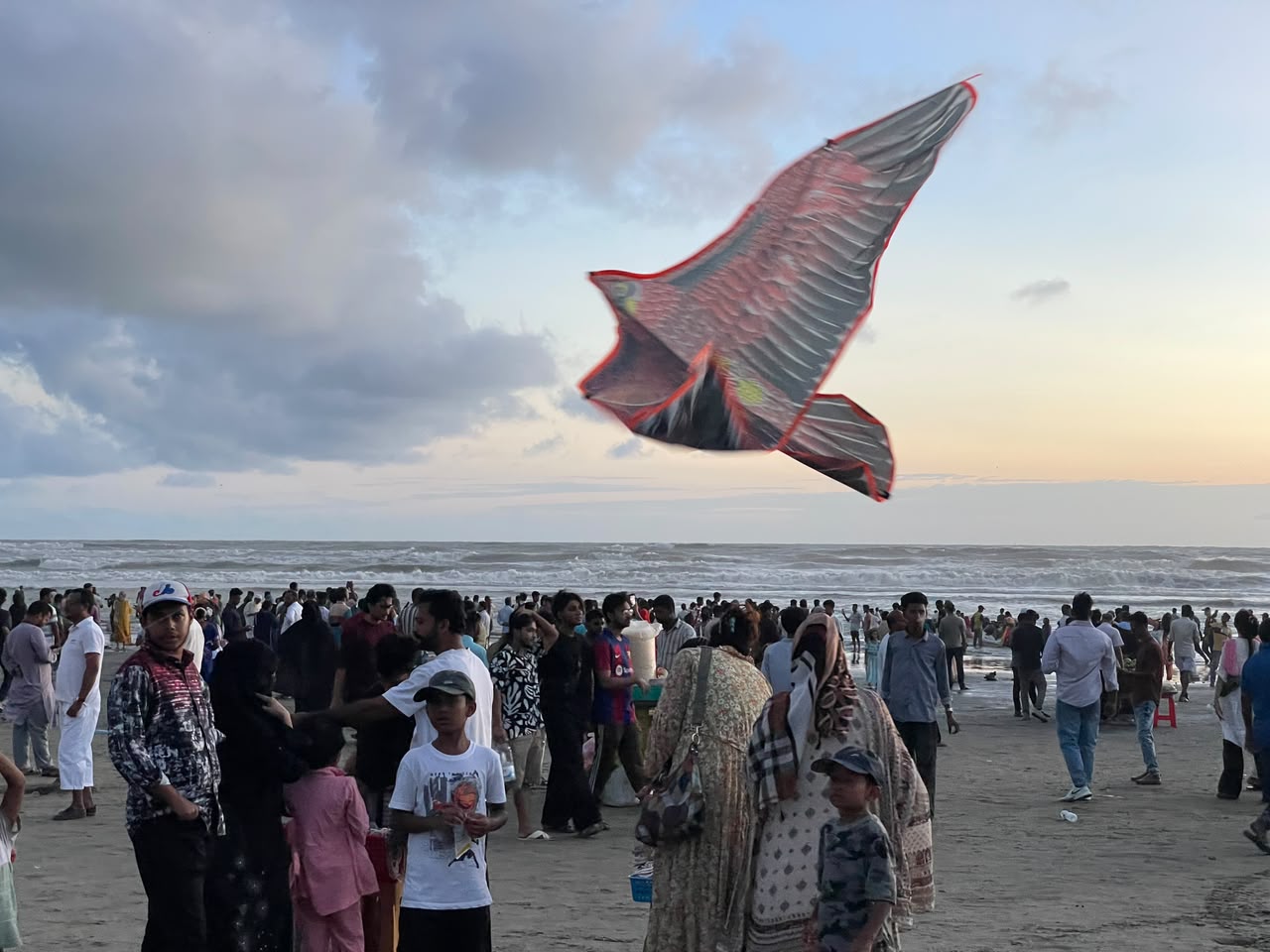
He also said that overcrowding in some beach areas made it hard for tourists to enjoy themselves.
“The beach is so crowded. But when I visited Sea Pearl two years ago, I could have a complete experience. In areas such as Kolatoli and Sugandha, there is insufficient space for a better experience,” he said.
He suggested utilising the vast beach in various ways instead of concentrating tourism activities in a few locations.
Nusrat Jahan, however, does not believe Cox’s Bazar should be described as entirely non-tourist-friendly.
Compared with other tourism destinations in Bangladesh, she said, Cox’s Bazar remained highly popular and sufficiently tourist-friendly, with the large number of visitors itself demonstrating its appeal.
But she said the destination would need better safety, entertainment, management, and service standards if its popularity were to translate into greater international tourism.
The reality, therefore, is that tourists are coming to Cox’s Bazar in large numbers. But high tourist arrivals alone do not necessarily indicate that the tourism management system is satisfactory.
The bigger challenge is turning that strong demand into sustainable, quality tourism.
A digital tourism challenge
World Tourism Day is observed on September 27 every year to raise global awareness of tourism’s social, cultural, political and economic importance. The day has been observed since 1980.
The theme of World Tourism Day 2026 is “Digital Agenda and Artificial Intelligence to Redesign Tourism”.
The theme raises another question for Cox’s Bazar: how prepared is the destination for an increasingly technology-driven tourism industry?
Digital information centres, reliable transport and hotel information, easy complaint mechanisms, emergency assistance, security monitoring and greater transparency in tourism services could help reduce harassment and uncertainty for tourists.
Cox’s Bazar has the sea, hills, nature and strong tourist demand. What remains a challenge, according to people involved in the sector, is building a comprehensive and coordinated system that can turn these attractions into a better-managed tourism experience.
Abdu Rashid Manik
Photo: Abdu Rashid Manik