

Bangladesh’s economy has long depended on readymade garments and remittances. To build a durable economic foundation, Bangladesh must break out of this narrow circle and diversify employment and growth sources.
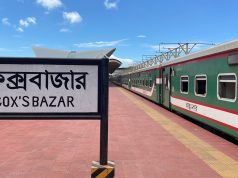
One of the most promising avenues is tourism. We have Cox’s Bazar, the world’s longest uninterrupted sea beach; the Sundarbans; Sylhet’s tea gardens and haors; and historic sites such as Paharpur and Mahasthangarh. Yet we have failed to fully realise the economic potential of these assets.
The problem is not simply a lack of plans; it is the absence of effective and unified administrative ownership.
Since 1986, tourism has been administered alongside civil aviation. Amid the aviation sector’s large budget and complex responsibilities, tourism has remained a secondary priority.
In January this year, Lutfey Siddiqui, then Special Envoy for International Affairs to the Chief Adviser, strongly recommended creating a standalone tourism ministry.
The proposal remains relevant under the current elected government, particularly if Bangladesh is serious about expanding tourism as a source of employment, investment and foreign exchange.
A dedicated tourism ministry would give the sector greater policy focus, budgetary attention, and institutional coordination.
The statistics paint a concerning picture. According to the Bangladesh Tourism Board, the Department of Immigration and Passports and related sources, 667,190 foreign tourists visited Bangladesh in 2023. The figure fell to 633,094 in 2024 and declined by another 7.6 per cent to 585,145 in 2025.
In the first half of 2026, arrivals fell by nearly 20 per cent year-on-year to 239,400. Around 90 per cent of the sector now relies on domestic tourists.
Despite the country’s substantial natural and cultural assets, the continuing weakness in international arrivals raises serious questions about our ability to compete effectively in the global tourism market.
The sector’s core responsibilities currently rest with the Bangladesh Tourism Board and Bangladesh Parjatan Corporation.
But without sufficient policy-making power or direct administrative authority over other ministries and agencies, their ability to address cross-sectoral barriers remains limited.
A tour operator or foreign tourist may need to navigate multiple agencies for visas, airport clearance, security, environmental permissions, land use and local infrastructure.
A standalone ministry could provide stronger policy leadership, dedicated budgetary authority and effective inter-ministerial coordination, while creating a more coherent one-stop service for investors and tourists.
The government aims to raise tourism’s contribution to GDP from around 3 per cent to 6–7 per cent. It has identified 1,498 tourism spots and placed projects worth Tk 19,000 crore on the priority list.
There are also plans to use digital technology and artificial intelligence to transform the sector. But without better roads, sanitation, tourist safety, faster airport clearance, and reliable transport, such initiatives will have limited impact.
Improving the overall tourist experience also requires skilled guides, language training, digital payment systems and professional service standards.
Tourism is not merely about leisure; it can be a key engine of economic diversification, employment, and foreign exchange. Realising that potential requires more than individual projects or digital initiatives.
It requires focused policy, dedicated resources, institutional coordination and clear accountability. A standalone tourism ministry can provide that institutional framework and give the sector the attention it needs to compete in the global market.
The sooner Bangladesh establishes such a structure, the sooner tourism can contribute more substantially to jobs, investment, foreign exchange and the country’s international presence.
By Salam Abu
Cox’s Bazar Life Photo