

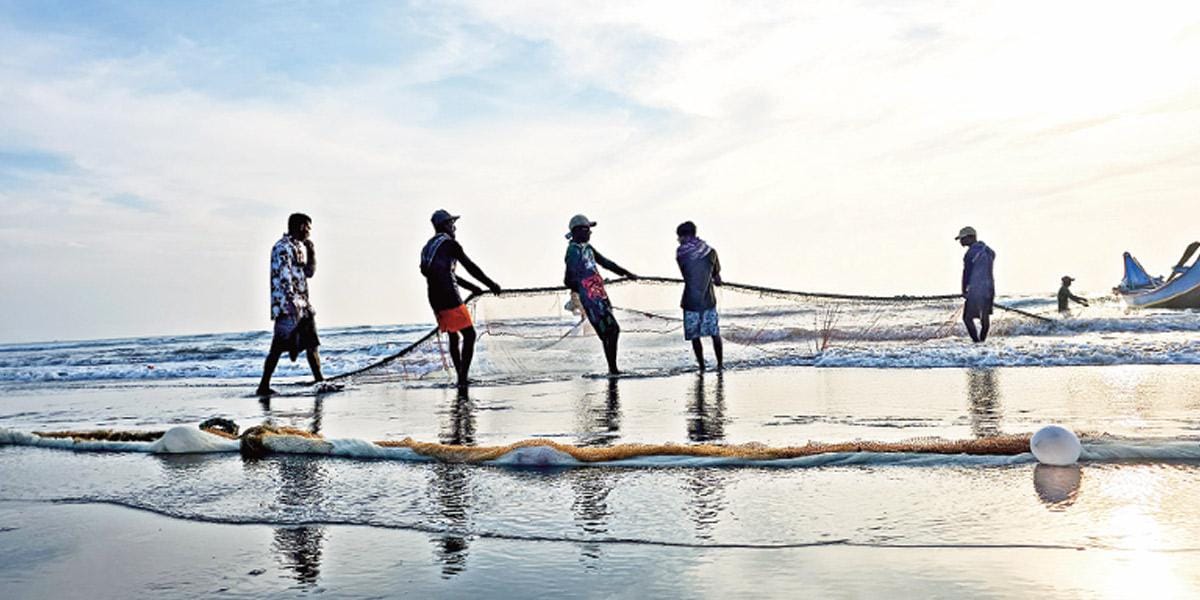
Fishing activity has picked up along the Teknaf coast of Cox’s Bazar with the arrival of winter, as fishermen head to the sea before dawn to cast their nets.
Hours later, groups of 20 to 25 fishermen work together to haul the nets ashore, pulling ropes with bamboo poles in a coordinated effort. Some keep their eyes on the sea while others wait anxiously to see what the nets have caught.
After hours of hard work, the nets often yield various species of marine fish. A good catch brings smiles to the fishermen, while a poor haul leaves them disappointed. This is how coastal fishermen in Teknaf make a living through the winter season, braving the sea and its risks.
Locally known as the ‘drag net’ method, the fishing season usually runs for four to five months from November. Around 20 fishermen work on each boat. They first take the net out to sea and bring both ends of the rope back to shore. The fishermen then work together, using bamboo poles, to pull the ropes and bring the net ashore after several hours of effort.
The process requires physical strength, patience and close coordination.
Azizul Haque, a fisherman from Hajamp para in Teknaf Sadar Union, said the amount of fish caught varies from day to day.
“Some days the nets are full of fish, while on other days the catch is very poor. On average, we earn Tk500 to Tk600 per person a day. We have to run our families on this income, which is often difficult after covering household expenses, children’s needs and daily necessities,” he said.
Resident Juman said fishermen often leave home late at night and remain at sea until dawn.
“They have to ignore bad weather and various risks to earn a living. Such fishing activity can particularly be seen along the coast beside the Marine Drive,” he said.
A local fish trade has also developed around the fishermen’s catch. Fish traders gather along the coast from early morning, and bargaining and transactions begin as soon as the fish are brought ashore.
Part of the catch is supplied to local markets and other parts of the country, while some fish are preserved with ice and others are dried to make dried fish.
Bashir Ahmed, a local fish trader, said he had been buying fish from the coast for years.
“I sell some fish in local markets and send the rest to Chattogram. Some are also dried and marketed later. When fishermen get a good catch, fish worth Tk3 million to Tk4 million can be sold,” he said.
According to the fisheries office, Teknaf has 8,792 registered marine fishermen. Fishermen use more than 110 drag nets along the roughly 48-kilometre coastal stretch from Shamlapur to Shah Porir Dwip.
The nets catch various marine species, including churi, poa, faisya, shrimp, chapila, bata and chanda. The catch volume varies depending on the season, weather, and sea conditions.
Sujay Pal, an additional senior fisheries officer at the Teknaf fisheries office, said fish abundance in the sea has increased following proper compliance with the government-imposed 48-day and 22-day fishing bans.
“As a result, fishermen are currently getting comparatively better catches in their nets,” he said.
Drag-net fishing during the winter is a long-established occupation in Teknaf’s coastal communities and supports thousands of fishermen’s families. Driven by the need to earn a living, they head to the sea every day before dawn, hoping to return with nets full of fish.
By Tarekur Rahman
Photo: Tarekur Rahman