
Cox’s Bazar is central to Bangladesh’s coastal economy, environmental security and marine resources. The country has approximately 710 kilometres of coastline and 118,813 square kilometres of maritime area in the Bay of Bengal. Yet despite adopting the Coastal Zone Policy in 2005 and the Coastal Development Strategy in 2006, Bangladesh lacks a binding, integrated framework for coastal land use, environmental protection and marine activities. This gap leaves Cox’s Bazar’s 120-kilometre shoreline increasingly vulnerable to unregulated development.
A 2025 study found that between 1989 and 2024, the Cox’s Bazar–Teknaf coast lost 1,085 hectares of land to erosion while gaining just 284 hectares through accretion—nearly four times as much land lost as gained. Research by the Centre for Environmental and Geographic Information Services (CEGIS) also estimated annual sea-level rise at 5.05 millimetres in Cox’s Bazar and 7.5 millimetres in Maheshkhali. Climate change and storm surges, compounded by sand dune destruction and unplanned construction, are weakening the coast’s natural defences.
Parts of the Cox’s Bazar–Teknaf shoreline were declared an Ecologically Critical Area in 1999. Yet damaging construction and encroachment persist, reflecting weak enforcement and poorly coordinated planning. The problem is not simply the absence of new legislation but the failure to implement existing safeguards.
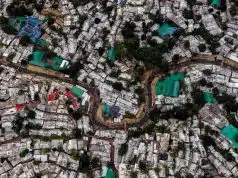
Coastal communities bear the human cost. Families displaced by cyclones and erosion in Kutubdia and Maheshkhali have sought refuge in settlements such as Samitipara and Kutubdiapara. Some now face renewed uncertainty as major projects, including airport expansion, move forward. Land acquisition without fair compensation, secure resettlement and alternative livelihoods risks placing the heaviest burden on those already vulnerable. Development should improve local lives, not uproot them.
Competing demands on coastal land are intensifying. One study identified 555 square kilometres of the area examined for strict protection and 1,047 square kilometres for moderate protection. Yet tourism, salt production, shrimp farming, mangrove conservation and residential expansion remain poorly coordinated. At sea, marine spatial planning is essential to balance fishing grounds, shipping and tourism. Without it, small-scale fishers’ livelihoods and the sustainable growth of the blue economy remain at risk.
Cox’s Bazar’s future cannot be measured by infrastructure alone. Parliament must enact an integrated Coastal Zone Planning Act incorporating Coastal Regulation Zones (CRZ) and Marine Spatial Planning (MSP), defining where construction is permitted and which ecosystems require protection. The law must safeguard local land rights, ensure fair compensation and resettlement, and strengthen enforcement, institutional accountability and public participation. Development cannot be justified if it destroys the coastline or leaves its people landless.
By Salam Abu
Editor