
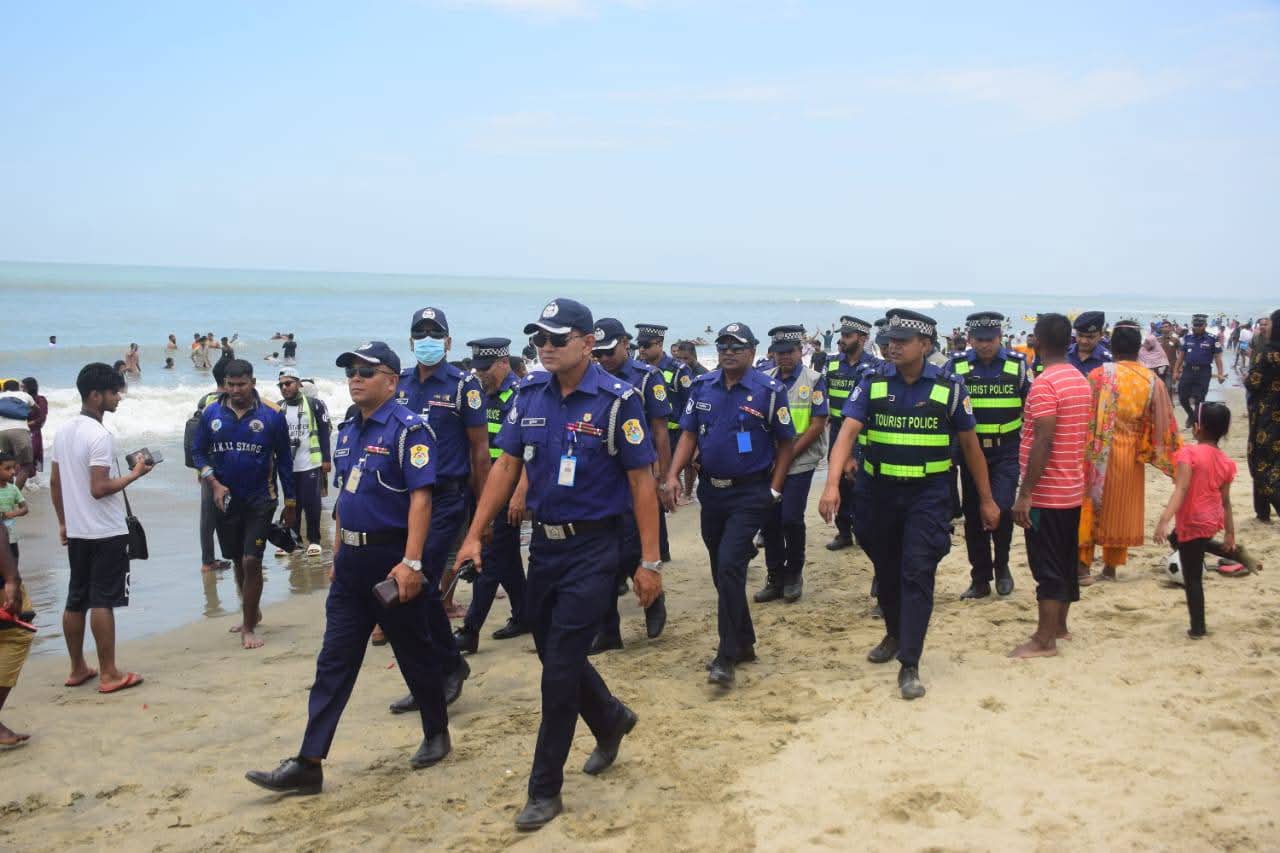
Cox’s Bazar, the heart of Bangladesh’s sea tourism, may soon see a new layer of protection for beachgoers. With the expiry of the Center for Injury Prevention and Research Bangladesh (CIPRB)’s lifeguard project on September 30, the government has taken an initiative to involve the Tourist Police in ensuring the safety of tourists entering the sea.
The Civil Aviation and Tourism Ministry has already sent a letter to include lifeguard positions in the organogram of the Tourist Police.
Ministry sources report that top CIPRB officials and the local administration convened a coordination meeting in Cox’s Bazar on August 28. The meeting proposed extending the project’s tenure, but CIPRB’s Executive Director Fazlur Rahman, and International Senior Manager Darren William declined the offer.
Instead, they suggested that the government take permanent responsibility for beach safety. The ministry has, however, since sent a formal letter extending CIPRB’s project by an additional six months.
Fatema Rahim Veena, Additional Secretary (Tourism) of the Civil Aviation and Tourism Ministry, said that ensuring tourists’ safety in sea tourism is a pressing concern.
“We have sent a letter to the Tourist Police requesting the inclusion of at least 60 lifeguard positions in their organogram. Since this process will take time, we have also extended CIPRB’s project for six months,” she said.
Data from CIPRB show that since 2015, a total of 66 tourists have drowned at Cox’s Bazar beaches, while trained lifeguards have saved 824 lives. In 2024 alone, 12 tourists drowned — the highest in a single year — and by mid-September this year, the number had already reached 14. As the peak tourist season begins in October, experts fear that without lifeguards, drowning incidents could rise sharply.
Additional IGP of Tourist Police Md. Mainul Hasan said, “The Tourist Police are always committed to tourists’ safety. If the ministry proceeds with this plan, we will give it top priority. However, the creation of new posts and recruitment will take time.”
He emphasized the need for both ministries to act quickly to prevent further risks to tourists.
Launched in 2014, CIPRB’s Sea Safe Project deployed 27 trained lifeguards across three popular beaches of Cox’s Bazar.
Equipped with rescue boats, jet skis, and watchtowers, the lifeguards have not only rescued swimmers but also raised red and yellow flags to mark safe swimming zones.
However, with limited manpower, they have been able to cover only half of their designated beach areas.
Imtiaz Ahmed, Field Team Manager of the Sea Safe Project, said, “Even with minimal resources, our team has been working across three beach points, covering only about 50 percent of each. With uncertainty over project continuity, our lifeguards are left in a state of indecision about their future.”
Cox’s Bazar Life Report
Photo: Courtesy