
‘Samudra Bilash’, Daruchini Dwip, and the blue sea remain intertwined with the literary magician’s love for the island
For popular Bengali novelist Humayun Ahmed, Saint Martin’s Island was more than just an island. It was a place of love, solitude and creative inspiration. He deeply loved its blue sea, coral rocks, rows of coconut trees, and breathtaking natural beauty. Drawn by this fascination, he built his dream retreat, ‘Samudra Bilash’, on Bangladesh’s southernmost coral island. Many memories of his literary works, films and personal life remain closely connected to Saint Martin’s. Although he is no longer alive, his presence can still be felt in the island’s sea breeze, waves and pages of his creations.
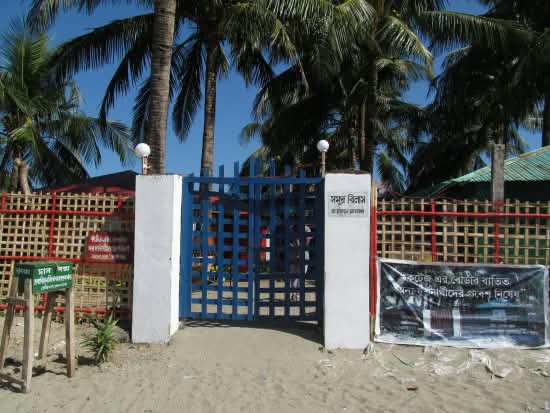
Humayun Ahmed’s love affair with Saint Martin’s began in the early 1990s. He first visited the island in late 1992 and was captivated by its natural beauty. He soon dreamed of building a small house there. In 1993, he purchased 22 decimals of land from a resident, Jolekha Khatun, on the island’s western beach. The following year, he built a wooden bungalow named ‘Samudra Bilash’. After its construction, he entrusted two residents with looking after the property.
‘Samudra Bilash’ was more than a holiday home. It was the writer’s personal retreat, where he could reconnect with nature. He particularly enjoyed watching the full moon over the sea, listening to the waves, and spending time in the island’s peaceful surroundings. He also captured these feelings in his writing. In his piece titled ‘Samudra Bilash’, he described the story behind building the small house on Saint Martin’s and his fascination with the island’s beauty.
Another important chapter in Humayun Ahmed’s connection with Saint Martin’s is ‘Daruchini Dwip’. His popular novel of the same name created a special emotional and literary connection with the island. The novel tells the story of a group of young people travelling to a sea-surrounded island. He later brought together his personal experiences and the island’s natural beauty with his literary imagination. Following the story of ‘Daruchini Dwip’, he also wrote the novel ‘Rupali Dwip’.
In 2007, the film ‘Daruchini Dwip’, based on his novel, was released. Humayun Ahmed wrote the screenplay, while Tauquir Ahmed directed the film. It featured a group of young Bangladeshi actors. Filming took place in Dhaka and Saint Martin’s, allowing audiences to experience the fictional island through the real island’s landscapes, sea, and people.
Humayun Ahmed’s literary works and films also generated renewed interest in Saint Martin’s Island. For many of his admirers, ‘Samudra Bilash’ became one of the major attractions during visits to the island. Many tourists take photographs in front of the house and explore the surrounding beach. For them, a visit often brings back memories of his novels, films, and writings about the sea.
Much has changed on the island over the years. Its beach environment, people’s lifestyles, and tourism-related activities have all changed. Yet ‘Samudra Bilash’ remains a familiar landmark of Humayun Ahmed’s legacy. The house’s current condition and its preservation have also drawn attention at different times.
Humayun Ahmed passed away on July 19, 2012. However, the emotional bond he developed with Saint Martin’s remains intact. Standing on the island’s western beach and looking towards the sea, visitors are reminded of the writer who was so captivated by its beauty that he built a home there. His imagined Daruchini Dwip and the real Saint Martin’s seem to remain intertwined.
Saint Martin’s is therefore more than an island of coral, rocks, coconut trees, and blue waters. It is also a cherished destination associated with Humayun Ahmed’s literature, love, and memories. Just as the waves repeatedly return to its shores, memories of the literary magician return whenever visitors set foot on the island.
By Abdu Rashid Manik
Photo: Courtesy