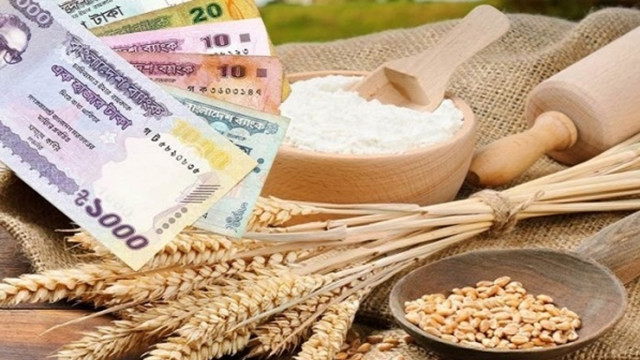
The minimum Fitra has been set at Tk 95 and the maximum at Tk 2,475 per person in Cox’s Bazar for this year.
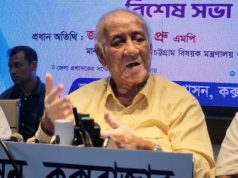
The decision was made on Monday at a joint meeting held at the local office of Islamic Foundation Bangladesh, attended by representatives of the Bangladesh National Imam Association (district unit) and the District Imam Council.
The meeting was chaired by Dr. Mohammad Abu Talha, Deputy Director of the Islamic Foundation in Cox’s Bazar.
The chief guest was Allama Mahmudul Haque, Khatib of Cox’s Bazar Central Model Jame Mosque and former principal of Sitakunda Kamil Madrasa.
After reviewing current local market prices, religious scholars finalized the Fitra rates based on essential food commodities.
Fitra is a form of almsgiving in Islam, and the amount is determined by the cost of staple foods.
According to the decision, the minimum amount of Tk 95 has been fixed, based on the price of wheat flour at half a sa (1,650 grams), and applies to lower-income individuals.
For dates measured at 1 sa (3,300 grams), the rate has been set at Tk 2,150, generally applicable to upper-middle-income individuals.
In the case of raisins, also measured at one sa (3,300 grams), the amount has been determined at Tk 2,475, which is considered suitable for higher-income individuals.
As barley and cheese are less commonly available in Cox’s Bazaar markets, the meeting was advised to follow the rates announced by the Islamic Foundation in Dhaka for those items.
Accordingly, the rate for barley, measured at one sa (3,300 grams), has been set at Tk 595, while cheese of the same quantity has been valued at Tk 2,805.
The meeting also determined the Zakat nisab threshold based on prevailing market values.
It was announced that individuals possessing surplus assets worth at least Tk 157,500 at the end of the year will be obligated to pay Zakat.
Religious scholars urged financially capable individuals to pay Fitra at the highest rate to extend greater support to those in need.
They also emphasized the spiritual importance of giving Zakat during Ramadan, noting that charitable acts performed in this month carry multiplied rewards compared to other times of the year.
Principals of various madrasas, mosque khatibs, and local religious leaders from across Cox’s Bazar were present at the meeting.
By Abdu Rashid Manik
Photo: Collected