

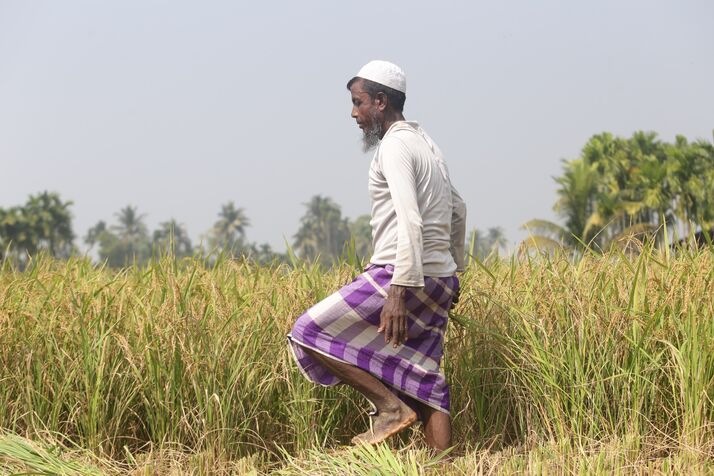
The first day of Agrahayan. Agrahayan marks a dawn in the Bengali seasonal calendar, when the rising sun not only brings light but also the fragrance of freshly ripened paddy.
The misty morning breeze carries the scent of harvest, while fields shimmer with waves of golden crops. With the arrival of Agrahayan, nature seems to put on a festive attire.
A gentle winter breeze blows across the dew-kissed fields where green and yellow paddy sway.
As the first rays of sunlight fall on the ripening grains, it feels as if the sun has scattered gold across the land.
The quiet satisfaction of a year’s hard labor appears on the farmers’ faces—this is the moment they have been waiting for over nine long months.
The joy of new crops is nothing short of a blessing.
With the ripening of paddy, rural Bengal awakens to a flurry of activity.
At dawn, men, women, and youth head to the fields in groups. Some carry sickles, while others wear straw hats or wrap gamchhas around their heads.
The rhythmic clinking of sickles creates a music of its own—an eternal tune of Bengal’s agrarian life.
From harvesting and bundling to drying the grain under the open sun, the joy of working together fills the air. Whether threshing with cattle or with machines, the cold morning breeze, the aroma of rice, and the scent of straw come together to create a rare sense of fulfillment.
And then begins Nabanna—‘nab’ meaning new, ‘anna’ meaning food. To farmers, this first meal of new rice is not just nourishment; it is an offering of gratitude.
A portion is dedicated to deities before it is shared among family members.
Every home prepares pithas, puffed rice, and other delicacies; yet no Nabanna celebration is complete without a bowl of sweet rice pudding made from the new harvest. In that pudding lies the story of toil, hope, and the promise of a better year.
Once a celebration rooted in farmers’ households, Nabanna has now become an integral part of the cultural heritage of Bengalis everywhere.
Urban cultural organizations celebrate it through music, dance, poetry, and pitha festivals. Even in the city, the scent of the soil reminds all Bengalis that they remain children of nature.
When the dawn of Agrahayan settles with dew, when golden paddy sways in the cool breeze, Nabanna becomes a symbol of emotion, heritage, and identity.
Times may change and life may change, but the joy of new crops, the sight of harvest, and the smiles of happy farmers will always be a part of Bengali festivals.
By Abdu Rashid Manik
Photo: Hussain Shetu