

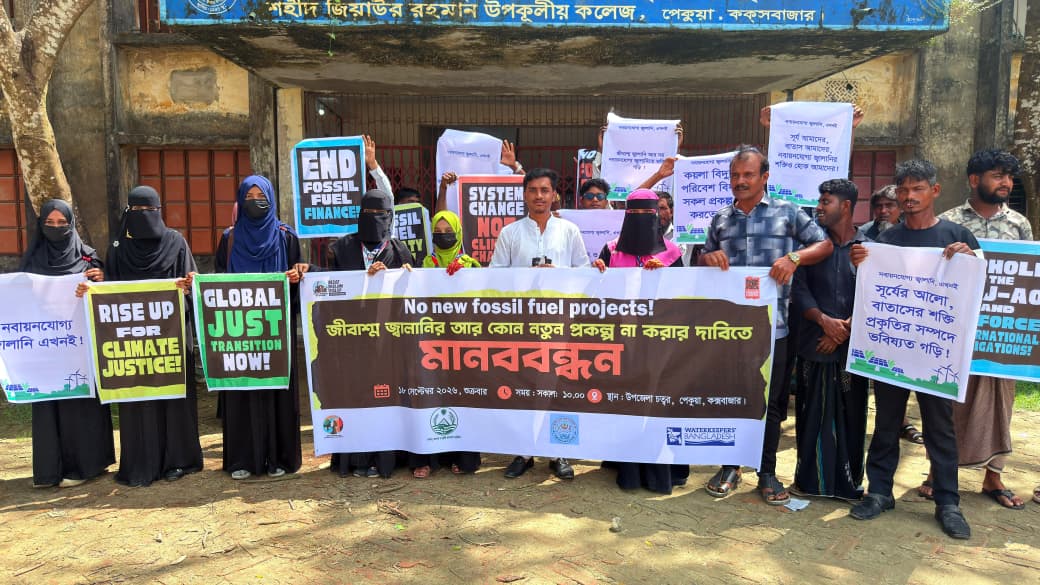
A human chain was held in Pekua, Cox’s Bazar, on Friday, demanding reduced dependence on fossil fuels and greater use of solar, wind, and other renewable energy sources to tackle climate change, reduce environmental pollution, and build a sustainable energy system.
The programme was organised as part of the global Week of Action campaign at 10:00 am at Pekua Shahid Ziaur Rahman Coastal College.
Dhara, Waterkeepers Bangladesh, the Salt, Fisheries and Agriculture Welfare Association and the Coastal Mukta Rover Scouts Group jointly organised the event.
Speakers said burning fossil fuels, particularly coal, increases air pollution and greenhouse gas emissions, intensifying climate change risks.
They said renewable energy sources such as solar and wind could provide a cleaner and more sustainable energy system in the long term. They said that a significant portion of future investment in the power and energy sector should therefore shift towards renewable sources.
Speakers also said coastal areas were among the regions most vulnerable to the adverse impacts of climate change. They said expanding access to clean energy is important for protecting the livelihoods and environment of coastal communities.
They added that expanding solar power could help reduce dependence on fossil fuels for electricity generation.
Delwar Hossain, Pekua upazila coordinator of Dhara; Jihadul Islam, supervisor of Pekua Planters Club; salt workers’ leader Nezam Uddin Nazu; Coastal Mukta Rover Scouts Group team leader Sadekur Rahman; and assistant team leader Asaduzzaman, among others, spoke at the human chain.
Students from different educational institutions and people from various walks of life attended the programme and expressed solidarity with the call to expand renewable energy and reduce fossil-fuel use.
The speakers also expressed solidarity with the global campaign being held ahead of the United Nations General Assembly and COP31. They called for reduced financing for fossil fuels, increased climate finance and a rapid and just energy transition involving public participation.
They also called for considering solar power at the 1,320-megawatt power plant under construction in Kalapara. They urged the government to install solar power systems in unused spaces within coal-fired power plants, as previously promised.
“Renewable energy, not fossil fuels, should be the energy of the future,” the speakers said, urging the government, private sector and civil society to work together towards that goal.
They said clean energy was essential to reducing pollution, addressing climate risks and ensuring a safer environment for future generations.
Cox’s Bazar Life Report
Photo: Courtesy