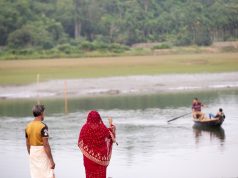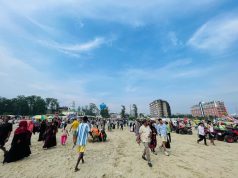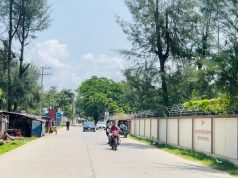

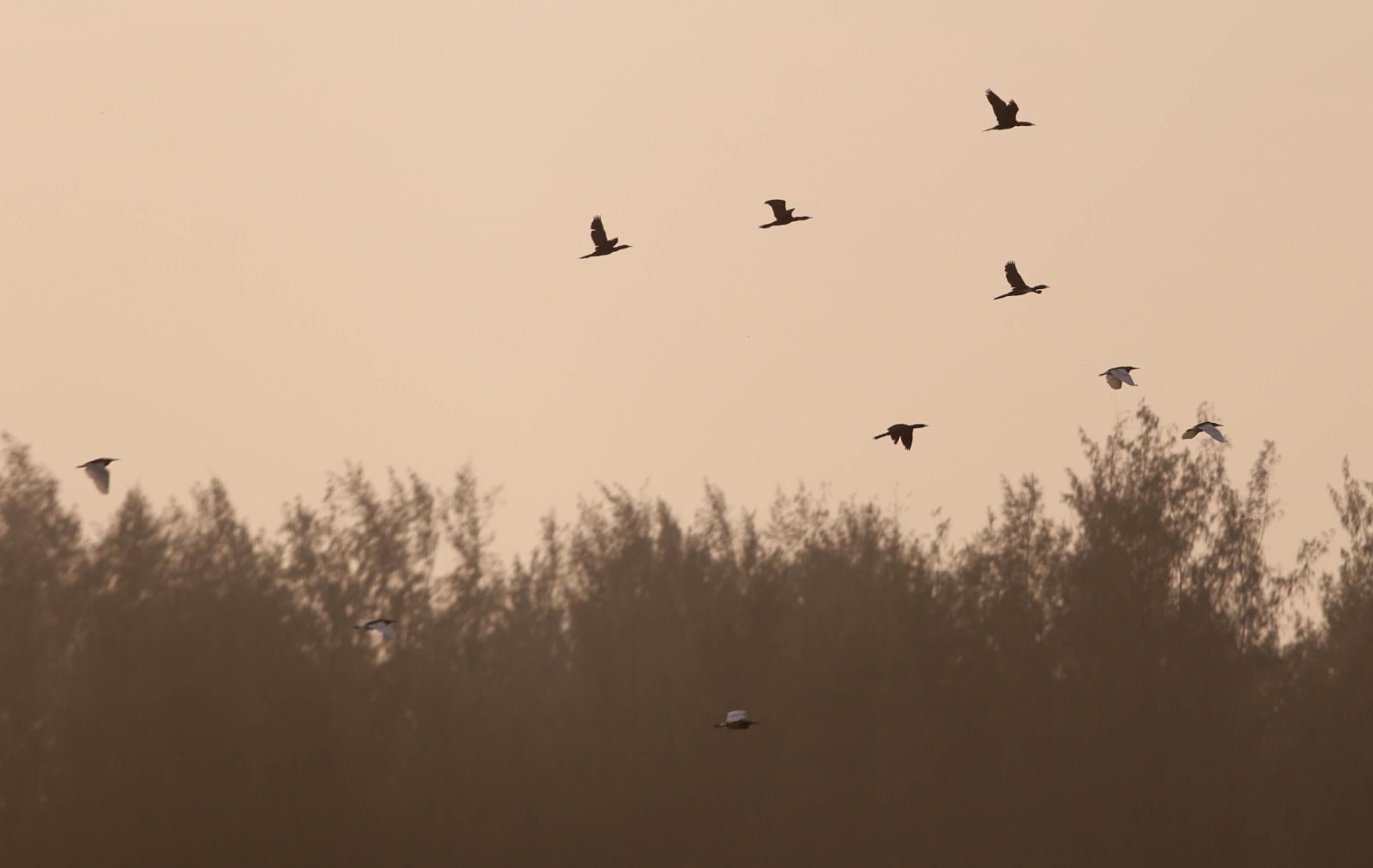
The holy month of Ramadan has ushered in a rare calm across the coastal belt of Cox’s Bazar, where the usual bustle gives way to a tranquil stillness from late afternoon.
Such a scene unfolds in the coastal village of Pechar Dwip, where dusk now arrives with the flutter of wings and the chorus of birdsong.
As evening approaches, the village sky fills with birds of various species circling overhead before settling on tree branches. Their chirping blends into the fading light, creating a quiet harmony.
Local youth Parvez said that compared to other times of the year, the village becomes noticeably calmer during Ramadan. With reduced human activity and movement, birds appear to return more freely to their former habitats.
In particular, white egrets, mynas, and sparrows are more frequently seen along the riverbanks and in coastal casuarina groves before and after sunset.
Resident Abdul Hakim observed that people remain largely engaged in prayers and reflection during Ramadan, leading to less unnecessary noise. “It feels as though nature itself is fasting,” he said. “The surroundings grow gentler, and the sound of birds becomes more distinct.”
Another villager, Rahima Begum, noted that such large gatherings of birds were less common in the past. “Now, as dusk falls, the sky fills with them. Children stand in the yard before iftar, watching the birds with delight,” she said.
Environmental observers say the scene underscores how swiftly nature regains its rhythm when human noise and unchecked movement subside.
In Pechar Dwip, the call to prayer before iftar now mingles with birdsong — a serene reminder of coexistence between faith, community, and the natural world.
Locals believe that preserving this atmosphere will require sustained awareness and year-round efforts to protect nature and wildlife, so that evenings as pure as those of Ramadan may be enjoyed year-round.
By Mohammad Morshed
Photo: Hussain Shetu