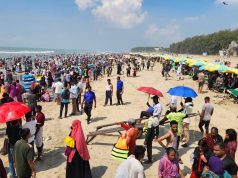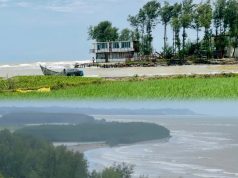
With the Bay of Bengal on one side and the Naf River on the other, Shah Porir Dwip in Teknaf offers visitors a rare combination of sea, river, hills and coastal scenery. On clear days, visitors can see Myanmar’s Maungdaw region and a range of hills across the river, with Saint Martin’s Island visible in the distance.
Standing at the end of the long jetty, visitors can feel surrounded by water. Away from the bustle of city life, the scenic landscape attracts nature lovers and families seeking a peaceful getaway.
Shah Porir Dwip is in the Sabrang union of Teknaf upazila in southeastern Cox’s Bazar district, near the Bangladesh-Myanmar border at the mouth of the Naf River. The settlement is about 15 kilometres from Teknaf town.
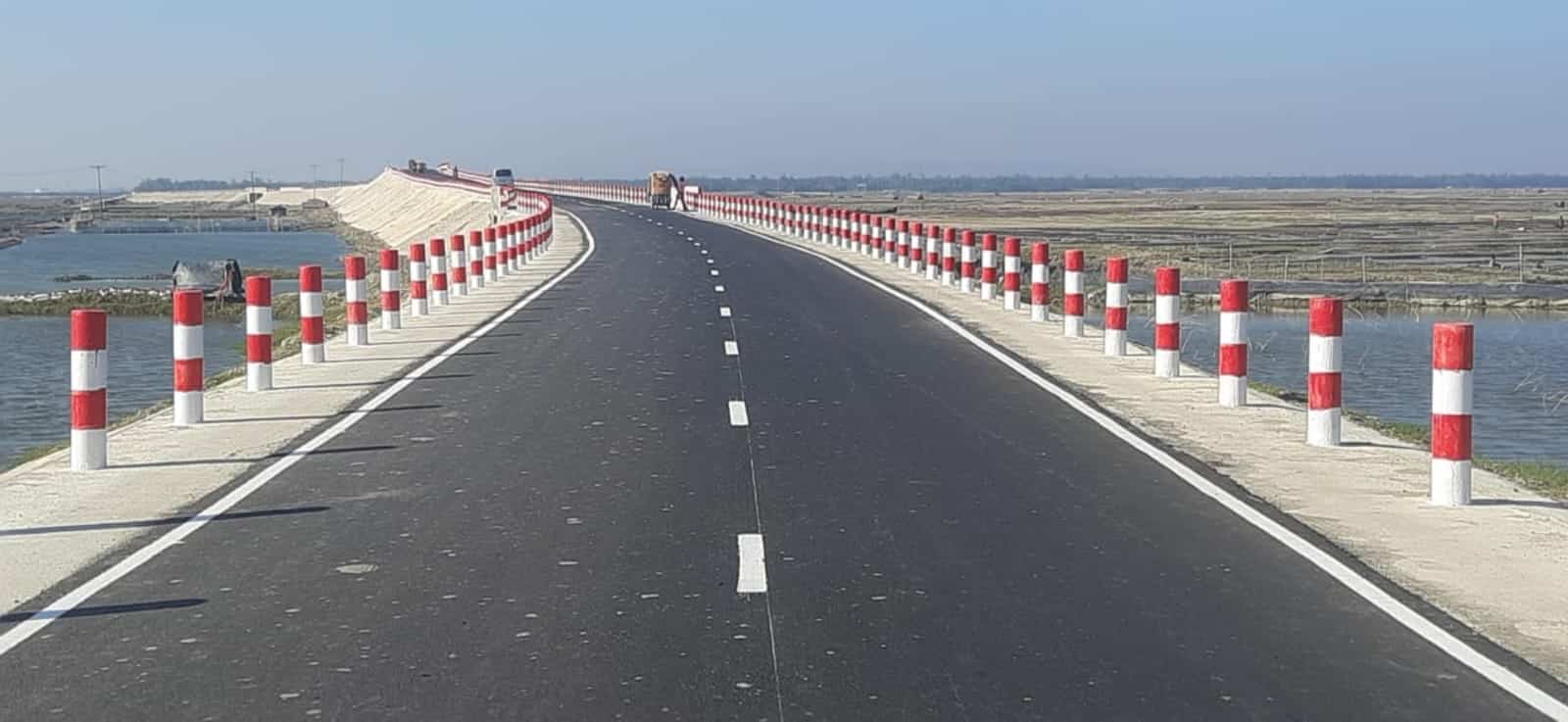
The island’s main attraction is the opportunity to enjoy views of the sea, river, hills and border landscape from one place. The long jetty and the 5.15-kilometre road connecting the island with Teknaf also add to the appeal.
The jetty offers a different view
The jetty is one of Shah Porir Dwip’s main attractions. Visitors can see the Naf River, Myanmar’s Maungdaw region and the hills across the water. On clear days, Saint Martin’s Island is also visible in the distance.
Many visitors take photographs, watch boats moving along the river and spend time with their families.
Local residents’ daily lives are another attraction. Fishing boats, the activities of fishers, and livelihoods connected to the river and sea offer visitors a glimpse of the local community.
Sadman Kabir, who came with his family from Khilgaon in Dhaka, said, “When we travel with our family, we prefer places where we can enjoy the sea, river, hills and natural beauty together.”
Labannya Regina, a student at Rajshahi University, said Shah Porir Dwip’s atmosphere was different from that of other places.
“Standing on the jetty, enjoying the surrounding views, taking photographs and spending time with family members is a wonderful experience. Better transport and tourist safety arrangements would attract more visitors,” she said.
The road connecting Teknaf with Shah Porir Dwip is an important part of the journey. Water and coastal scenery on both sides enhance the experience. Travel has become easier since the road was rebuilt, allowing visitors to reach the jetty by car.
However, tourists should remain cautious when using coastal roads and infrastructure. They should avoid damaged or unsafe sections of the jetty and refrain from taking photographs outside the railings. Children should be supervised at all times.
New prospects around Sabrang Tourism Park
Sabrang Tourism Park is another attraction along the route to Shah Porir Dwip. The tourism project, under development in Sabrang union of Teknaf, has ambitious plans.
According to the Bangladesh Economic Zones Authority, the park is planned to accommodate around 39,000 domestic and foreign tourists a day once fully developed.
For local residents, tourism growth could bring employment and business opportunities, but transport, infrastructure and environmental protection remain important concerns.
Ashikur Rahman, a local resident, said more tourists could increase demand for local transport, food outlets and other services.
“At the same time, attention must be paid to protecting the coastal environment, managing waste and ensuring that the daily lives of local people are not disrupted,” he said.
How to reach Shah Porir Dwip
Visitors can travel directly from Dhaka to Teknaf by bus. Alternatively, they can travel from Dhaka to Cox’s Bazar and then continue to Shah Porir Dwip by bus, private car, locally used open-sided vehicle known as a chander gari, or CNG-run auto-rickshaw.
From Cox’s Bazar, the reported fares are around Tk 300 per person by air-conditioned bus, Tk 200 by regular bus, Tk 300 by car and Tk 220 by CNG-run auto-rickshaw.
Explore Jahajpura Garjan Forest along the way
Nature lovers can also visit Jahajpura Garjan Forest in Baharchhara, Teknaf, while travelling to Shah Porir Dwip. The forest is about 55 kilometres from Cox’s Bazar town along the Marine Drive road.
Its main attractions are century-old garjan trees and lush greenery. The forest has more than 5,772 garjan trees, reportedly around 70 to 80 feet tall, with trunks measuring 10 to 12 feet in circumference.
Rows of large trees, shaded surroundings and quiet natural scenery draw visitors seeking a break from busy urban life.
Rezaul Karim, a tourist from Gazipur, said seeing the green forest along Marine Drive was a wonderful experience.
“The large trees and peaceful surroundings offer relief from the rush of city life. Visiting the forest along with Shah Porir Dwip makes the trip more enjoyable,” he said.
Local resident Saddam Hossain said Jahajpura Garjan Forest is a natural asset for the area and could benefit locals if more tourists visited.
“Everyone must help preserve the forest’s beauty. Damage to trees and littering should be stopped so that the forest can retain its natural charm,” he said.
How to reach Jahajpura Garjan Forest
Visitors can hire a private vehicle directly from Cox’s Bazar town for around Tk 4,000. Those using public transport can travel from Cox’s Bazar to Shamlapur for about Tk 170 per person, then take local transport to Jahajpura for about Tk 20 per person.
Balancing tourism with conservation
Shah Porir Dwip, Sabrang, and Jahajpura Garjan Forest offer scope to develop a planned tourism route. However, sustainable tourism requires more than infrastructure. Environmental conservation, safe transport, cleanliness, local participation, and reliable visitor information are also essential.
Tourism expert Rafi Al Imran said Shah Porir Dwip’s geographical location and natural diversity offered significant tourism potential.
“Developing a planned tourism route linking Sabrang Tourism Park and Jahajpura Garjan Forest could increase local employment and income. However, he emphasised that tourism development must be balanced with environmental protection, safe transport, and quality services.
By Tarekur Rahman
Photo: Collected