

St. Martin’s Island, Bangladesh — Early December sunshine glimmered on the turquoise sea as St. Martin’s, the country’s only coral island, burst back into festive life. After a 10-month shutdown, passenger vessels finally returned on Monday, reviving the quiet shores and bringing relief to thousands dependent on tourism.
Exactly at 2:00 pm, the first tourist ship of the season, MV Baro Awlia, anchored at the island’s jetty. Soon after, Karnaphuli Express and Keari Sindabad arrived. Around 1,200 tourists stepped ashore, greeted warmly with flowers by smiling local residents.
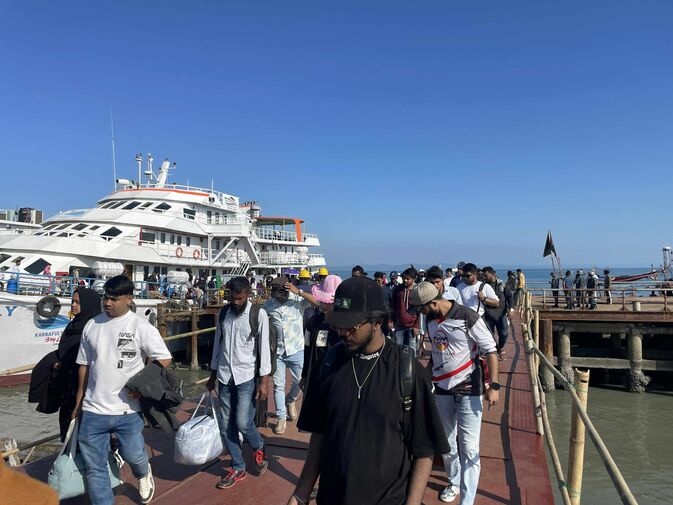
Earlier in the morning at 7:15 am, the three ships had set sail from the Nuniachhara BIWTA Terminal in Cox’s Bazar under close supervision. Passenger tickets and QR-coded travel passes were digitally verified to ensure that the island’s daily visitor limit was not exceeded.
The sight of tourists brought much-needed life to local businesses. Mir Ahmed, who runs a small restaurant, said he had spent months fearing that tourism might never return. “Today I opened my shop again. It feels like the island has woken up,” he said with joy on his face. Conservation volunteer Osman Goni expressed a hopeful yet cautious optimism. “Tourism feeds us, but the environment must not be harmed,” he said. “The rules are stricter this time, and we hope the coral and nature will get some protection too.”
Tourists who had waited months for this moment were equally excited. First-time visitor Sadia Nowrin from Mymensingh said she felt overwhelmed the moment she stepped off the vessel. “It feels like I have arrived in paradise. The sea journey was wonderful, and all the waiting was worth it,” she said. Another tourist, Azharul Islam, praised the discipline in arrangements, saying the ticket verification and QR scanning process seemed more organized and secure than before.
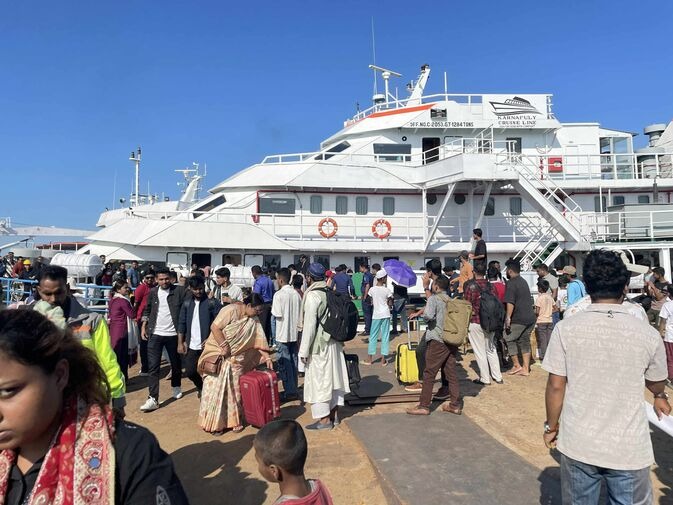
Deputy Commissioner of Cox’s Bazar, Abdul Mannan, told reporters that night stays are now allowed on the island for December and January, as he oversaw the management at the jetty.
He stated that the entire travel process is digital to mitigate the environmental impact of excessive visitor pressure. Authorities are also promoting the use of aluminum bottles as alternatives to plastics.
The government has deployed volunteer teams and law enforcement personnel at Nuniachhara and St. Martin’s to ensure adherence to its directives.
Tourist Police Additional DIG Apel Mahmud said their personnel are stationed throughout the journey—at the terminal, on each vessel and across the island — to ensure safety and immediate support for travelers. “We are vigilant at all times,” he said.
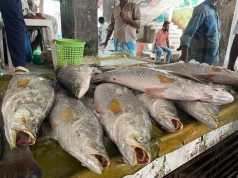
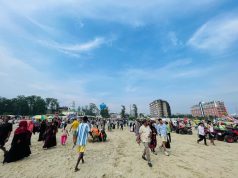
The markets, hotels and beaches of the island quickly regained their lively charm. Laughter, joy and camera flashes once again filled the sandy shorelines. Local residents say that when tourists return, life returns to their homes too. St. Martin’s appears to have regained its old rhythm.
Director of the Department of Environment’s Cox’s Bazar office, Md. Zamir Uddin, said daily tourist entry will not exceed 2,000 and the ships will operate under strict monitoring. Security checkpoints have been set up at both jetties to enforce compliance. Four more ships are ready to join the route once additional approval is granted. Tourist operations via Nuniachhara will continue until 31 January.
The island’s tourism restrictions were imposed under a government circular issued on 22 October by the Ministry of Environment, Forest and Climate Change to protect its fragile ecosystem. Under the policy, visitor access will remain limited to November, December and January, and only through online ticketing containing approved travel passes and QR codes. From 1 February next year, St. Martin’s will again be closed to tourists for nine consecutive months so nature can recover.
The directives prohibit nighttime lighting and loud sound on the beach. Visitors are not allowed to damage or collect corals, disturb sea turtles or harm any marine creatures, including birds, crabs and shells. Motorized vehicles such as motorcycles and sea-bikes are banned on the beach areas. Polythene bags and single-use plastics such as chip packets, disposable bottles, straws and mini-packs of soap or shampoo are strongly discouraged. Instead, tourists are advised to bring personal water flasks for refill.
By Abdu Rashid Manik
Photo: Abdu Rashid Manik