
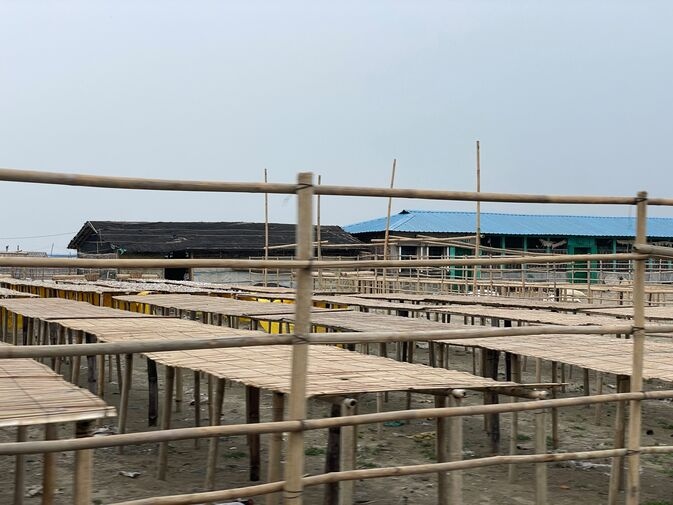
Nazirartek, at the southern edge of Cox’s Bazar town, is one of the best-known dried-fish processing hubs in Ward 1 of Cox’s Bazar municipality.
Thousands of men and women work across the sprawling area processing and drying fish caught from the sea.
But the 22-day government ban during the hilsa breeding season has brought work to a halt, leaving thousands of workers in dried-fish production and other fisheries-related activities unemployed.
The ban on catching hilsa and all other fish in the sea and rivers began at midnight on October 7 to protect hilsa during its breeding season and will remain in effect until October 29.
Alongside fishing, the restrictions are expected to disrupt fish landings, processing, and drying, cutting off income for many workers who depend on these activities.
Ahead of the ban, fishing trawlers have started returning to the Cox’s Bazar District Fish Landing Centre, nearby areas and other coastal landing points.
Fishermen and workers have been busy unloading the final catches brought back from the sea before the restrictions take effect.
After being brought ashore, the fish are transported to the dried-fish yards, where women clean them, remove their entrails and prepare them for drying.
Workers then place the fish on racks to dry. A large workforce is involved in this daily process.
Hasina Begum, a female fish processor, said she would become unemployed once the current batch of fish had been dried.
“After drying the fish caught today, we will be out of work. It will be very difficult to support our families. The government provides assistance to fishermen, but workers like us receive no support,” she said.
Another Nazirartek worker, Mohsena Begum, said thousands of men and women depended on dried-fish yards and other fisheries-related activities for their livelihoods.
“People like us work for daily wages. When the work stops, our wages stop too. How will we support our families then?” she asked.
The workers alleged that although the government provides assistance to registered hilsa fishermen during fishing bans, many people directly involved in the wider fisheries value chain remain excluded.
These include workers engaged in fish processing, net mending, ice supply and dried-fish production.
Their earnings disappear during the ban, but they receive no government assistance, they said.
Cox’s Bazar District Fisheries Officer Md Nazmul Huda said the fishing ban would remain in force from midnight on October 7 until October 29, prohibiting the catching, transportation, storage and sale of hilsa during the period.
He said 27,146 registered hilsa fishermen in Cox’s Bazar district would each receive 25kg of rice as government assistance.
“The government assistance is exclusively for registered fishermen involved in catching hilsa. The government currently has no initiative for workers in dried-fish yards, fish processing, and related activities. However, we will inform the government about the issue,” he said.
Although the ban aims to ensure safe breeding for mother hilsa, it affects the wider fishing and fish-processing chain.
Those involved in the sector have therefore called for the government to include workers in other fisheries-related occupations in assistance during the restriction period, alongside fishermen.
By Abdu Rashid Manik
Photo: Abdu Rashid Manik